
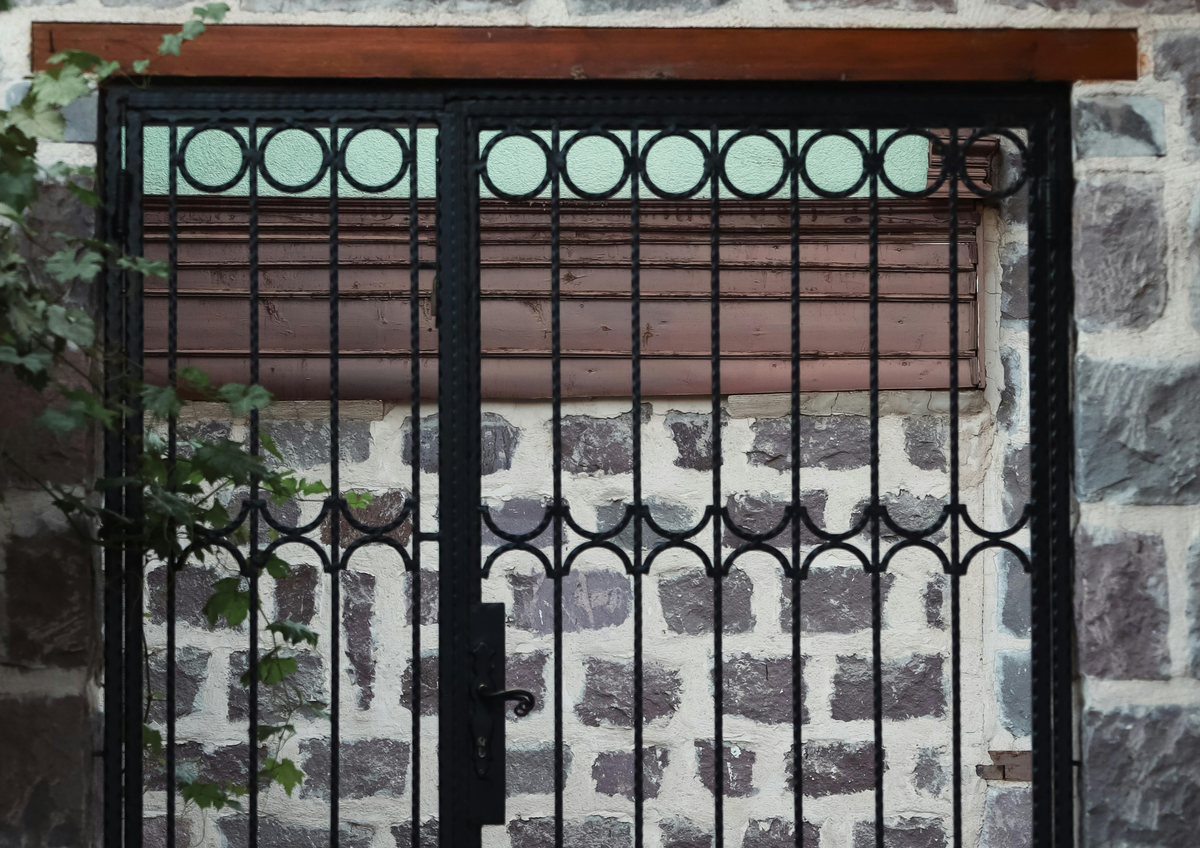
Anchoring an Iron Fence Into Existing Concrete or Masonry
Setting fence posts in fresh footings is straightforward. Anchoring an iron fence to concrete or masonry that is already there is a different exercise, because you inherit whatever the previous work left you: unknown thickness, unknown reinforcement, unknown condition, and occasionally something buried that nobody mentioned. On a Chicago lot this comes up constantly, since most fences go onto existing stoops, retaining walls, patios, parapets, and sidewalks rather than into open ground. Getting it right determines whether the iron fence is still tight in ten years or loose in two.
SHORT ANSWER
There are two approaches: core drilling and grouting posts into the concrete, or surface mounting with base plates and anchors. Core drilling is stronger and suits taller fences and anything taking lateral load. Surface mounting is faster and depends entirely on slab thickness and anchor selection. Never anchor into mortar joints, verify what is under the slab before drilling, respect edge distance, and treat gate posts as a separate problem requiring their own footing.
Anchoring an Iron Fence: Two Methods
Core drilling and grouting. A core bit cuts a hole, the post is set into it, and the annulus is filled with non-shrink grout or anchoring cement. Load transfers into the surrounding concrete over the full embedded depth rather than through fasteners, which makes this the stronger method and the one to use where the fence takes real lateral load.
Surface mounting. The post is welded to a base plate and the plate is anchored to the surface with mechanical or adhesive anchors. It is faster, less disruptive, and creates no hole to trap water. It also transfers all the load through a handful of anchors into the top few inches of concrete, which is only adequate if the concrete underneath is up to it.
Neither is universally correct. The decision follows fence height, exposure, what the slab actually is, and whether anything below it rules out drilling deep.
Find Out What Is Under the Surface First
This step gets skipped and occasionally produces an expensive afternoon.
Utilities run shallow near buildings, so locating services before drilling is not optional. Several other conditions are worth confirming on a Chicago property.
Older commercial blocks frequently have vaulted space beneath the public sidewalk, and a core bit through a vault ceiling will not appear on any utility locate. Plaza decks and slabs over occupied space may have waterproofing membranes that drilling breaches. Some slabs carry radiant heating loops, and newer structural slabs may be post-tensioned, where hitting a tendon is a serious matter.
If you do not know what a slab is or what is under it, that is a question to answer before the drill comes out rather than after.
Anchor Types and Where Each One Works
Wedge and sleeve anchors. Mechanical expansion anchors that grip by pressing outward against the hole. Reliable in sound solid concrete, and dependent on adequate edge distance because the expansion force is what can crack a slab near its edge.
Screw anchors. Cut their own threads into the hole. Quick, removable, and generally used for lighter duty.
Adhesive anchors. Threaded rod bonded into the hole with epoxy or similar. These develop high capacity, generate no expansion force, and work close to edges and in some conditions where mechanical anchors do not. They are also the type most sensitive to installation.
That last point is the most common cause of anchor failure in the field. Adhesive anchors depend on a properly cleaned hole, because drilling dust prevents the adhesive bonding to the concrete and the anchor pulls out under load carrying the dust with it. Brushing and blowing the hole is not a formality.
Masonry Is Not Concrete
Anchoring into brick or block follows different rules, and treating masonry like a slab is a frequent error.
Never anchor into mortar joints for structural load. Mortar is weaker than the units around it and it deteriorates first. Anchors belong in the masonry unit itself.
Hollow block is not solid. Concrete masonry units have voids, and an anchor landing in a void has almost nothing to grip. Solutions include adhesive anchors with screen tubes designed for hollow substrates, toggle-type anchors, or through-bolting where the back face is accessible.
Confirm what the wall actually is. Many older Chicago buildings have brick veneer over another structure, and an anchor set into veneer holds a facing rather than a wall. Condition matters as much as type, since spalling brick, soft mortar, and previous repairs all reduce what a wall will hold.
Edge Distance, Spacing, and Thickness
Three dimensions govern whether an anchor performs as intended.
Edge distance. An anchor set too close to the edge of a slab or the end of a wall can blow out the concrete rather than holding in it. Expansion anchors are particularly sensitive because they work by pushing outward.
Anchor spacing. Anchors placed too close together interact, and the group holds less than the individual capacities suggest.
Slab thickness. This is the one that catches people out. A typical residential sidewalk or patio slab is thin, and while it will hold a base plate against gravity, a fence takes lateral load. Wind against a tall panel, someone leaning on it, and repeated loading over years all work to pry the plate up. Surface mounting a substantial fence to a thin slab is how fences end up loose.
Anchor manufacturers publish minimum edge distance, spacing, and base material thickness for every product. Those numbers exist because the concrete fails before the anchor does.
Water Is What Ends It
In this climate, the long-term failure mode is almost always water at the connection.
A core-drilled hole is a cup. If grout is not properly placed and the top is not crowned or sealed to shed water, the hole holds water against the post, and Chicago winters then freeze it. Road salt tracked onto walks and drives concentrates at exactly these points.
A few things extend the life of either method. Crown the grout so water runs away from the post, seal the joint between post and concrete, and avoid creating a pocket that holds water under a base plate. Keep the coating intact at the grade line too, since that transition is where corrosion starts on exterior ironwork and where periodic metal painting pays off.
Anchor material deserves a thought too. Mixing metals at a connection can accelerate corrosion, so fastener material and coating should be selected deliberately rather than by whatever is on the truck.
Gates Are a Separate Problem
This is worth stating on its own because it is the single most common anchoring failure.
A gate post does not carry a static load. It carries the cantilevered weight of the gate plus the dynamic load of every open and close, thousands of times. That is a different demand from a fence post holding a panel.
Surface mounting a gate post to an existing thin slab will not hold. Gate posts generally need proper footings sized for the gate, set below frost depth, and on wider or heavier gates that requirement grows quickly. Where gate problems recur on the same installation, an undersized or improperly anchored post is usually the reason rather than the hardware.
When Existing Concrete Is Not Enough
Sometimes the honest answer is that the substrate will not do the job. Deteriorated concrete with spalling, cracking, or exposed reinforcement cannot hold anchors reliably. A slab too thin for the fence height will loosen whatever anchor is specified, and masonry in poor condition needs repair before it carries anything new.
The options are repairing the concrete first, setting new footings alongside the existing work, or reducing fence height and wind load to what the substrate supports. Fabricating a structural solution around a substrate that cannot hold it spends money on a connection that will fail.
Key Takeaways
Core drilling and grouting is stronger than surface mounting and better for lateral load.
Verify what is under the slab before drilling, including vaults, membranes, heating loops, and tendons.
Adhesive anchors fail most often because the hole was not cleaned properly.
Never anchor structural load into mortar joints.
Hollow block needs anchors designed for hollow substrates, not standard expansion anchors.
Edge distance, spacing, and base material thickness are published for every anchor for a reason.
Crown and seal at the post base so water runs away rather than sitting against the steel.
Gate posts take cyclic loads and generally need their own footings rather than surface mounting.
Frequently Asked Questions
Can I anchor a fence to an existing patio slab?
Often yes, depending on slab thickness, condition, and fence height. A thin slab may hold a low decorative fence while being inadequate for a tall panel taking wind load. The slab needs assessing before the method is chosen.
Is core drilling better than surface mounting?
It is stronger, because load transfers over the embedded depth rather than through anchors at the surface. Surface mounting is faster and less disruptive and is entirely adequate where the substrate and the loads suit it.
Why did my surface-mounted fence come loose?
Common causes are a slab too thin for the load, anchors set too close to an edge, insufficient anchor count or size, or water getting into the connection and corroding it. Retightening rarely holds, because the concrete around the anchor is usually what gave way.
Can I anchor into brick?
Into the brick units, yes, with appropriate anchors and if the masonry is sound. Not into mortar joints for structural load, and not into veneer where the attachment needs to reach structure.
Do I need a permit for a fence on existing concrete?
Requirements vary by jurisdiction and by fence height, location, and whether the work touches the public way. Confirm locally before installation rather than after.
What about frost heave on an existing slab?
An existing slab moves with whatever supports it. If it heaves seasonally, a fence anchored to it moves too, which stresses the connections. Persistent movement points toward new footings below frost depth rather than anchoring to the surface.
Conclusion
Anchoring an iron fence into existing concrete or masonry comes down to knowing what you are attaching to before deciding how. Slab thickness, masonry condition, what sits below the surface, and how the fence will be loaded all narrow the method before anchor selection even begins. Where the substrate is sound the work is straightforward, and where it is not, the honest answer is to fix the concrete first rather than engineer around it.
Americana Iron Works & Fence fabricates and installs iron fencing, gates, railings, and custom ironwork for residential and commercial properties throughout Chicago and the surrounding suburbs, with more than thirty years of in-house fabrication behind the work. If you are planning a fence on existing concrete or masonry, reach out today to request a free quote.