
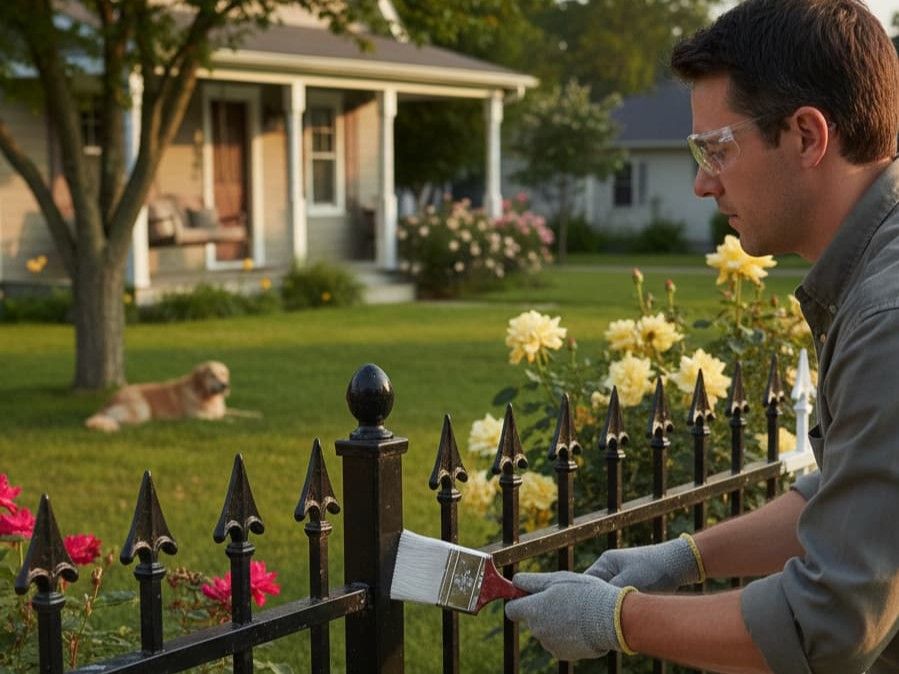
Paint vinyl fencing was sold to homeowners on one promise above all others no maintenance. No painting, no staining, just install it and forget it. That promise holds up until it doesn't. Sun exposure, harsh winters, and years of UV bombardment can leave white vinyl looking chalky, grey, or just plain tired. At that point, a lot of homeowners start wondering whether a coat of paint might bring it back.
The short answer is yes, you can paint a vinyl fence. The longer answer is that doing it wrong almost guarantees you'll be peeling flaking paint off your fence within a season or two. The material itself creates real challenges, and most standard exterior paints aren't designed for it.
Here's what you need to know before you pick up a brush.
Why Vinyl Is Difficult to Paint
Vinyl, or PVC, has an inherently smooth, non-porous surface. Paint needs something to grip onto. With wood or metal, there's texture and porosity that help paint bond. With vinyl, you're essentially asking paint to stick to a surface that was engineered to repel things.
The other issue is expansion and contraction. Vinyl moves significantly with temperature changes, especially in a city like Chicago where you can see 90-degree summers and subzero wind chills in the same year. A paint film that doesn't flex with the material will crack and peel, often within a single season. Standard exterior latex or oil-based paints simply aren't formulated to handle that kind of movement.
That's not a reason to avoid vinyl fence painting altogether it's a reason to be selective about how you approach it.
When Painting Vinyl Actually Makes Sense
Before committing to the process, it's worth asking whether painting is the right solution for your situation.
Painting works best when:
The fence is structurally sound but visually faded or discolored
You want to change the color of an existing fence without replacing it
The surface has minor chalking or UV oxidation but no deep scratches, cracks, or warping
Budget or timing makes replacement impractical right now
Painting is not a fix for damaged vinyl. Cracked panels, warped posts, or brittle sections from UV degradation won't be saved by a coat of paint. In those cases, the more practical solution is section replacement or a full fence upgrade. Some homeowners also discover at this stage that a different material, like aluminum or a chain link fence, would serve them better long-term particularly in high-traffic or high-exposure areas.
Choosing the Right Paint for Vinyl
This is where most DIY vinyl fence painting attempts go wrong. Not all exterior paints are compatible with PVC.
Look for paints specifically formulated for vinyl or plastic. Products labeled "vinyl-safe" are designed to flex with the material and resist the kind of thermal expansion that causes cracking. Several major paint manufacturers, including Sherwin-Williams and Benjamin Moore, offer exterior paints that are rated for vinyl surfaces. Check the product data sheet if it doesn't explicitly mention vinyl or PVC compatibility, skip it.
Color choice also matters more than most people realize. Darker colors absorb more heat, which amplifies thermal expansion and puts more stress on the paint film. This doesn't mean you can't go dark, but it does mean you need a paint product specifically tested for darker pigments on vinyl. Many vinyl-safe paints have color restrictions for exactly this reason, particularly anything darker than a medium grey or brown.
As a general rule, sticking close to the original color or going lighter gives you the best chance of a durable result.
Surface Preparation: The Step Most People Rush
Even with the right paint, poor prep will undermine the whole job. Vinyl looks clean, but it collects a thin layer of oxidation, mildew, and atmospheric grime that will prevent proper adhesion.
The preparation process should go like this:
Clean thoroughly. Use a diluted solution of white vinegar and water, or a dedicated vinyl fence cleaner. A pressure washer on a low setting works well for large sections. Avoid anything abrasive that could scratch the surface.
Let it dry completely. Painting over damp vinyl traps moisture and causes adhesion failure. Give it at least 24 to 48 hours after washing, especially in humid conditions.
Lightly sand or scuff the surface. This step gets skipped constantly. A light pass with fine-grit sandpaper (around 220 grit) gives the paint something to hold onto. You're not trying to rough it up aggressively, just break the surface gloss enough to improve mechanical bonding.
Apply a bonding primer. A primer formulated for slick, non-porous surfaces is essential unless your chosen paint is a self-priming vinyl-safe product. Skipping primer is the single most common cause of premature peeling on painted vinyl.
Application Tips for a Lasting Finish
Once prep is done properly, the application phase is relatively straightforward but a few details still matter.
Paint in moderate temperatures. Ideal conditions are between 50°F and 85°F, with low humidity and no direct harsh sunlight on the surface during application. Painting in direct sun on a hot day causes the paint to dry too quickly, leaving brush marks and reducing adhesion.
Apply thin, even coats rather than one thick coat. Two thin coats with proper dry time in between will always outlast a single heavy application. With vinyl, a thick coat is more likely to crack as the material moves.
A foam roller is often better than a brush for flat panels, as it leaves a smoother finish with fewer marks. Use a brush for detail work on posts, caps, and lattice sections.
What to Avoid Entirely
A few things will ruin a vinyl paint job faster than anything else:
Oil-based paints not rated for vinyl: they don't flex and will crack in the first cold snap
Dark colors without verified vinyl-safe formulations: the heat absorption accelerates failure
Skipping the cleaning and scuffing steps: even a perfectly chosen paint won't stick to a dirty, glossy surface
Painting over existing peeling or flaking sections: if old paint is already coming off, stripping it back to bare vinyl is the only viable path forward
It's also worth noting that vinyl's original color is baked into the material rather than applied as a surface coating. Even a well-executed paint job will require eventual reapplication typically every three to five years depending on climate and sun exposure.
When to Call a Professional Instead
For small residential fences in good condition, a careful DIY approach is entirely achievable. But for large properties, historic or architecturally detailed fencing, or commercial settings where the appearance has to hold up to scrutiny, professional fence painting is usually the smarter route.
Professionals have access to commercial-grade primers and coatings, spray equipment that delivers a more even finish than roller application, and the experience to spot issues like micro-cracking or panel degradation that aren't always obvious to the untrained eye. For properties that need to meet HOA standards or where curb appeal directly affects value, the difference in outcome is usually significant.
If you're unsure whether your fence is worth painting or whether replacement is the more cost-effective path, getting an assessment from an experienced contractor is worth the time. Companies like paint vinyl fence specialists who work regularly with Chicago's older housing stock can identify whether the vinyl itself is still structurally viable before you invest time and money in a paint job that won't last.
Key Takeaways
Vinyl can be painted successfully, but only with products specifically formulated for PVC or vinyl surfaces
Surface preparation, including cleaning, scuffing, and priming, is as important as the paint itself
Stick to lighter colors or verified vinyl-safe dark color formulations to minimize thermal stress on the paint film
Painting is a cosmetic fix, not a structural one; damaged or brittle vinyl needs repair or replacement first
In high-visibility or large-scale applications, professional application generally outperforms DIY in durability and finish quality
Frequently Asked Question
Can you use regular exterior house paint on a vinyl fence? Most standard exterior paints are not formulated to flex with vinyl's thermal expansion and will crack or peel quickly. Always check that the product is explicitly rated for vinyl or PVC surfaces before applying.
Do I need to prime a vinyl fence before painting? In most cases, yes. A bonding primer designed for slick, non-porous surfaces significantly improves adhesion. Some premium vinyl-safe paints are self-priming, but these are the exception rather than the rule.
How long does paint last on a vinyl fence? With proper preparation and the right paint, a vinyl fence paint job typically lasts three to five years. Climate plays a big role harsh winters and intense UV exposure in places like Chicago will shorten that lifespan without regular maintenance.
What's the best color to paint a vinyl fence? Lighter colors generally perform better because they reflect heat rather than absorbing it. If you want to go darker, choose a paint specifically tested for darker pigments on vinyl and check the manufacturer's color restrictions.
Is it better to paint or replace an aging vinyl fence? It depends on the condition of the material. If the fence is structurally sound with no cracking, warping, or brittleness, painting is a reasonable option. If the vinyl itself is degraded, replacement will almost always be more cost-effective in the long run than painting over a compromised surface.
Ready to Explore Your Options?
If you're weighing whether to paint, repair, or replace your fence, getting a professional opinion first saves a lot of second-guessing. Americana Iron Works and Fence offers free quotes for fence work across Chicago and the surrounding area.
Conclusion
Painting a vinyl fence is completely doable but it's one of those projects where the details determine the outcome. The right paint, proper prep, and realistic expectations about longevity will get you a clean, refreshed result. Cut corners on any of those, and you'll be dealing with peeling paint before the next season is out.
If the fence is worth saving, it's worth doing properly. And if it's not, knowing that before you spend a weekend painting it is arguably the most useful information you can have.