
Every summer, at least one Chicago homeowner finds out the hard way that their backyard pool is out of compliance. Not from a neighbor complaint, but from a city inspector, a liability claim, or worse. Pool fencing isn't just a nice-to-have feature, in Illinois, it's the law, and the rules are more specific than most people expect.
If you're installing a new pool, buying a property with an existing one, or just trying to make sure you're covered, understanding the pool fence requirements Illinois law sets out is essential. This guide covers both state-level requirements and Chicago-specific rules, so you know exactly what applies to your property.
What Illinois State Law Says About Pool Barriers
Illinois doesn't have a single statewide pool fencing statute that applies universally to every property. Instead, the framework comes from a combination of the Illinois Swimming Pool and Bathing Beach Act, local municipal codes, and building permit requirements enforced at the county or city level.
That said, most Illinois municipalities follow guidance based on the International Residential Code (IRC) and the International Building Code (IBC), which include specific pool barrier provisions. If your town or city has adopted these codes (and most in the Chicago metro area have), those standards form the baseline you need to meet.
The Baseline Requirements Under IRC Guidelines
The IRC sets out clear minimums for residential pool barriers. These aren't suggestions they're the standards most Illinois building departments use when issuing pool permits and conducting inspections.
Here's what the IRC-based framework typically requires:
Fence height: At least 48 inches (4 feet) measured from the finished grade on the outside of the barrier
Openings: No gap in the fence should allow a 4-inch sphere to pass through (this prevents young children from squeezing through)
Vertical clearance: The bottom of the fence should have no more than a 2-inch gap from the ground
Gates: All pool gates must be self-closing and self-latching, with the latch on the pool side of the gate and positioned at least 54 inches from the bottom
No climbable structure: The fence must not have horizontal rails or protrusions that could be used as footholds
These requirements exist for a clear reason. Drowning is the leading cause of accidental death in children under five in the United States, according to the Centers for Disease Control and Prevention (CDC). A properly installed pool barrier reduces a child's risk of drowning by an estimated 83%, based on research cited by the American Academy of Pediatrics.
Chicago-Specific Pool Fence Rules
Chicago operates under the Chicago Building Code, which in some areas is stricter than the IRC baseline. The city also has its own permit and inspection process through the Department of Buildings.
What Chicago Requires
In Chicago, any residential pool over 24 inches in depth must have a barrier that completely surrounds the pool area and separates it from the rest of the property. The barrier must:
Be at least 4 feet high (some inspectors and permit applications reference 5 feet for in-ground pools, always verify with your local permit office)
Have a self-latching gate that opens outward, away from the pool
Not use the wall of a house as part of the barrier unless the home has an approved door alarm system meeting code
Chicago also enforces permits seriously. Installing a pool without the proper permit and fence inspection can result in fines, forced removal, or complications when you sell the property.What About Above-Ground Pools?
Above-ground pools in Chicago and throughout Illinois are not automatically exempt just because the pool is elevated. If the top of the pool wall is less than 48 inches from the ground, an additional barrier is required. If you use a ladder or steps to access the pool, those must be removable or lockable when the pool is not in use.
A common misconception is that the pool wall itself counts as the barrier. It may but only if it meets height and climbability standards, and even then, the access point (ladder, steps, deck connection) must be secured.
Fence Materials That Meet Pool Barrier Standards
Not every fence type works for pool compliance. The material matters as much as the dimensions.
Aluminum Fence
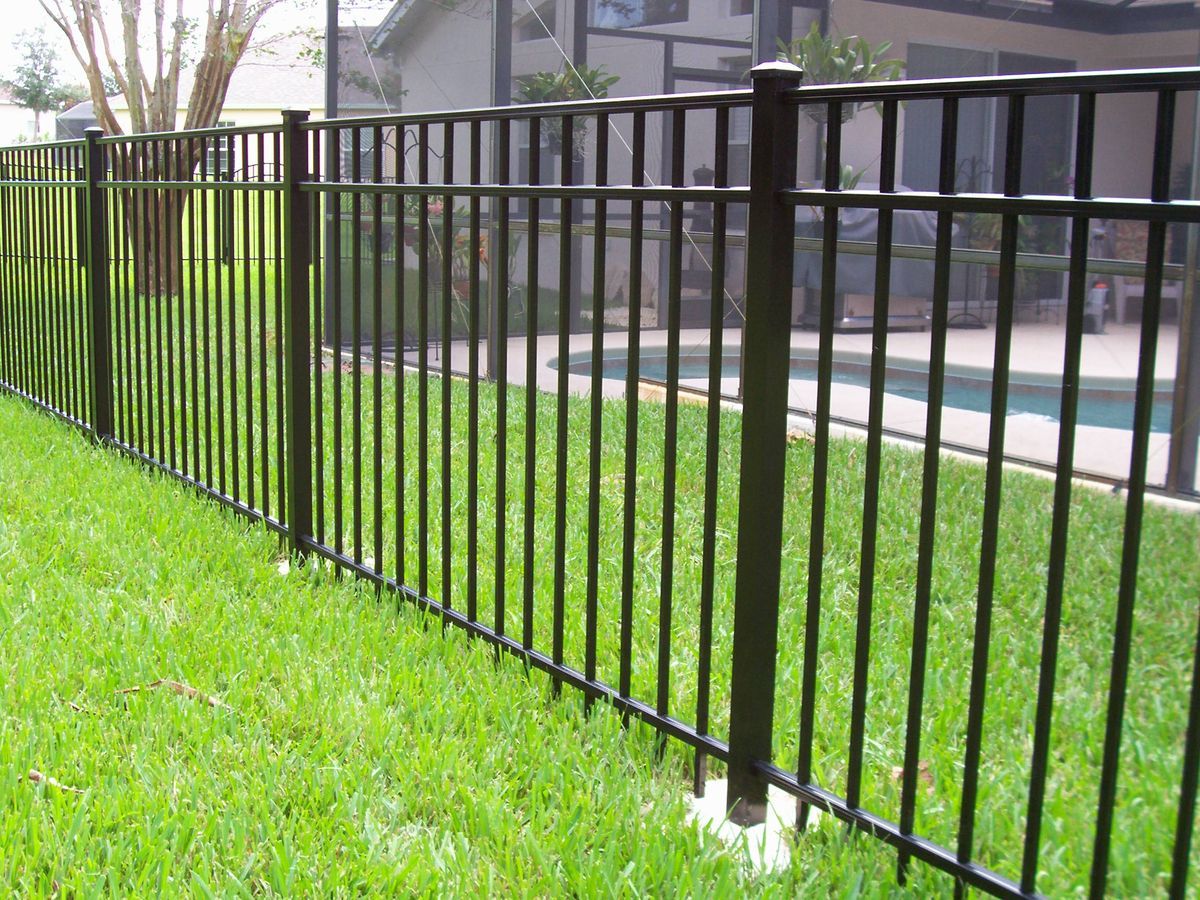
Aluminum fence is one of the most common choices for pool enclosures in Chicago and across Illinois. It's rust-resistant, low-maintenance, and available in styles that provide the vertical picket spacing required by code. Because aluminum doesn't corrode, it holds up well against pool chemicals and year-round Chicago weather.
For pool compliance, choose a style with no horizontal mid-rails on the outside of the fence (which could be used as climbing footholds) and confirm that the picket spacing meets the 4-inch rule. Working with a qualified aluminum fence installation professional ensures the fence is measured, installed, and positioned correctly relative to the pool and the grade of your yard.
Wrought Iron and Ornamental Steel
Wrought iron and ornamental steel fences are a popular choice in older Chicago neighborhoods, where aesthetics matter as much as function. These fences are strong, durable, and typically have the vertical picket design that satisfies pool barrier rules.
The key consideration with iron is maintenance. Iron fences near pools are exposed to water splashing, humidity, and chemical air, which can accelerate rust if the coating isn't maintained. Annual or biennial painting and sealing makes a significant difference in longevity.
Chain Link
Chain link is allowed in some jurisdictions but is often flagged for pool use because of its diamond pattern, which can act as a climbing surface for children. If you choose chain link, a slat insert that eliminates the climbable pattern may be required, depending on your inspector. Check with your local building department before committing to this material for a pool barrier.
Wood
Wood fences can meet pool barrier requirements, but horizontal wood boards or rail designs are often disqualified because of the climbability issue. A solid vertical-board privacy fence, on the other hand, may meet requirements in many areas. Wood near water also requires more upkeep than metal alternatives.
Gates: The Most Overlooked Part of Pool Compliance
A pool fence is only as effective as its gate. This is the area where a lot of otherwise-compliant pool barriers fall short during inspections.
Gates must be:
Self-closing, meaning they return to the closed position on their own without manual assistance
Self-latching, meaning the latch engages automatically when the gate closes
Outward-opening, so a child pushing against the gate from the pool side cannot inadvertently open it
Fitted with a latch positioned high enough (typically 54 inches or more from the ground) or on the pool side, so a child cannot easily reach it
If you're replacing an existing gate or adding one to a pool enclosure, working with a full-service commercial & residential gate company ensures the hardware, swing direction, and latch placement are all configured to meet local code from day one.
Permits, Inspections, and What Happens If You Skip Them
In Chicago, any new pool installation requires a building permit. The fence and barrier are part of that permit process. An inspector will verify that your barrier is in place and compliant before the pool can be used.
If you're buying a home with an existing pool, don't assume the fence is up to code. Standards change, previous owners may have made modifications, or the original installation may have never been inspected. A pre-purchase inspection from your building department or a licensed contractor can save you from inheriting someone else's violation.
Fines for non-compliant pools in Chicago can run into the hundreds to thousands of dollars, and the city can require immediate remediation. More importantly, if someone is injured at a pool that doesn't meet safety requirements, property owners can face significant civil liability.
Key Takeaways
Illinois does not have a single statewide pool fence law, but most municipalities (including Chicago) enforce requirements based on the IRC and local building codes
The standard minimum fence height for pool barriers is 48 inches, with no gaps larger than 4 inches
Gates must be self-closing, self-latching, and outward-opening, with the latch positioned out of reach of young children
Aluminum and ornamental iron are the most code-compatible materials for pool fencing in Illinois; chain link and horizontal-rail wood designs often present compliance issues
Always pull a permit for pool installation and have the barrier inspected before using the pool
Frequently Asked Questions
Does every pool in Illinois need a fence? Most residential pools in Illinois that are deeper than 24 inches require a barrier, but the exact rule depends on your municipality. Chicago's building code applies within city limits, while suburban areas follow their own local codes, most of which mirror IRC standards. Always check with your local building department before starting any pool project.
Can the wall of my house serve as part of the pool barrier? In some cases, yes. Chicago's building code allows a house wall to serve as part of the barrier, but only if the doors leading from the house to the pool area have approved alarms that sound when the door is opened. This is a specific code provision, and it must be verified with your building department and confirmed during inspection.
What's the penalty for not having a code-compliant pool fence in Chicago? Penalties vary depending on the nature and duration of the violation, but fines can be substantial, and the city may require you to install a compliant barrier before the pool can be used. Beyond fines, the civil liability risk for an unenclosed pool is significant if someone is injured on the property.
Do above-ground pools need a fence in Illinois? Yes, in most cases. If the pool wall itself is not at least 48 inches above grade, an additional fence barrier is required. Ladders and steps must also be secured or removed when the pool is not in use to prevent unsupervised access.
How do I know if my existing pool fence is still up to code? Start by measuring the height and checking for gaps larger than 4 inches. Test your gate to confirm it self-closes and self-latches properly. If the fence has been in place for more than a few years or you've made any changes to the yard grade, it's worth having a licensed fence contractor assess it. Code standards can be updated, and older installations don't always grandfather in automatically.
Conclusion
Pool fence compliance in Illinois isn't complicated once you know the framework, but it does require attention to detail. Height, gate hardware, material choice, and permit documentation all play a role in whether your barrier holds up to a city inspection or a legal standard.
A pool should be something you enjoy without liability hanging over it. If you're not sure whether your current barrier is up to code, or you're ready to install one that is, don't leave it to guesswork. Get a free quote from American Fence Company and have a Chicago-area specialist confirm your fence meets Illinois requirements before your next inspection or swim season.