
Chicago loses roughly 15 to 20 percent of its balcony railings to structural rust or code violations every decade, according to estimates from local building inspection data. That figure is not surprising given what the city throws at exterior metalwork: freeze-thaw cycles, road salt drift, and humid summers that accelerate corrosion on anything less than well-maintained iron.
For property owners in neighborhoods like Lincoln Park, Wicker Park, or Pilsen, where vintage two-flats and greystone buildings still define the streetscape, railing replacement is rarely as simple as swapping out a generic panel. The architecture demands something that fits. And that is exactly where custom ironwork earns its keep.
Why Custom Over Off-the-Shelf?
Prefabricated aluminum or welded-steel panels are readily available from big-box suppliers. They are also built to generic dimensions, standard post spacing, and a limited set of profiles. On a modern suburban deck, that works fine. On a 1920s Chicago two-flat with an irregularly sized balcony, non-standard post placement, or a distinctive masonry fascia, those panels rarely fit without visible compromises.
Custom iron railings are fabricated to the exact measurements of the space, which matters more than most homeowners realise until they have a contractor standing on their balcony saying the off-the-shelf option is "close enough." Close enough is not compliant. And in Chicago, where the Department of Buildings actively inspects residential and commercial structures for railing height, balusters spacing, and load-bearing capacity, close enough can become a violation.
Beyond code compliance, there is the aesthetic argument. Chicago's older residential stock carries architectural details, brick profiles, and ironwork traditions that are genuinely worth preserving or echoing in new work. A well-designed custom railing adds real curb appeal and can positively affect a property's perceived value.
Design Options Worth Knowing
Traditional Scrollwork and Picket Styles
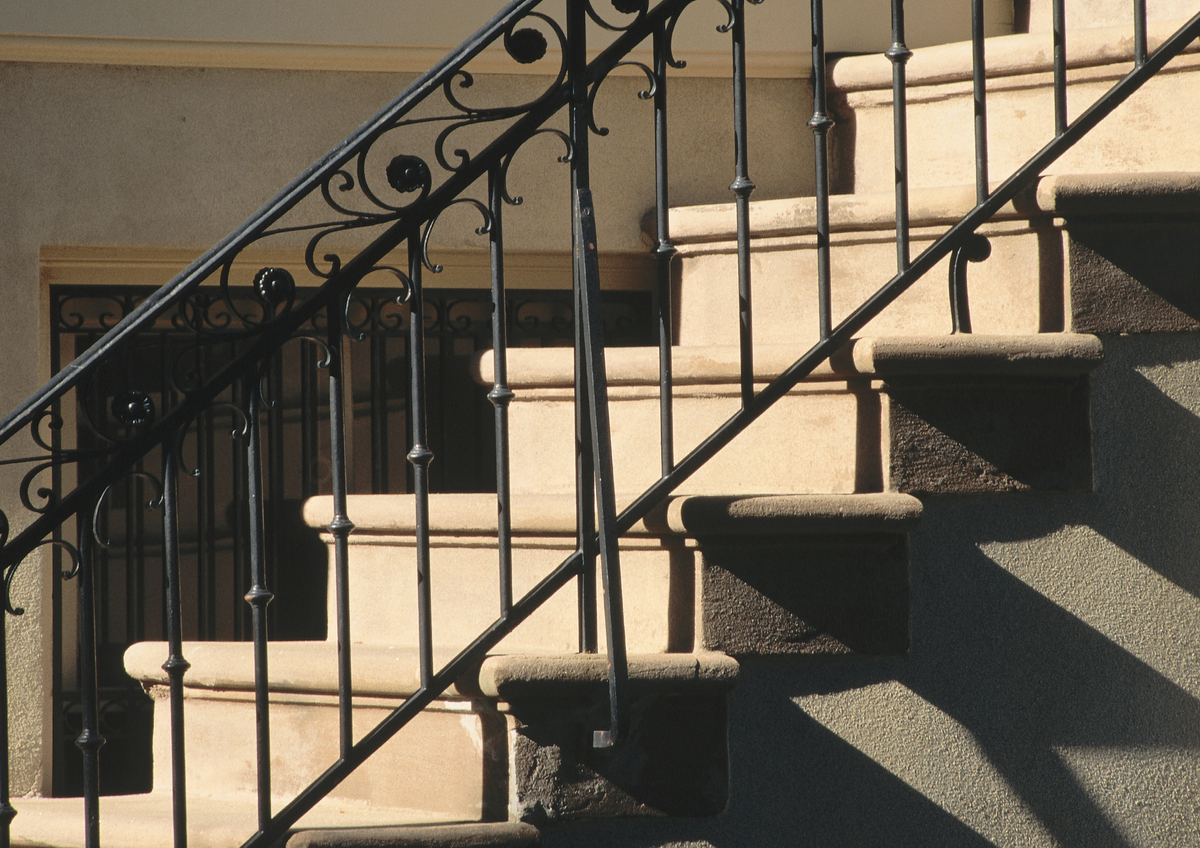
The most recognisable style in Chicago's older neighborhoods is the vertical picket railing, often paired with scrollwork collars, finial tops, or horizontal bar accents. These designs trace their lineage to 19th-century wrought iron traditions and hold up visually against brick and brownstone exteriors. The pickets themselves can be plain, twisted, or fluted, and spacing is governed by the IRC's 4-inch rule, which prohibits gaps wide enough for a 4-inch sphere to pass through.
Scrollwork panels add complexity and visual weight. They suit properties where the ironwork is meant to be a feature rather than background detail. Keep in mind that more scroll complexity means more surface area to paint and maintain over time.
Flat Bar and Contemporary Profiles
Not every Chicago homeowner wants historical reproduction work. Flat bar railings, cable systems, and geometric grid panels are increasingly popular on renovated properties where the interior has been modernised and the exterior should follow suit. Flat bar iron offers a cleaner profile, less surface area to corrode, and a look that reads as intentionally modern rather than simply minimal.
Cable systems, which use stainless steel wire stretched horizontally between iron posts, are another option gaining traction, particularly on rooftop decks and contemporary additions. They preserve sightlines and perform well in urban settings where views matter.
Custom Fabricated Panels for Non-Standard Spaces
Some balconies present genuine fabrication challenges: curved balcony edges, asymmetric widths, or attachment points that sit at odd angles relative to a masonry wall. These situations essentially rule out any standard product. Custom fabrication, where a piece is designed, cut, and welded to the specific geometry of the space, is the only workable solution. This is particularly relevant for corner balconies on vintage Chicago buildings, where the railing needs to turn and meet at an angle that no catalogue product accounts for.
Material Considerations
Wrought Iron vs. Mild Steel
True wrought iron, worked by a blacksmith and shaped under heat, is rare in modern fabrication. Most of what is sold as "wrought iron" today is actually mild steel that has been fabricated to replicate the look. Mild steel is entirely appropriate for residential and commercial railings when properly primed and painted, but it does require maintenance to prevent rust.
The key variable is the coating system. A properly applied epoxy primer followed by a high-quality oil-based or powder coat finish dramatically extends the service life of a mild steel railing. Powder coating, applied in a controlled shop environment, tends to outperform site-applied paint in terms of adhesion and longevity, but it requires the piece to be taken to a facility for application.
Aluminum as an Alternative
Aluminum does not rust, which makes it a genuinely low-maintenance option. The trade-off is feel and visual weight. Aluminum is lighter, and on a period property, that lightness can read as flimsiness even when the piece is structurally adequate. For contemporary builds or rooftop applications where corrosion resistance is the primary concern, aluminum makes strong practical sense. For a vintage building where the ironwork is meant to look substantial, most designers and restoration professionals still lean toward steel.
What the Installation Process Actually Involves
Site Assessment and Measurement
Proper installation starts well before anything is fabricated. A thorough site visit covers balcony dimensions, post placement options, substrate condition (concrete, wood, or masonry), any existing anchor points, and the condition of the balcony structure itself. A railing anchored into a deteriorated concrete slab will fail regardless of how well the ironwork is made.
Fabrication Lead Times
Custom fabrication takes time. Depending on design complexity and shop workload, lead times typically run two to six weeks for residential work. More complex commercial projects or large-scale panel work take longer. Homeowners who need to meet a city violation deadline should factor this in when planning, as waiting until the week before an inspection is genuinely problematic.
Structural Anchoring
Chicago building codes require balcony railings to meet specific load-bearing thresholds. The International Building Code, which Chicago adopts with local amendments, calls for railings to resist a 200-pound concentrated load applied in any direction at the top rail. Anchoring methods vary by substrate: epoxy-set anchor bolts work well in masonry, while through-bolted connections to a structural wood frame offer the most secure attachment to timber-framed decks.
Contractors experienced with Chicago's building stock understand that the anchoring solution often has to be adapted to older materials that do not behave like new construction. A surface that looks solid can be soft or cracked below the waterproofing layer.
Painting and Finishing
Raw steel should never be left uncoated outdoors for more than a few days. On-site finishing involves cleaning the steel, applying a rust-inhibiting primer, and then finish coats in the specified colour. Touch-up work is typically done after installation to address any areas disturbed during the anchoring process. The Chicago climate makes this step worth doing properly the first time, since a railing with compromised coating in even one section will start to rust and spread.
Teams that handle both fabrication and installation in-house, like the crew at Americana Iron Works & Fence, can coordinate the finishing schedule around weather and installation timing in a way that separate trades rarely manage as smoothly.
Code Compliance in Chicago
Chicago's Department of Buildings inspects properties regularly, and balcony railings are a common source of violations. The main failure points are railing height (minimum 36 inches for residential, 42 inches for commercial), baluster spacing, and structural integrity. A railing that is visually intact but no longer properly anchored is still a violation.
Property owners who receive violation notices have a limited window to remediate. The process involves permitting, inspection, and sign-off, which adds time to what many owners assume will be a quick job. Working with a contractor who understands the permitting process and has experience producing code-compliant custom iron railings significantly reduces the risk of delays or failed inspections.
Key Takeaways
Custom fabricated iron railings are the most reliable solution for Chicago's older building stock, where non-standard dimensions make off-the-shelf products a poor fit.
Design options range from traditional scrollwork and vertical pickets to flat bar profiles, cable systems, and fully custom geometric panels.
Mild steel with a proper primer and finish coat is the standard for most residential railings; aluminum is worth considering where corrosion resistance outweighs the aesthetic trade-off.
Chicago building codes set specific requirements for railing height, baluster spacing, and load resistance; code compliance is not optional, and violation remediation involves permitting as well as physical work.
Lead times for custom fabrication typically run two to six weeks; homeowners with active violations or pending inspections should start the process early.
Frequently Asked Questions
How long does a custom iron railing typically last on a Chicago balcony? With proper installation, priming, and periodic repainting every five to eight years, a well-fabricated mild steel railing can last several decades. The limiting factor is almost always coating failure that leads to surface rust, not the structural integrity of the iron itself. Staying on top of paint maintenance is the single most effective way to extend service life.
Do I need a permit to replace a balcony railing in Chicago? In most cases, yes. Chicago requires permits for structural work, including railing replacement, particularly when the work involves changes to anchoring, height, or configuration. The permit process also ensures the work is inspected and documented, which matters for liability purposes if the railing is ever involved in an incident.
What is the difference between wrought iron and mild steel for railings? True wrought iron is a historical material worked by hand that is rarely used in modern fabrication. Most contemporary "wrought iron" railings are made from mild steel, which is shaped and welded to replicate the traditional aesthetic. Mild steel performs well in exterior applications when properly coated, and it is generally more cost-effective to fabricate and repair than historically accurate wrought iron work.
Can an iron railing be installed on a deteriorated concrete balcony? Not safely. If the substrate is cracked, spalling, or structurally compromised, the anchors holding the railing in place cannot achieve the required load resistance. In practice, balcony restoration and railing work often need to happen together, with the structural surface repaired before the ironwork is anchored into it.
How do I choose between scrollwork and a contemporary design for a vintage Chicago property? The architecture of the building is the most useful guide. Properties with original decorative ironwork, masonry detailing, or period facades generally look best with a railing that echoes those traditional elements. Renovated interiors with a modern aesthetic sometimes call for a clean contemporary profile. When in doubt, looking at what the original railing on similar nearby buildings looked like provides a reliable reference point.
Balcony railings sit at the intersection of safety, compliance, and architecture. Getting them right means more than choosing a finish colour. It means understanding the substrate, the code requirements, the material options, and the lead times involved in fabricating something that actually fits the space. For Chicago property owners, that combination of constraints makes custom ironwork less of a luxury choice and more of a practical necessity, especially on buildings that predate standardised construction and carry architecture worth preserving.
If you are dealing with a current violation or want to get ahead of a potential inspection, the practical first step is to contact us for an assessment before committing to a specific design or timeline.