
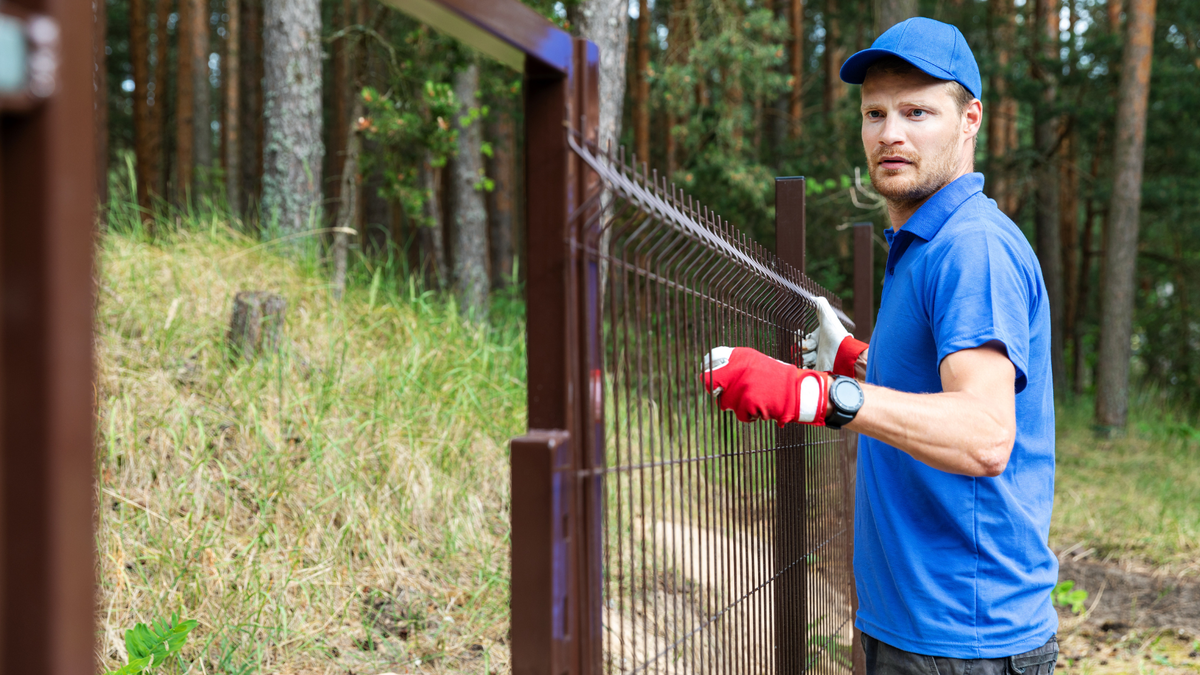
A gate that drags, sticks, or swings open on its own is not just a nuisance. It is a security gap, a liability concern, and in some cases, the early warning sign of a structural problem that will only get more expensive to ignore. Chicago's older residential neighborhoods, from Lincoln Park to Pilsen to Bridgeport, are full of wrought iron gates that have been standing for decades, absorbing freeze-thaw cycles, rust, and daily mechanical stress. Some of them are fine. A lot of them are not.
The question most property owners get wrong is not whether to repair, but which type of repair the gate actually needs. Slapping a coat of paint over a misaligned frame or tightening loose hardware on a cracked weld rarely solves anything. Knowing the difference between a welding problem, an alignment problem, and a hardware problem will save you time, money, and the frustration of watching the same issue come back six months later.
Why Iron Gates Fail: The Three Core Problem
Iron gates fail for identifiable, predictable reasons. Understanding the category of failure tells you a lot about what the repair involves and how urgent it is.
Weld Failures and Cracked Joints
Wrought iron and steel gates are assembled at welded joints. Over time, those joints experience repeated stress from the gate swinging open and closed, wind loading, and physical impact. In Chicago's climate, the problem compounds significantly. Water infiltrates microscopic surface cracks, freezes, and expands, weakening the joint from the inside out.
A failed weld does not always look dramatic. Sometimes it presents as a hairline crack at the corner of a frame. Sometimes a decorative element, such as a scroll or finial, has started to work loose. In more advanced cases, the joint pulls apart visibly, and the gate begins to rack or distort out of square.
Attempting to repair a failed weld without proper equipment and technique is a common mistake. A surface grind and a bead of caulk might look fine temporarily, but structural welding requires the right process, the right filler material, and enough heat penetration to create a genuine bond. According to the American Welding Society, a significant percentage of structural weld failures in ornamental metalwork are attributable to improper technique or insufficient joint preparation, not to the material itself.
Realignment: The Problem Behind the Problem
A gate that is difficult to open, drags along the ground, or does not latch correctly is almost always a realignment issue. The source of that misalignment is usually one of three things: post movement, hinge failure, or frame distortion.
Post movement is particularly common in Chicago because of the soil conditions and frost depth. The Chicago area frost line sits at approximately 42 inches below grade, and posts that were not set deep enough, or were set in poor concrete, can shift seasonally. Even a small amount of post lean translates to significant gate misalignment at the latch end.
Hinge failure is more straightforward but equally disruptive. Hinges bear the full dynamic load of the gate every time it moves. When a hinge pin wears down, when a mounting weld cracks, or when the hinge plate pulls away from the post, the gate drops on the hinge side and the opposite corner lifts. The symptoms are classic: difficulty opening, visible gap at the bottom of the latch side, and a latch that no longer lines up with its strike.
Frame distortion, often the result of a vehicle impact or gradual material fatigue, means the gate itself is no longer square. This is the most involved repair because it may require disassembly, reshaping, and re-welding before reinstallation.
Hardware Replacement: More Than Just Swapping Parts
Gate hardware, including hinges, latches, latch receivers, drop rods, and lock cylinders, is a wear category on its own. Even when the frame and posts are sound, worn or corroded hardware will make a gate feel broken.
One detail worth understanding is that hardware on older Chicago iron gates is often custom-fit or non-standard. A hinge that was fabricated to match a specific gate weight and frame profile in 1985 will not be sitting on a shelf at a hardware store today. This is where the difference between a general handyman and a metal fabrication specialist becomes very real. Replacing hardware on older wrought iron work often means fabricating a compatible component, not just pulling one off a rack.
Lock hardware deserves special attention on gates that serve a security function. A gate that latches but does not lock, or that has a lock mechanism that has seized from rust, offers only the appearance of security. Replacing a corroded cylinder or upgrading to a keyed deadbolt-style lock on a pedestrian gate is a straightforward job when done alongside other repairs, but it should not be overlooked.
How to Assess Your Gate Before Calling a Contractor
A basic visual and physical assessment takes about five minutes and will help you communicate the problem clearly when you do call for an estimate.
Start by examining the hinges at close range. Look for rust weeping from hinge pins, visible cracks at the mounting welds, and any gap between the hinge plate and the post. If the hinge side of the gate has dropped, you will often see a crescent-shaped wear mark on the ground where the gate drags.
Next, check the posts. Stand at the side of the gate and sight down the post line. Any visible lean toward or away from the gate opening suggests post movement. Push on the post firmly. Even slight movement at the base indicates a foundation issue that needs to be addressed alongside any gate work.
Operate the latch. Does it engage smoothly? Is there a gap between the latch bolt and the strike? A misaligned latch that you are forcing closed every day is accelerating wear on both the hardware and the frame.
Finally, look at the frame itself, particularly the corners and any welded ornamental elements. Rust streaks running from a joint, bubbling paint, or visible cracks at weld points are all indicators of joint failure in progress.
What Professional Gate Repair Actually Involves
When a qualified contractor assesses a damaged iron gate, they are working through a decision tree: what is structurally compromised versus what is cosmetically worn, and what needs to be done in what order.
Weld repairs come first. There is no point realigning a gate with a cracked frame because the frame will continue to distort under load. Proper weld repair means grinding the failed joint back to clean metal, re-welding with the appropriate process for the material (MIG for mild steel, TIG for thinner or more intricate work), and grinding the finished bead smooth before any surface treatment.
If posts have shifted, that needs to be addressed before hardware is replaced, because a new hinge set installed on a leaning post will fail for the same reason the old one did. Post resetting typically involves excavating around the base, resetting in concrete, and allowing adequate cure time before the gate is rehung.
Hardware replacement is the final stage, but it should be specified at the start of the project. A contractor who does the structural work but leaves corroded hinges in place is leaving the repair incomplete.
For anyone dealing with this type of problem on a Chicago property, the team at Americana Iron Works & Fence brings over 30 years of experience and more than 20,000 completed jobs to exactly this kind of work, with in-house fabrication capability that makes custom hardware and frame work a practical option rather than an afterthought.
When to Repair Versus When to Replace
This is the question every property owner eventually asks. The honest answer is that most iron gates, even heavily rusted or structurally compromised ones, can be repaired to a high functional standard if the posts are sound and the overall frame geometry is recoverable. Iron is forgiving material when you have skilled welders working with it.
Replacement makes more sense when the gate has suffered impact damage that has distorted the frame beyond practical reshaping, when the post condition is too deteriorated to anchor a repaired gate reliably, or when the owner wants to change the design, height, or configuration.
A partial replacement, replacing one panel of a double gate while retaining the other, is also a viable option when the damage is isolated. In-house fabrication means a new panel can be built to match the existing ironwork precisely, preserving the visual consistency of the installation.
For a more detailed look at what Chicago iron gate repair involves and what to expect from a professional assessment, the gate repair service page covers the scope of work and the types of problems most commonly addressed on residential and commercial properties across the city.
The Role of Metal Painting in Long-Term Gate Maintenance
Structural repairs without surface treatment are a missed opportunity. Bare or poorly coated iron exposed to Chicago weather will begin to rust within a single season. Any repair that involves grinding, welding, or hardware removal creates new bare metal that needs to be primed and painted before the job is complete.
The correct process is a rust-inhibiting primer applied to clean, dry metal, followed by an oil-based or epoxy topcoat appropriate for exterior metal. Rushing this step, or painting over existing rust without removing it first, undermines the repair and accelerates future deterioration.
A complete gate repair job should always include a surface treatment component. It is not cosmetic. It is protective.
Key Takeaways
Most iron gate problems fall into one of three categories: weld failure, misalignment, or hardware wear. Identifying the correct category is the first step toward an effective repair.
Chicago's frost depth and soil conditions make post movement a significant cause of gate misalignment, particularly in older residential installations.
Hardware on older wrought iron gates is frequently non-standard and may need to be fabricated rather than sourced off the shelf.
Weld repairs, post resetting, and hardware replacement should be sequenced in the correct order. Skipping steps creates repeat failures.
Any repair that involves grinding or welding must be followed with proper priming and painting to prevent rapid re-rusting.
Frequently Asked Questions
How do I know if my gate problem is a welding issue or a hardware issue? If the gate frame itself feels loose, wobbly, or visibly racked out of square, that points to a weld or structural issue. If the frame is solid but the gate drags, sticks, or does not latch cleanly, hardware or alignment is usually the cause. In practice, many repairs involve both.
Can a badly rusted iron gate be repaired, or does it need full replacement? Surface rust, even heavy surface rust, is generally treatable through mechanical grinding, rust converter treatment, and repainting. Structural rust that has eaten through the metal at load-bearing joints is a different matter. A professional assessment will tell you whether the affected sections can be cut out and replaced or whether full replacement is more practical.
How long does a professional gate repair typically take? A straightforward hinge replacement or hardware swap can often be completed in a few hours. More involved work, including post resetting with concrete cure time, weld repair, and painting, may span two to three days. Custom fabrication for a replacement panel adds lead time depending on the complexity of the design.
Is gate repair something a general handyman can handle? Basic hardware tightening and latch adjustment, yes. Anything involving welding, post resetting, or fabricating replacement components requires proper equipment, skill, and ideally experience with ornamental ironwork specifically. Improper welding on a structural joint can look fine and fail within a season.
How do I get started with a gate repair estimate in Chicago? The most straightforward approach is to document the problem with a few photos and a description of what the gate is doing, then reach out to a qualified contractor. You can contact us directly for a free quote and a professional assessment of what the repair actually requires.
Closing Thoughts
Iron gates are built to last. The ones lining the courtyards and driveways of Chicago's older neighborhoods have already proven that, often standing for 40 or 50 years with minimal attention. The issue is that minimal attention eventually becomes neglect, and neglect turns a straightforward repair into a replacement conversation.
Catching weld failures early, addressing misalignment before it compounds into post and hardware damage, and treating bare metal properly after any repair work are the habits that keep iron gates functional and looking right for another generation. It is not complicated. It just requires knowing what to look for and who to call when the problem moves beyond a simple adjustment.