
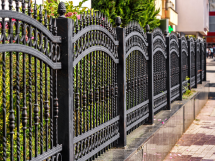
Chicago's older residential neighborhoods are full of iron fencing that has stood for decades without significant repair. Walk through Lincoln Park, Beverly, or the Gold Coast and you will notice something: the fences that still look sharp after 40 or 50 years are almost always wrought or ornamental iron. The ones that have buckled, rusted through, or simply vanished are usually cheaper alternatives that were never built to handle Chicago winters.
If you are weighing fence options for a Chicago home, understanding the specifics of ornamental iron, including style differences, appropriate heights, and how posts are properly anchored, will help you make a decision you will not regret in five years.
What Sets Ornamental Iron Apart From Other Residential Fencing
The term "ornamental iron" gets used loosely, so it helps to understand what you are actually buying. True wrought iron is increasingly rare and expensive. Most residential ornamental iron fencing installed today is steel-based, fabricated to replicate the look of traditional wrought iron, with pickets, scrollwork, and collars that match the architectural character of older Chicago homes.
What makes it stand out against alternatives like aluminum or vinyl is the weight, density, and structural integrity. Ornamental iron fencing does not flex under impact the way aluminum does. It holds its shape through freeze-thaw cycles that would cause other materials to shift or crack. Over time, properly maintained iron actually develops a patina that adds to its visual appeal rather than diminishing it.
From a property value standpoint, the National Association of Realtors has consistently noted that quality fencing contributes meaningfully to curb appeal, with iron and steel options ranked among the highest-return exterior upgrades for residential properties.
Choosing the Right Style for Your Property
Not all ornamental iron fencing suits every home. The style you choose should reflect the architecture of the property, the character of the street, and how the fence will function day to day.
Flat-Top Picket Fencing
The most common residential choice, flat-top ornamental iron features evenly spaced vertical pickets at uniform height. It is clean, understated, and fits almost any property type, from brick two-flats to newer construction. If you want a fence that defines your boundary without demanding visual attention, this is usually the right call.
Spear-Top and Finial Styles
Spear-top pickets, sometimes called pointed or fleur-de-lis finials, are a staple of Chicago's Victorian and Greystone-era architecture. Properties in Old Town, Wicker Park, and Logan Square often feature this style on their original fencing. When restoring or replacing period fencing, matching the finial profile matters more than most homeowners initially expect. The difference between a flat-top replacement and a period-appropriate spear-top is immediately visible.
Decorative Scrollwork Panels
For front entrances, courtyard separators, or properties where visual impact is a priority, panels with scroll or basket designs add significant character. These are typically used as accent sections within a longer fence run rather than the full perimeter. In-house fabrication is what makes truly custom scroll profiles possible, since off-the-shelf catalog options rarely match the proportions of older Chicago properties precisely.
Combination Styles
Some properties benefit from a combination approach, using a lower ornamental iron fence along the street-facing side and a taller, more functional fence toward the rear or alley. This is particularly common in neighborhoods where front-yard aesthetics are important to the block character but back-yard privacy is also a practical need.
Understanding Height: What Works Where
Height is partly an aesthetic choice and partly a practical and regulatory one. Chicago has specific zoning ordinances governing fence heights that vary depending on the fence's location on the property.
In most residential zones, front yard fences are limited to 42 inches (3.5 feet), while rear and side yard fences can typically reach 60 inches (5 feet) without a variance. Corner lots carry additional restrictions due to sightline requirements at intersections. Before any installation, confirming height restrictions with the City of Chicago's Department of Buildings is a necessary step, not an optional one.
Within those parameters, here is how height choices typically break down for ornamental iron:
36 inches (3 feet): Common for decorative front-yard borders. This height signals property boundaries and adds curb appeal without creating a barrier. It suits bungalows, cottages, and smaller lot homes well.
42 inches (3.5 feet): The standard upper limit for most Chicago front yards. It provides a more substantial presence than 36 inches while remaining compliant. Works well alongside mature landscaping where visual continuity matters.
48 to 60 inches (4 to 5 feet): Appropriate for side and rear yards where privacy, security, or child and pet containment is a factor. At this height, ornamental iron reads as a serious boundary while still allowing visibility through the pickets.
A well-selected ornamental iron fence at the right height does two things simultaneously: it complies with local code and it looks like it belongs on the property. Getting both right requires more thought than most homeowners invest at the outset.
Post Anchoring: The Factor That Determines Long-Term Performance
The most common reason ornamental iron fencing fails before its time is not rust or damaged pickets. It is post failure. Posts that were not anchored correctly shift under frost pressure, lean over years, and eventually compromise the structural integrity of the entire fence run.
Chicago's frost line sits at approximately 42 inches below grade, according to the Illinois State Geological Survey. This is the depth at which ground movement caused by freezing and thawing can physically displace a post. Any post set shallower than this is vulnerable to what contractors call "frost heave," where ice formation in the soil lifts and tilts the post over repeated seasonal cycles.
Proper Post Depth and Footing Diameter
For ornamental iron fencing, posts should be set a minimum of 42 to 48 inches below grade in the Chicago metro. For taller fence runs or corner posts handling gate loads, deeper footings are warranted. The footing itself should be poured concrete, flared at the base to resist uplift, with a diameter appropriate to the post gauge and fence height.
A common shortcut that causes long-term problems is setting posts in gravel or compacted fill without concrete. This may hold adequately in warmer climates but it will not survive Chicago frost cycles with any reliability.
Corner Posts and Gate Posts
These positions carry the highest load and require the most attention. Corner posts receive lateral stress from two directions simultaneously. Gate posts carry the dynamic weight and movement of a swinging gate, which creates stress concentrations at the base that a standard footing may not handle over time.
For gate posts on ornamental iron installations, it is standard practice to increase both the post gauge and the footing diameter, and to allow the concrete to cure fully before hanging gate hardware. Rushing this step is a reliable predictor of gate sag within a few years.
Surface Conditions in Chicago's Urban Environment
Chicago's residential lots often include mature tree roots, existing utility lines, and decades-old underground infrastructure that complicates post placement. In neighborhoods with established streetscapes, working around existing conditions while still achieving proper depth and alignment requires experienced judgment, not just equipment.
This is one of the reasons that property owners in older Chicago neighborhoods consistently benefit from working with Americana Iron Works & Fence, a contractor that has completed over 20,000 jobs across the city's varied building stock and understands the specific challenges that come with urban residential installation.
Coating, Finishing, and Long-Term Maintenance
Even the best ornamental iron requires surface protection to perform over decades. The standard approach combines a rust-inhibiting primer with a topcoat applied by brush or spray, matched to the iron's surface profile.
Powder coating is a popular alternative for newer fabricated pieces. It bonds electrostatically to the metal and creates a durable, uniform finish that outperforms conventional paint in terms of adhesion and chip resistance. The trade-off is that powder coating requires shop application and is harder to touch up in the field if damage occurs later.
For existing iron fencing that has already developed surface rust, proper preparation matters more than the coating product. The Chicago-based painting contractor community generally agrees that wire brushing, grinding, and chemical treatment of rust prior to coating is the difference between a finish that lasts five years and one that lasts fifteen.
Annual inspection is a realistic maintenance standard for ornamental iron in Chicago's climate. Look for chipping paint at weld points and picket bases, which are the first places moisture penetrates and rust develops. Catching this early means a simple spot repair. Ignoring it for a few seasons means full panel replacement.
Permits and Inspections: What Chicago Homeowners Should Know
Fence permits in Chicago are required in most cases, though the specific requirements depend on fence height, location on the property, and whether the property falls within a historic preservation district. The Chicago Department of Buildings issues fence permits, and failure to pull one before installation can result in a stop-work order or required removal.
Properties within designated Chicago Landmark districts, including sections of Pullman, Prairie Avenue, and several North Side neighborhoods, may face additional review through the Commission on Chicago Landmarks. Ornamental iron is generally viewed favorably in these contexts due to its historical appropriateness, but documentation and approval still need to happen before installation begins.
If you are unsure whether your project requires a permit or has any historic overlay considerations, the right move is to contact us before work begins rather than trying to resolve issues after the fact.
Key Takeaways
Ornamental iron fencing outperforms aluminum and vinyl in Chicago's freeze-thaw climate due to its density, structural integrity, and long-term durability.
Style selection should be driven by the architectural character of the property and street, not just personal preference. Spear-top and finial profiles are historically appropriate for many North Side and Greystone-era homes.
Chicago zoning limits most front yard residential fences to 42 inches. Confirming height requirements before installation is a non-negotiable first step.
Posts must be anchored below the 42-inch frost line with poured concrete footings. Shallow or improperly footed posts are the leading cause of premature fence failure in Chicago's climate.
Proper surface preparation before coating, and annual visual inspections, are the most effective ways to extend the service life of any ornamental iron installation.
Frequently Asked Questions
How long does an ornamental iron fence typically last in Chicago? A properly installed and maintained ornamental iron fence can last 50 years or more. The lifespan depends heavily on the quality of the initial installation, particularly post depth and footing, as well as consistent surface maintenance to prevent rust from taking hold at weld points and picket bases.
Can ornamental iron fencing be installed on uneven terrain? Yes. Ornamental iron panels can be racked to follow a slope or stepped in increments to match grade changes. Racking suits gradual slopes and maintains a continuous visual line. Stepping is more appropriate for steeper grades and creates a series of level horizontal panels. The right choice depends on the degree of slope and the desired aesthetic outcome.
What is the difference between ornamental iron and aluminum fencing? Ornamental iron is heavier, denser, and more structurally rigid than aluminum. Aluminum fencing mimics the visual profile of iron at a lower material cost but flexes more under impact, and many contractors find it less suited to Chicago's urban environment where fencing often contends with foot traffic, alley access, and seasonal ground movement.
Do I need to paint an ornamental iron fence every year? Not necessarily. A well-applied primer and topcoat should provide several years of protection before requiring full repainting. The practical standard is annual inspection with spot touch-ups as needed, and a full repaint every five to seven years depending on the fence's exposure and the quality of the original coating.
Will a fence permit be required for my residential property? In most cases, yes. Chicago requires permits for fences above a certain height, and the requirements vary by zone and property type. The safest approach is to confirm permit requirements with the Chicago Department of Buildings or through a licensed contractor before any digging or installation begins.
Conclusion
Ornamental iron fencing is one of the few exterior investments that genuinely improves with the right choices made upfront. The style you select should reflect the architecture around it. The height should satisfy both your practical needs and the city's zoning requirements. And the post anchoring, done correctly to Chicago's frost depth, is what separates a fence that holds its line for fifty years from one that starts to lean within a decade.
The decisions made during planning and installation are the ones that determine long-term performance. Getting specific advice for your particular property, block, and soil conditions is always worth the conversation before work begins.