
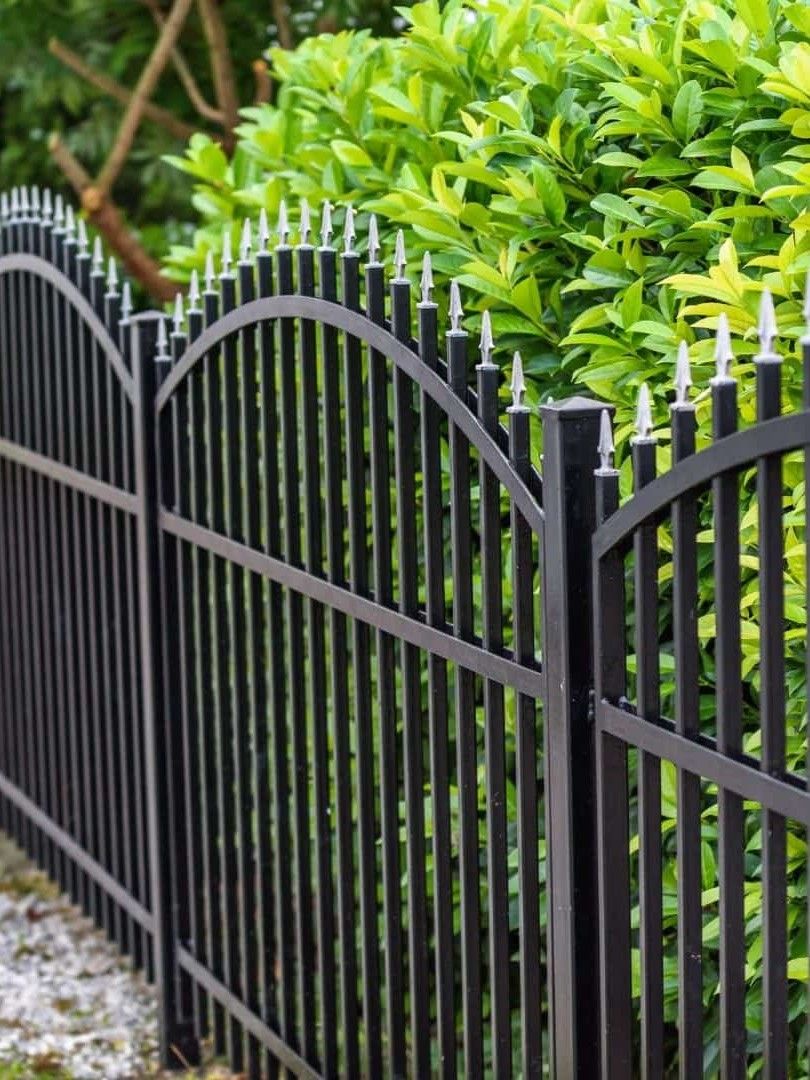
Chicago's older neighborhoods are full of wrought iron. It lines the front yards of greystones in Lincoln Park, borders courtyard buildings in Wicker Park, and frames century-old two-flats across Rogers Park and Pilsen. Most of it was built to last, and a lot of it has. But iron is not invincible. Left untreated, even the most solid fence will corrode, shift, and eventually fail. The question most property owners face is not whether their fence needs attention, but what kind of attention it actually needs.
This article breaks down the three most common categories of wrought iron fence repair, rust removal, bent or broken sections, and structural welding, and explains what each process actually involves, how to spot the signs early, and what a proper repair looks like versus a shortcut.
Why Wrought Iron Deteriorates Differently Than Other Metals
Wrought iron is a low-carbon alloy that was widely used in fencing through much of the 20th century because of its strength, workability, and visual character. Unlike modern steel or aluminum, wrought iron has a fibrous grain structure that gives it resilience against impact but also makes it particularly susceptible to surface oxidation when protective coatings wear away.
In Chicago, that process accelerates. The combination of freeze-thaw cycles, road salt drift, and seasonal humidity creates an environment where bare iron can begin rusting visibly within a single season. Once rust takes hold at a joint, a rail, or a picket base, it expands beneath the surface, compromising structural integrity long before it looks serious from the outside.
That is why surface appearances can mislead. A fence that looks like it just needs a coat of paint might already have deep pitting, weakened welds, or posts that have shifted at ground level.
Rust Removal: What It Takes to Do It Properly
Surface rust and deep corrosion are not the same problem, and treating them as if they are is one of the most common mistakes made during iron fence repair.
Surface Oxidation vs. Structural Corrosion
Surface oxidation is the reddish-orange film that forms on iron exposed to moisture. At this stage, the metal underneath is largely intact. A thorough mechanical cleaning, using wire brushes, angle grinders, or sandblasting, can strip it back to bare metal, which can then be primed and repainted to stop the cycle.
Structural corrosion goes deeper. It creates pitting, flaking, and sometimes hollow sections where the iron has been eaten through entirely. At that point, cleaning alone is not enough. Sections may need to be cut out and replaced rather than simply refinished.
The Right Rust Removal Process
For most Chicago iron fences, a proper rust removal job follows a clear sequence. First, all loose rust and failing paint are mechanically removed down to clean metal. Second, a rust-inhibiting primer is applied while the metal is still clean and dry, ideally within hours of the bare surface being exposed, because flash rust can begin forming quickly in humid conditions. Third, a topcoat rated for exterior metal is applied to seal and protect.
Skipping the primer step, or applying paint over loose rust, is the shortcut that causes fences to fail within a season or two. The paint may look fine initially, but rust migrates underneath and lifts the coating from below.
Chemical rust converters, products that react with iron oxide and neutralise it, can be a useful part of the process for tight spaces or heavily pitted sections. They are not a replacement for mechanical prep, but they complement it well in stubborn spots.
Bent and Broken Sections: Assessment Before Action
Physical damage to wrought iron fences tends to fall into a few distinct categories. Vehicle impacts, falling tree limbs, and frost heave are the most common causes in Chicago. Each creates a different type of damage and requires a different approach.
Bent Pickets and Rails
Minor bends in individual pickets can sometimes be corrected with controlled heat and pressure, a process that requires knowledge of the metal's working temperature. Heating iron too aggressively weakens it. Done correctly, a skilled metalworker can straighten a bent picket or rail section without replacing it, which saves both material cost and the visual disruption of mismatched new metal alongside aged original iron.
More severe bends, or those involving a break at a weld joint, typically require replacement. The damaged section is cut out, a replacement piece is fabricated to match the original profile, and it is then welded into place and finished to blend with the surrounding fence.
Post Integrity and Ground-Level Damage
Posts are where the real structural risk often lives. In Chicago's freeze-thaw environment, the ground shifts repeatedly through winter, and posts that were set in concrete can crack their footings, tilt, or pull free at the base. A fence that looks fine from a distance might have posts that move noticeably when pressure is applied.
Assessing post integrity properly means checking for movement, not just visible rust or damage. Posts that have shifted need to be reset or replaced, not simply repainted and left in place. A leaning fence with a corroding post base is a liability, especially where children or pedestrians regularly pass by.
For property owners in Chicago navigating older iron fences in need of assessment, a detailed professional inspection is a more reliable starting point than a visual check alone. Resources like the team at Americana Iron Works & Fence, which has worked on iron across Chicago's architectural fabric for over 30 years, can distinguish quickly between what needs repair and what needs full replacement.
Welding: The Core of Structural Iron Repair
Welding is what separates a lasting iron fence repair from a temporary patch. And not all welding is equal.
MIG vs. Stick Welding for Iron Fences
For ornamental iron fence work, MIG welding (Metal Inert Gas) is generally preferred for its cleaner finish and control on thinner profiles. Stick welding (shielded metal arc welding) is more common for heavier structural joins and post repairs, where penetration depth matters more than cosmetic finish.
The choice of filler material also matters. Using the wrong electrode or wire for wrought iron or older mild steel can create brittle joins that look solid but fail under stress or vibration. This is a detail that experienced ironworkers understand instinctively, and one that distinguishes a proper repair from a quick tack weld.
Fabricating Replacement Sections
When sections of a fence are too damaged to repair in place, replacement pieces need to be fabricated to match. This is where in-house fabrication capability becomes genuinely relevant. A fence installer who orders stock components from a catalog will rarely find an exact match for Chicago's older ornamental ironwork, which often features non-standard picket profiles, decorative collars, and finials that simply are not manufactured at scale anymore.
Custom fabrication, matching profile dimensions, metal weight, and surface character, produces a repair that holds up structurally and looks consistent across the span of the fence. It costs more than a stock replacement panel, but the alternative is a fence that looks patched rather than restored.
Grinding and Finishing After Welding
Weld joints should be ground smooth before any primer or paint is applied. A raised or rough weld joint traps moisture and creates a new corrosion point. Finishing the weld flush with the surrounding metal, then priming and painting the full section, gives the repair a lifespan comparable to the original material.
Knowing When Repair Is the Right Call (and When It Is Not)
Not every aging fence is worth repairing. A useful rule of thumb: if more than 30 to 40 percent of the fence requires structural intervention, replacement often makes more financial sense over a 10-year horizon. If the damage is isolated, repair is almost always the more cost-effective path.
For those working through this decision, a professional fence repair assessment provides clarity. It identifies exactly which sections need structural work, which can be addressed with surface treatment, and which posts need resetting, giving property owners a concrete picture of scope and cost before committing to anything.
Chicago's building stock rewards investment in quality work. An iron fence repaired properly, with correct metalwork, proper rust treatment, and matched fabrication, can last another 30 to 50 years with routine maintenance. One patched cheaply is likely back in disrepair within five.
Key Takeaways
Surface rust and structural corrosion require different approaches. Mechanical cleaning and proper priming are non-negotiable for any lasting finish.
Bent pickets may be straightenable with heat and skilled pressure, but breaks at weld joints and damaged posts typically require fabrication and replacement.
Post integrity at ground level is often the most critical and most overlooked part of a fence assessment in Chicago's freeze-thaw climate.
Welding quality, including filler material selection and post-weld grinding, directly determines how long a structural repair holds.
When damage covers more than a third of a fence span, a full replacement assessment is worth running alongside the repair estimate.
Frequently Asked Questions
How do I know if my wrought iron fence needs welding or just painting? If the fence is structurally sound and the rust is surface-level with no visible pitting, scaling, or movement in posts or joints, painting with proper prep may be sufficient. If sections move when pushed, joints are cracked or separated, or the iron has rusted through in places, welding and fabrication are needed before any surface treatment makes sense.
Can bent wrought iron pickets be straightened, or do they always need replacing? It depends on the severity and location of the bend. Pickets with a gradual bend and no cracks can often be carefully heated and straightened by an experienced metalworker. Pickets that have cracked at a weld point or bent sharply near the base generally need to be replaced. Attempting to straighten cracked iron usually weakens the metal further.
Why does my fence keep rusting even after being painted? The most common reason is that paint was applied over loose rust or bare metal without a rust-inhibiting primer. Rust migrates underneath the paint layer and lifts it from below, making it appear the paint failed when the problem was actually inadequate surface preparation. Another cause is mechanical damage, small chips or scratches that expose bare metal, which then begins oxidising and spreads beneath the surrounding paint.
How long does a proper wrought iron fence repair last? With correct mechanical prep, proper priming, matched fabrication, and quality welding, a well-executed repair on wrought iron should last 20 to 30 years before needing significant attention again. Routine touch-up painting every 7 to 10 years extends that considerably. Poor-quality repairs, particularly those involving paint over rust or mismatched materials, often fail visibly within two to three seasons.
Is it worth repairing an old wrought iron fence, or should I replace it? In most cases, repair is worth it if the damage is limited to specific sections, the posts are structurally sound, and the fence has architectural character worth preserving. Chicago's older ornamental ironwork is difficult and expensive to replicate authentically, so a properly restored original fence often has more aesthetic and material value than a stock replacement. A professional assessment will tell you quickly which category your fence falls into.
Conclusion
Wrought iron is genuinely durable material. Most of it fails not because it reached the end of its natural lifespan, but because small problems were left untreated until they became structural ones. Rust that goes unaddressed for a few seasons can compromise a joint that would have cost very little to clean and reprime. A slightly leaning post, left through another Chicago winter, can shift far enough to pull the entire fence panel out of alignment.
The good news is that iron responds well to skilled repair. Unlike wood, it does not rot through once moisture gets in. Unlike vinyl or aluminum, it can be heated, reshaped, and welded back to full strength. A fence that looks like it needs replacing often just needs the right hands on it.
If you are working through a repair decision and want a professional view on scope and options, contact us to get a free assessment from a team with over 30 years of ironwork experience across Chicago and its surrounding neighborhoods.