
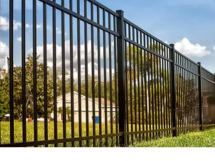
Chicago winters are not subtle. Temperatures routinely drop below zero, the ground freezes hard, and the freeze-thaw cycle that runs from November through March does something genuinely destructive to fence posts: it moves them. Posts that were perfectly plumb in September can be visibly tilted by spring, not because of any storm or impact, but simply because of how water in the soil behaves when it freezes and expands.
This is the central question any property owner in Chicago needs to answer before putting a fence post in the ground: concrete or spike anchors? Both methods are widely used across the country. But Chicago's frost line changes the calculation significantly, and choosing the wrong method can turn a ten-year fence into a five-year problem.
Understanding Chicago's Frost Line First
The frost line is the depth at which soil freezes during winter. In Chicago, that depth sits at approximately 42 inches below grade, according to the International Building Code's climate zone maps and local municipal standards. That is not a guideline, it is the engineering reality your fence installation needs to be built around.
When water in the soil freezes, it expands and pushes upward. This process is called frost heave, and it is particularly aggressive in clay-heavy soils, which are common across much of the Chicago metro area. If a fence post is not anchored below the frost line, the soil will literally lift it over time, cracking concrete footings, bending metal posts, and leaving the entire fence structurally compromised.
For wrought iron and steel fences specifically, frost heave is not just a cosmetic problem. A tilted post puts uneven stress on the fence panels and joints, accelerating rust formation at connection points and ultimately requiring more extensive iron fence repair & installation services than would have been needed with proper installation from the start.
Spike Anchors: What They Are and Where They Work
Spike anchors, sometimes called post spikes, drive-in anchors, or ground spikes, are metal stakes with a square or round cup at the top designed to hold a fence post. You drive the spike into the ground with a sledgehammer or a driver, drop the post into the cup, and secure it.
In the right context, spike anchors are genuinely useful. They are fast to install, require no digging, no concrete, and no curing time. For applications like temporary fencing, wooden privacy screens in mild climates, or decorative lightweight fencing in non-frost-prone regions, they perform reasonably well.
In Chicago? The limitations become obvious fast.
Spike anchors typically penetrate 18 to 24 inches into the ground, sometimes less in harder soils. That puts them well above the frost line. Every winter, the soil around the spike freezes, expands, and exerts upward pressure. The spike has no concrete mass to resist that movement. Over one or two seasons, the post loosens, rocks, and eventually requires resetting. For a lightweight wooden picket fence in a non-critical location, that might be manageable. For an iron fence on a property perimeter, a driveway gate, or anywhere structural integrity matters, spike anchors are simply not engineered for Chicago conditions.
There is also a soil-specific problem. Chicago's clay soil retains moisture exceptionally well, which amplifies frost heave. Sandy or loamy soils drain faster and freeze somewhat more gently. Clay does not cooperate.
Concrete Footings: The Chicago Standard
Concrete footings involve digging or augering a hole to the required depth, setting the post, and filling the hole with poured concrete. Done correctly, the footing extends below the frost line, which means the base of the installation is sitting in ground that does not freeze. The concrete mass also grips the surrounding soil, resisting the upward pressure from frost heave above it.
For post sizing, the general rule is that the hole diameter should be roughly three times the post diameter, and the footing depth should exceed the frost line by at least a few inches. In Chicago, that means digging to 42 to 48 inches as standard practice. Anything less is cutting corners, regardless of how the finished fence looks above ground.
There are two main concrete footing approaches:
Full concrete encasement: The post is set in the center of the hole, and concrete fills the entire cavity. This is the strongest method, particularly for gate posts and corners that bear higher lateral loads.
Concrete collar with gravel base: A layer of gravel sits at the bottom of the hole for drainage, the post sits on or just above it, and concrete fills the upper portion. The gravel reduces water pooling at the base of the post, which can slow corrosion on metal posts over time.
For iron and steel fence posts, the gravel-base approach has real merit. Standing water at the base of a steel post accelerates oxidation from the inside out. Gravel improves drainage and reduces that risk without sacrificing footing strength.
The Specific Case for Wrought Iron and Steel Fences
Wrought iron and ornamental steel fences add a layer of complexity that aluminum or vinyl fences do not. The posts are heavier, the panels exert more lateral stress, and the consequences of movement show faster because metal joints are rigid rather than flexible.
When a wrought iron fence post shifts even slightly, the mortise and tenon connections, or the welded joints depending on fabrication method, begin to experience stress they were not designed to handle. Over time this causes cracks in the weld, gaps where pickets meet the rail, and the kind of pervasive rust that starts at a joint and spreads outward. What began as a footing problem becomes a fence-wide corrosion problem.
This is why professional wrought iron fence repair & installation services in Chicago almost universally spec concrete footings at or below the frost line for iron and steel fencing. The structural demands of the material make it non-negotiable.
For properties in established Chicago neighborhoods like Lincoln Park, Bridgeport, or Beverly, where iron fences are often original to homes built in the early twentieth century, the footing depth question is even more critical. Many of these older installations were set at shallower depths by modern standards, which is one reason iron fence repair requests spike every spring in Chicago.
Practical Factors That Influence the Decision
Even knowing that concrete footings are the correct choice for Chicago, a few situational factors are worth considering before installation begins.
Soil conditions matter. Soft or water-saturated soils may require a wider footing diameter or a deeper gravel base to prevent the concrete itself from settling. A contractor doing soil assessment before installation is a sign of thoroughness, not over-engineering.
Post location determines load requirements. Gate posts carry far more stress than line posts. End posts and corner posts also experience higher lateral loads than posts in the middle of a run. These high-stress positions benefit from larger, deeper footings even if adjacent line posts could theoretically get by with something slightly smaller.
Urban setback constraints. In Chicago, underground utilities, existing foundations, and sidewalk setbacks can limit where and how deep you can dig. In those cases, a structural engineer or experienced contractor should assess the site before installation. Shallow footings forced by site constraints need to be compensated for with wider concrete mass or alternative anchoring strategies.
For larger commercial projects where structural steel is involved, companies like Americana Iron Works & Fence work through these site-specific constraints routinely, using in-house fabrication to adapt post sizing and footing design to what the actual conditions demand.
When Spike Anchors Are Not the Problem, but the Symptom
One scenario worth addressing: a property owner who has an existing fence installed on spike anchors and is now dealing with leaning posts. The temptation is to simply reset the spikes. That is almost always a temporary fix.
The deeper question is whether the fence design, post sizing, and panel weight are appropriate for spike installation at all. If the answer is no, resetting spikes buys one winter at best. The right correction is converting to concrete footings, which may mean temporarily removing fence panels, digging new holes, and reinstalling posts with proper footings.
This is more labor-intensive than a reset, but it solves the problem rather than postponing it.
Key Takeaways
Chicago's frost line sits at approximately 42 inches, and any fence post anchoring method that does not account for this will struggle to hold long-term.
Spike anchors are practical in mild climates and light-duty applications, but they are not engineered for the freeze-thaw cycle severity common in the Chicago metro area.
Concrete footings installed at or below the frost line are the standard for iron and steel fences in Chicago, with a gravel drainage base recommended for metal post installations.
Gate posts, corner posts, and end posts require deeper, wider footings than line posts due to the increased lateral loads they carry.
Frost heave damage to iron fences often presents as rust at joints and connections, meaning a footing problem can masquerade as a corrosion problem until the root cause is addressed.
FAQ
How deep should fence post footings go in Chicago? The Chicago frost line is approximately 42 inches, so footings should reach at least that depth, ideally 44 to 48 inches to provide a buffer. Posts set shallower than this are at real risk of heaving over consecutive winters, particularly in clay-heavy soil.
Can I use concrete and spike anchors together? Not effectively. The two systems work on fundamentally different principles. Pouring concrete around a spike does not solve the depth problem; if the base is still above the frost line, the concrete-and-spike assembly will heave as a unit. The concrete needs to be a proper footing dug to the correct depth.
Why do iron fence posts rust at the base even with concrete footings? Water can pool at the interface between the post and the concrete if the footing was not installed with drainage in mind. A gravel base layer helps mitigate this. Applying a rust-inhibiting primer to the buried portion of the post before installation is also a standard protective measure that experienced installers use.
How do I know if my current fence posts are heaving? The most obvious sign is visible tilting, especially after winter. You may also notice gaps opening between fence panels and rails, gate latches that no longer align properly, or cracking in any existing concrete at ground level. If multiple posts are affected in a pattern, frost heave is a likely cause.
Is it worth replacing spike-anchored posts proactively, or should I wait until they fail? Proactive replacement is almost always more cost-effective. Waiting until posts have heaved significantly can cause panel damage, weld cracking, and accelerated rust at stress points, all of which add to the repair scope. If a fence was installed on spike anchors in Chicago and has been in place for three or more years, a professional assessment of post stability is a reasonable step before the next winter cycle.
Conclusion
The concrete vs spike anchor question has a clear answer in Chicago, but it is worth understanding why rather than just accepting it as a rule. The frost line is a physical reality that the soil imposes on any structure set into the ground. Spike anchors can be excellent products in the right conditions; Chicago in winter is simply not those conditions for anything beyond temporary or very lightweight fencing.
For iron and steel fences especially, the investment in properly spec'd concrete footings is what separates a fence that lasts decades from one that requires attention every few years. Getting the foundation right is the least visible part of the job and often the most important one.
If a fence is already showing signs of movement or post instability, an assessment from a licensed, experienced contractor will clarify whether the issue is the footing method, the depth, the soil, or some combination. That conversation is worth having before another freeze-thaw cycle makes the decision for you.