
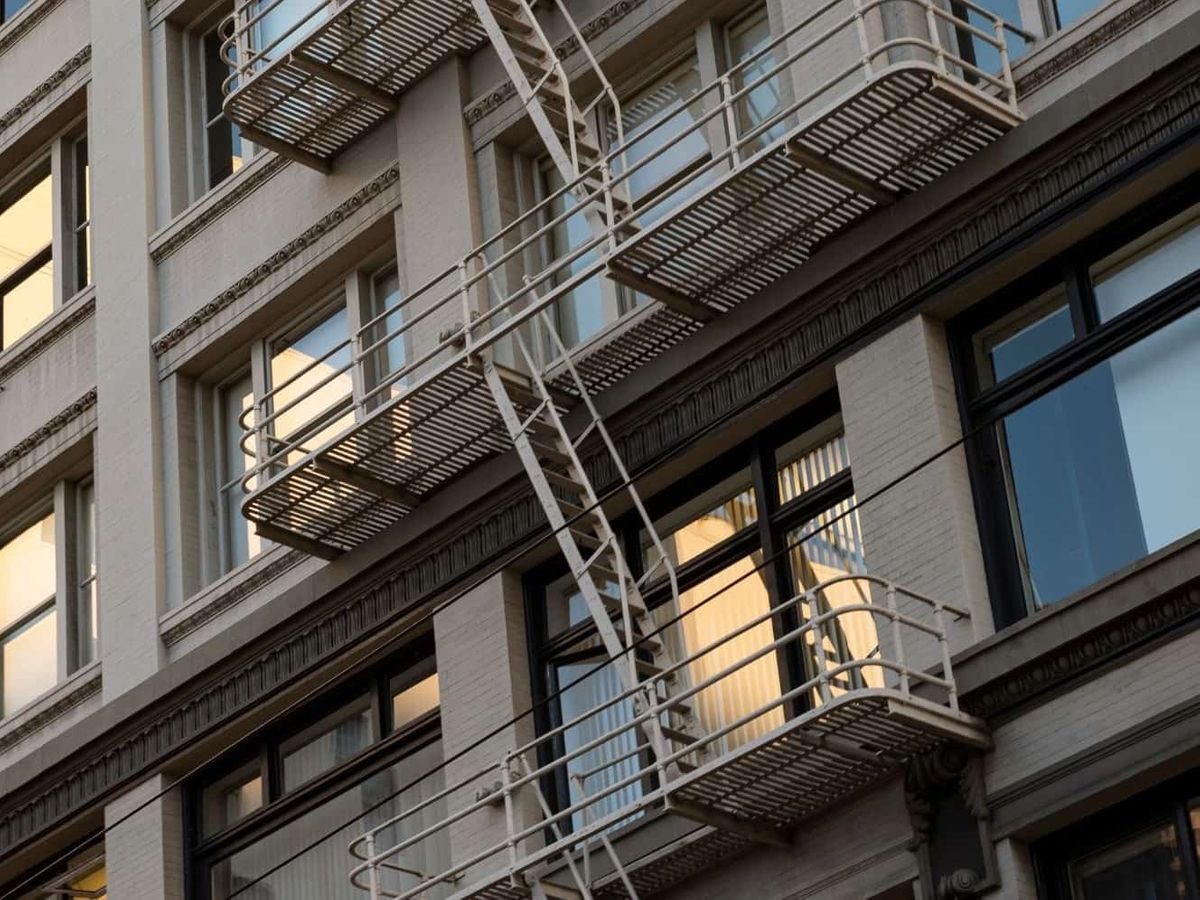
Fire escapes are the most neglected structural element on most older Chicago buildings, and they are also part of the life safety system. That combination produces a familiar situation: an owner gets a violation or an inspection report, receives two very different numbers from two contractors, and has no basis for deciding which is right. Whether fire escape repair or full replacement is correct usually turns on one question that has nothing to do with the stairs themselves, which is what condition the wall anchors and the surrounding masonry are in. Sorting that out first is what makes the rest of the fire escape conversation productive.
SHORT ANSWER
Repair when deterioration is concentrated at specific points and the wall anchors and surrounding masonry are sound. Replace when section loss is distributed through the structural members, when multiple anchors have failed, or when repairs would touch most of the assembly anyway. The anchor connection into the building is usually the deciding factor, because corroding anchors damage the masonry around them and turn a steel repair into a masonry repair.
What Chicago Requires
Fire escapes on Chicago buildings are not decorative holdovers. Where they serve as a required means of egress, they are subject to maintenance obligations, and the city requires them to be scraped and repainted on a recurring cycle rather than when an owner gets around to it.
That requirement exists for a practical reason. Coating is what stands between structural steel and Chicago weather, and a fire escape that has gone years past its repaint is not just looking poor, it is actively losing material. Enforcement generally comes through inspection or complaint, and the violation arrives long after the deterioration started.
Because specific requirements and cycles change, confirm what currently applies to your building with the city rather than working from what was true the last time the building was cited.
How Fire Escapes Actually Fail
Deterioration is predictable and follows the water.
Coating failure first. Paint blisters and flakes, bare steel is exposed, and corrosion begins immediately in this climate.
Platforms and treads. Water sits on horizontal surfaces, and grating and tread ends corrode from the point where water cannot drain.
Connections. Welds and bolted joints trap moisture in the crevices between members, so corrosion advances inside the connection where it is not visible.
Stringer ends and ladder connections. Where stair members meet platforms, and where drop ladders attach.
Drop ladder mechanisms. Counterweighted ladders seize from corrosion and disuse, which means the escape does not function as designed even when it looks intact.
Wall anchors. The connection to the building, and the most consequential failure of the group.
North and shaded elevations tend to fare worse, because they stay wet longer after rain and snow.
The Anchor Problem That Decides Most Projects
A fire escape is only as sound as its connection to the building, and that connection is embedded in masonry.
When embedded steel corrodes, the rust it forms occupies substantially more volume than the original metal. That expansion pushes outward against the masonry surrounding it, cracking brick and displacing mortar from the inside. You see it as cracks radiating from an anchor point, spalling brick, or mortar loss around the connection.
Two consequences follow. First, the anchor itself is losing section at exactly the point carrying the load. Second, the masonry that was supposed to hold the anchor is being broken apart by the same process. Repainting the steel does nothing about either.
This is why anchor condition, rather than the visible condition of the stairs and platforms, usually determines whether a project is a repair or a replacement. It is also why fire escape work frequently involves both steel and masonry, and why an assessment should look at the wall as carefully as the structure hanging off it.
When Fire Escape Repair Is the Right Answer
Corrosion is concentrated. Specific treads, a section of railing, one platform edge, individual failed welds.
Anchors and masonry are sound. No cracking or spalling at the connections, and the wall is in reasonable condition.
Structural members retain their section. Surface rust and pitting that has not penetrated the material.
The drop ladder can be freed and serviced rather than being seized beyond recovery.
Coating has failed but the steel underneath is intact. This is the best case, and it is a scrape, prime, and repaint job rather than fabrication.
Localized repair on sound structure is genuinely economical, and it is what regular maintenance is supposed to keep you in. Cut out the corroded section, weld in new material, reseal, recoat. Coordinating that work with metal painting across the whole assembly produces a uniform result rather than a patchwork.
When Replacement Makes More Sense
Section loss throughout. Pitting that has penetrated material in multiple locations across stringers, platform framing, or posts means there is progressively less sound steel to weld to.
Multiple anchors compromised. Once several connections and the masonry around them have failed, you are rebuilding the attachment regardless.
Repairs would touch most of the assembly. At that point you are fabricating a new fire escape in place, one piece at a time, at higher cost.
Repeated findings at consecutive inspections. A pattern of deficiencies indicates a structure at the end of its service life rather than a run of separate problems.
The assembly is being altered anyway. Where configuration is changing, building current work to current requirements is usually more sensible than adapting old steel.
Replacement also allows the connection detail, the coating system, and drainage to be addressed properly from the start, which is what determines how long the new structure lasts. Fabricated structural steel built for the actual conditions outperforms steel that has been repaired around its weaknesses for decades.
The Landmark Question
Chicago has a great deal of landmarked and historic district property, and fire escapes on those buildings carry additional considerations.
Where a fire escape is a contributing feature, alterations may require preservation review, and replacement in a different configuration or profile may not be approved. In those cases repair and in-kind replacement of deteriorated components is often not just the preferred path but the required one.
Confirm landmark or district status before scoping the work. Discovering it after fabrication has started is an expensive way to learn.
What About Removal?
Owners ask, and it is a legitimate question rather than a dodge.
If the building has been modified so that the fire escape is no longer serving as a required means of egress, removal may be possible. That is a code determination rather than an owner's preference, and it requires review of the building's egress provisions. Removal also means repairing the masonry where anchors were embedded, which is its own scope.
Where the fire escape is still required egress, removal is not on the table and the decision is repair or replace.
The Cost Factor People Underweight
The steel is rarely the expensive part.
Access is. Staging, lift equipment, street or alley permits, protection for the sidewalk and adjacent property, and the coordination that comes with working on an occupied building are largely fixed costs regardless of how much work happens once you are up there.
That changes the arithmetic. Three separate repair visits over five years means paying for access three times. Where a structure is going to need ongoing attention, doing more per mobilization, or replacing outright, frequently costs less across the period than a series of minimum-scope repairs. The same logic applies to related metal stair repair on the same elevation, which is worth bundling rather than scheduling separately.
Key Takeaways
Anchor and masonry condition usually decides repair versus replacement, not the visible condition of the stairs.
Corroding embedded steel expands and cracks the masonry holding it.
Chicago requires fire escapes to be scraped and repainted on a recurring cycle.
Coating failure is the earliest and cheapest stage to intervene at.
Concentrated corrosion with sound anchors is a repair. Distributed section loss is not.
Seized drop ladders mean the escape does not function even when it looks intact.
Landmark status can restrict replacement and make in-kind repair the required path.
Access and staging are largely fixed costs, so repeated small repairs pay for them repeatedly.
Frequently Asked Questions
How often do Chicago fire escapes need painting?
The city requires scraping and repainting on a recurring cycle. Confirm the current interval and requirements for your building with the city, since provisions change and enforcement varies.
Why is the brick cracking around my fire escape anchors?
Because the embedded steel is corroding, and rust takes up more room than the steel it came from. That expansion breaks the masonry apart from within. Repairing the brick without addressing the anchor will not hold.
Can a fire escape be repaired while the building is occupied?
Generally yes, with appropriate protection, staging, and coordination. Access arrangements and any temporary egress considerations should be planned before work starts.
Is replacement always more expensive than repair?
Not across a full service life. A single replacement can cost less than repeated repairs plus repeated access costs, particularly on a structure already showing distributed deterioration.
My fire escape looks fine. Does it still need attention?
Possibly. Corrosion inside connections and at embedded anchors is not visible from the ground, and coating that looks acceptable can be failing at the edges and seams. A close inspection tells you more than a look from the alley.
Can I remove a fire escape I no longer use?
Only if it is not serving as required egress, which is a code determination rather than a usage question. Removal also involves repairing the masonry at the anchor locations.
Conclusion
The fire escape repair or replacement decision on a Chicago building is answered at the wall more often than at the stairs. Sound anchors and localized corrosion point to repair, which is the outcome regular maintenance is meant to preserve. Failed anchors, cracked masonry at the connections, and section loss through the members point to replacement, and continuing to repair around those conditions spends money without buying much time.
Americana Iron Works & Fence repairs, fabricates, and refinishes fire escapes, stairs, railings, and structural ironwork for residential and commercial properties throughout Chicago and the surrounding suburbs, with more than thirty years of in-house fabrication behind the work. If your fire escape is due for service or you have received a notice, reach out today to request a free quote.