
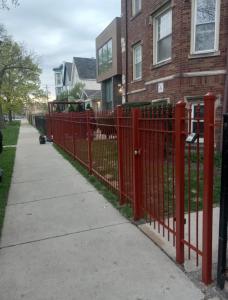
Hot-Dip Galvanizing vs Powder Coating for Chicago Ironwork, and Where Wrought Iron Fence Painting Fits
Most Chicago property owners comparing finishes for ironwork are asking the question one step too late. Hot-dip galvanizing and powder coating are both shop processes, applied to steel before it is installed. Once a fence, railing, or gate is set in concrete, neither one is available, and professional metal fence painting becomes the practical option. Understanding that split saves a great deal of wasted comparison.
The finish decision matters more here than in milder climates. Chicago ironwork absorbs freeze and thaw cycling, road salt carried onto fences and stair landings through the winter, and humid summers. Each of the three finishes handles that differently, and each fails differently when it does fail.
How Hot-Dip Galvanizing Works
Hot-dip galvanizing immerses fabricated steel in a bath of molten zinc. The zinc reacts with the steel metallurgically, forming a bonded alloy coating rather than a layer sitting on the surface.
The advantage is the type of protection. Zinc is sacrificial, meaning it corrodes in place of the steel underneath. A scratch that reaches bare metal on a galvanized rail does not start a rust bloom, because the surrounding zinc continues protecting the exposed spot. That is why galvanized steel is standard on bridges, guardrails, and marine structures.
The limitation is appearance. Zinc produces one look, a spangled gray that weathers to a flatter matte over time. For ornamental wrought iron on a Chicago greystone or a Lincoln Park frontage, that finish is frequently wrong for the building.
How Powder Coating Works
Powder coating applies dry pigment electrostatically to clean steel, then cures it in an oven so the powder flows into a continuous hard shell. It is a barrier finish, which is the key difference from galvanizing.
A barrier protects completely while it stays intact. Powder coating is considerably tougher than liquid paint against chipping and abrasion, and it comes in effectively any color and gloss level, which is why ornamental fabrication so often specifies it. Custom balcony and railing installation work is typically finished with two to three coats.
The weakness is what happens after a breach. Once salt or moisture reaches steel through a chip or a poorly prepped edge, corrosion spreads underneath the coating, lifting it from below. Powder coating does not self protect the way zinc does.
Where Wrought Iron Fence Painting Fits
Wrought iron fence painting is the only one of the three that can be performed on ironwork already standing. That single fact decides most Chicago projects, because the majority of iron fences, porch rails, and fire escapes in the city were installed decades ago.
Quality here depends almost entirely on preparation rather than on the paint itself. A proper industrial sequence grinds off all rust and loose paint, applies a rust inhibiting industrial exterior primer, and finishes with industrial grade exterior metal paint. Skipping the grinding stage is the common failure, because paint applied over active rust traps the corrosion and peels within a season or two.
Painting also carries a compliance dimension in Chicago that the other finishes do not. City requirements call for fire escapes to be scraped and painted on a recurring cycle, which makes fire escape repair and painting a scheduled obligation for many building owners rather than a discretionary upgrade.
Comparing the Three Finishes for Chicago Ironwork
Protection type: galvanizing is sacrificial, powder coating and paint are barriers.
Where applied: galvanizing and powder coating are shop only, painting can be done in place.
Color range: powder coating and paint offer full color choice, galvanizing offers gray.
Service life: galvanizing is the longest by a wide margin, often measured in decades. Powder coating and quality paint systems generally run several years before refinishing.
Failure mode: galvanizing wears gradually and evenly, barrier finishes fail locally at chips and edges, then undercut.
Relative cost: galvanizing carries the highest upfront cost and the lowest maintenance cost, painting reverses that relationship.
Salt exposure shifts the math. Ironwork close to a sidewalk, a stair landing, or a driveway that gets salted through winter takes chloride loading that punishes barrier finishes considerably faster than the same fence set back in a yard.
Powder Coating Over Galvanized Steel
The two processes are not mutually exclusive. Powder coating applied over galvanized steel produces a duplex system: zinc handling the corrosion protection underneath, powder handling appearance and abrasion resistance on top. If the powder layer is breached, the zinc is still there.
Duplex costs more than either finish alone and requires correct surface preparation of the zinc before powder is applied. For new ornamental fabrication in high salt exposure, it is the most durable option available, and it is worth pricing on projects intended to last decades rather than years.
Choosing the Right Finish for Your Project
Existing ironwork already installed. Painting is the available option. Budget for thorough rust removal rather than for premium topcoat.
New fabrication, appearance driven. Powder coating, in the color the building calls for.
New fabrication, harsh exposure, appearance secondary. Hot-dip galvanizing, particularly for structural and utility applications.
New fabrication, harsh exposure, appearance matters. A duplex system, powder over galvanized.
Ironwork corroded past the surface. No finish repairs section loss. Fabrication or replacement comes first, and finish is chosen afterward.
That last point is the one owners resist most. A finish is not a repair. Iron with pitting deep enough to compromise a picket or a post needs custom ironworks fabrication before any coating conversation is useful.
Maintenance Expectations in Chicago
All three finishes need inspection, and spring is the right time, after the salt season has done its work.
Check the bottom several inches of pickets and posts, where salt splash and standing snow concentrate.
Look at welds, joints, and anchor points, which fail before flat surfaces do.
Address chips in powder coating or paint promptly, since barrier finishes degrade from the breach outward.
Keep landscaping, mulch, and snow piles off the base of iron fencing.
Schedule recoating on a cycle rather than waiting for visible rust, since metal railing painting costs far less than fabrication.
Key Takeaways
Hot-dip galvanizing and powder coating are shop applied, so they are only options during fabrication.
Wrought iron fence painting is the finish available for ironwork already installed, and its durability depends mainly on rust removal and priming.
Galvanizing protects sacrificially and lasts longest, but offers only a gray finish.
Powder coating offers full color and strong abrasion resistance, but undercuts once breached.
A duplex system, powder over galvanized steel, is the most durable choice for new ornamental work in high salt exposure.
No coating restores iron that has lost section, so structural repair precedes finish selection.
Frequently Asked Questions
Can an existing wrought iron fence be powder coated?
Not in place. Powder coating requires blasting, electrostatic application, and oven curing, so the fence would have to be removed, transported to a shop, and reinstalled. For most installed fencing, painting delivers a better result for the money.
How often does wrought iron fence painting need to be redone in Chicago?
It depends on exposure. Fencing along a salted sidewalk needs attention sooner than fencing set back in a yard. Inspecting annually in spring and recoating when the topcoat begins chalking or chipping, rather than waiting for visible rust, is the approach that keeps costs down.
Is galvanized steel maintenance free?
No, though it is close for long stretches. Zinc depletes gradually, and cut ends, field welds, and drilled holes made after galvanizing expose bare steel that needs touch up with a zinc rich product.
Which finish is best for a Chicago fire escape?
Fire escapes are existing structures subject to recurring scrape and paint requirements, so an industrial paint system is the standard answer. The compliance cycle, not the coating comparison, drives the schedule.
Does powder coating fail faster than paint?
Generally the opposite. Powder coating resists chipping and abrasion better than liquid paint. The difference is that when powder does fail, it tends to fail by undercutting from a single breach, while paint tends to degrade more visibly across the surface first.
Can iron be repainted a different color?
Yes. Color change is straightforward with a paint system, provided the existing coating is sound or fully removed. This is one area where painting is more flexible than either shop process, since recoating does not require dismantling the ironwork.
Conclusion
The comparison between hot-dip galvanizing and powder coating matters at the fabrication stage, where color, exposure, and budget determine which protects a piece of Chicago ironwork better over its life. For iron already standing, wrought iron fence painting is the decision that actually needs making, and doing it properly means paying for preparation rather than for the label on the can.
Americana Iron Works & Fence fabricates, finishes, and repaints iron fencing, railings, gates, and fire escapes for residential and commercial properties across Chicago and the surrounding suburbs. Whether you are specifying a finish for new ornamental work or scheduling recoating on ironwork that has been standing for decades, reach out today to request a free quote