
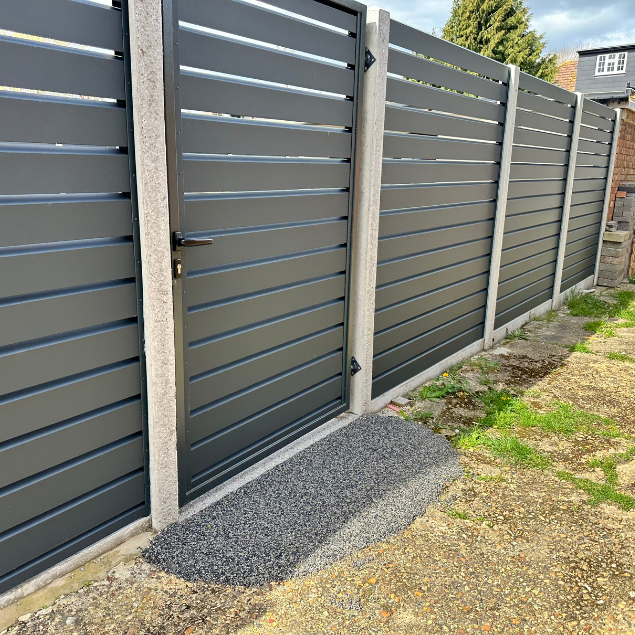
A fence that leans or heaves out of the ground after one Chicago winter is not a fence that was installed cheaply. It's a fence that was installed wrong. Specifically, posts that were not set deep enough to survive what the ground does when it freezes, expands, and then thaws again every single year.
This is one of the most practical and frequently misunderstood aspects of fence installation in the Chicago area. Get the depth right, and a fence can hold solid for decades. Get it wrong, and you're reletting concrete footings push your posts out of alignment by spring.
Here's what you actually need to know.
Why Chicago's Frost Line Changes Everything
The frost line, also called the frost depth, is the maximum depth at which the ground is expected to freeze during winter. For Chicago and the surrounding metro area, that depth is 48 inches, according to the International Building Code's frost depth maps and local municipal standards.
When soil freezes, it expands. When it thaws, it contracts. This movement exerts significant upward pressure on anything embedded in the ground, a process called frost heave. Posts set above the frost line are vulnerable to this pressure. Over one or two winters, they can shift, tilt, or be pushed partially out of the ground entirely.
This is not a theoretical risk. It's a documented pattern that contractors across the Chicago metro deal with every season when they're repairing fences that were installed without adequate depth.
What Frost Heave Actually Does to a Fence Post
Imagine a wooden 4x4 post set 24 inches deep in concrete. The frost line sits at 48 inches. During a hard freeze, the soil below the frost line remains stable, but the frozen zone above it grips the post and, as the ground expands upward, pulls it with it. The concrete footing becomes a lever rather than an anchor.
The result: posts that are visibly tilted by spring, gates that no longer align properly, and fence panels that gap at the bottom. For wrought iron or ornamental metal fences, the problem can also stress the welds and connection points at the base.
The General Rule for Post Depth
The standard industry rule is to set fence posts at a depth equal to one-third to one-half of the post's total above-ground height, with a minimum depth of 24 to 36 inches in moderate climates. But in Chicago, that baseline is not enough on its own.
Here's how to think about it practically:
For a 4-foot fence, posts should be set at least 24 to 30 inches deep, but given Chicago's frost line, a minimum of 42 to 48 inches is recommended for stability.
For a 6-foot fence, posts need at least 36 inches, but again, 48 inches is the standard for this region.
For 8-foot or taller fencing, posts should always reach or exceed the 48-inch frost line, with additional depth for taller or heavier panel systems.
The extra depth beyond the one-third rule is not over-engineering. It's accounting for the specific ground conditions and climate in northeastern Illinois.
Soil Conditions in Chicago: Why Depth Alone Isn't the Whole Story
Chicago sits on a mix of clay-heavy glacial soils, especially in older residential neighborhoods. Clay soil presents a specific challenge: it holds moisture and expands when frozen far more dramatically than sandy or loamy soil.
In areas like Lincoln Park, Old Town, and the North Shore suburbs, you're often dealing with dense urban clay that has been compacted over more than a century of development. In parts of the south and southwest suburbs, there's more varied fill soil, sometimes with inconsistent density.
A few soil-specific considerations:
Clay soil: Requires wider-diameter footings and careful concrete placement. Because clay retains moisture, the freeze-thaw cycle is more aggressive. Flared or belled footings at the bottom of the hole can help resist upward heave.
Sandy or looser soil: Offers less resistance, so posts may need to go deeper to achieve the same holding strength. Concrete footings become more critical here.
Fill or disturbed soil: Common in urban Chicago lots, especially near older buildings or former demolition sites. Always probe or dig to confirm you're in stable ground before setting posts.
The Chicago Department of Buildings and most municipal permit requirements in surrounding suburbs reflect this soil reality. Projects that require permits typically specify minimum footing depths that account for local conditions.
Post Material Matters Too
The right depth also depends on what you're installing. Not all fence post materials behave the same way underground.
Steel and wrought iron posts are the most durable option for Chicago's conditions. They don't rot, they hold their structural integrity even with minor movement, and they pair well with concrete footings. For wrought iron fence installation, posts are typically set in concrete to the full frost-line depth, with the footing diameter sized to the post gauge and fence height.
Pressure-treated wood posts are a common residential choice, but they need to be rated for ground contact (UC4B or UC4C for Chicago conditions). Even treated wood in clay soil can deteriorate faster than expected if water pools around the base.
Aluminum fence posts are lightweight and corrosion-resistant, but their lower weight means they depend heavily on correct footing depth and diameter for stability. Under-footings are a common failure point with aluminum in freeze-prone areas.
Vinyl posts are the most susceptible to frost heave because they offer less surface friction against the surrounding soil. They almost always require concrete footings and full frost-line depth.
Concrete Footings: How to Do Them Right
Setting posts in concrete is the standard approach for Chicago fence installation, but the execution matters. A few specifics:
Hole diameter: The footing hole should be at least three times the post diameter. For a 4-inch post, that means a 12-inch diameter hole minimum. Wider is better in clay-heavy soil.
Bell the bottom: Flaring the bottom of the hole to a wider diameter creates a mechanical anchor that resists upward heave. This technique is especially valuable in Chicago's clay soil.
Crown the top: When pouring concrete, crown it slightly above grade and slope it away from the post. This directs water away from the wood or metal base and reduces freeze-thaw deterioration at the most vulnerable point.
Cure time: Concrete needs at least 24 to 48 hours of cure time before panels or rails are attached. Rushing this step introduces stress into the footing before it has set properly.
Gravel base: Adding 4 to 6 inches of gravel at the bottom of the hole before pouring concrete improves drainage and reduces moisture accumulation around the base of the post.
Permits and Code Compliance in Chicago
Many fence installations in the City of Chicago and surrounding suburbs require a permit, particularly for fences over a certain height or along property lines that border public rights-of-way.
Chicago's Municipal Code Section 10-20 governs fencing and has specific requirements around height, placement, and materials. Permit requirements vary by municipality in the suburbs, so checking with the local building department before starting is always the right move.
When a project requires a permit, the inspector will check that posts are set to the appropriate depth. Installing without a permit and later needing to sell, refinance, or file an insurance claim can create legal and financial complications that far outweigh the inconvenience of pulling the permit upfront.
Contractors who specialize in fence installation in the Chicago area, like Americana Iron Works & Fence, handle permit coordination as part of their process, which removes a significant administrative burden from property owners and ensures that the work meets local code from the start.
Key Takeaways
Chicago's frost line sits at 48 inches, and fence posts must be set at or below that depth to resist frost heave.
Clay-heavy soil, common throughout Chicago and its older neighborhoods, amplifies freeze-thaw movement and requires wider footings and careful concrete placement.
Post depth requirements vary by fence height, but the one-third rule is a floor, not a ceiling, in this climate.
Post material affects how footings should be sized and configured. Wrought iron and steel hold up best; vinyl and aluminum require precise footing work to compensate.
Permit compliance is not optional in most Chicago jurisdictions, and inspectors do verify post depth and footing standards.
FAQ
How deep should a 6-foot fence post be in Chicago? For a 6-foot fence in Chicago, posts should be set at a minimum of 42 to 48 inches deep to clear the frost line. Given the city's clay-heavy soil, aiming for the full 48-inch depth is the safer and more durable choice. Shallower settings risk heave and movement after the first hard winter.
Do I need concrete for all fence posts? In Chicago's climate, concrete footings are strongly recommended for all fence posts, regardless of material. Concrete provides a stable mass that resists the upward pressure of frost heave more effectively than compacted soil alone, particularly in clay-heavy ground where moisture retention amplifies movement.
What is frost heave and how does it damage fences? Frost heave occurs when frozen soil expands upward and exerts pressure on anything embedded in it. For fence posts, this means gradual upward displacement over repeated freeze-thaw cycles, resulting in tilting posts, misaligned gates, and gaps at the base of fence panels. Posts set above the frost line are especially vulnerable.
Does Chicago require a permit for fence installation? Yes, many fence installations in the City of Chicago require a permit, particularly for fences exceeding 5 feet in height or those along front lot lines. Permit rules vary in suburban municipalities, so it's worth checking local requirements before starting any installation project.
What type of fence post holds up best in Chicago winters? Steel and wrought iron posts tend to perform best in Chicago's climate because they resist corrosion, hold structural integrity through freeze-thaw cycles, and bond well with concrete footings. Pressure-treated wood is a viable residential option if rated for ground contact, but needs proper footing depth and drainage to hold up long-term.
Conclusion
Post depth is one of those details that's invisible once a fence is installed, which is exactly why it matters so much. No one checks it after the fact until something goes wrong. In a climate like Chicago's, where the ground freezes and moves every year without exception, this is the part of the job that determines whether a fence stays straight and solid for twenty years or starts showing problems after two.
Before committing to any fence installation, it's worth asking the contractor directly how deep they plan to set posts, what footing diameter they use, and whether they're accounting for Chicago's frost line. The answer to those questions tells you a lot about the quality of work you're going to get.