
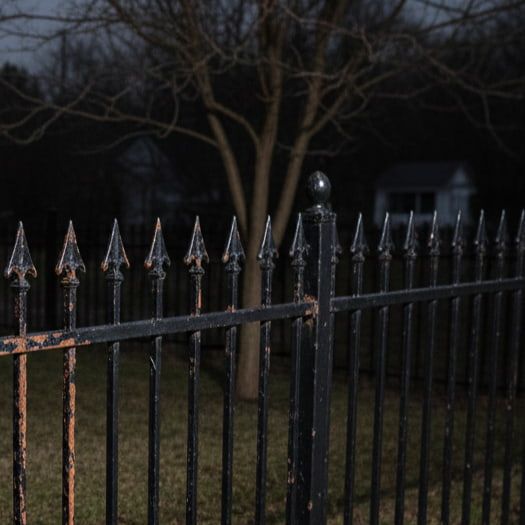
Replacing a single damaged fence panel sounds simple enough. But anyone who has tried it knows the frustration: the new section looks obviously newer, the color is slightly off, the picket profile doesn't quite match, or the post spacing creates a subtle but noticeable break in the pattern. A patch job that draws the eye is sometimes worse than the original damage.
Chicago's older neighborhoods make this even more complicated. Homes in Lincoln Park, Wicker Park, Bridgeport, and Beverly often have fencing that's decades old — and the original materials, styles, or profiles may no longer be available off the shelf. Getting a clean, cohesive repair takes more planning than most homeowners expect.
Here's a practical breakdown of how to approach partial fence replacement for the three most common materials in Chicago: wood, wrought iron, and chain link.
Start With an Accurate Assessment of What You're Working With
Before you source replacement materials or call anyone for quotes, spend time documenting the existing fence in detail. This step gets skipped constantly, and it leads to mismatches that are entirely preventable.
Measure the post spacing, the rail height, and the individual picket or section dimensions. Photograph sections at different times of day so you can see the true color without glare. Note whether the existing fence uses standard lumber dimensions or custom-profile pieces. For iron, look closely at the scrollwork and finial style — these vary significantly and manufacturers don't all use the same patterns.
Material age matters too. A wood fence that has been weathering for eight years will have a specific gray-silver tone that fresh-cut lumber simply won't replicate immediately. Iron that has been painted multiple times carries texture and color depth that a freshly powder-coated replacement section won't match on day one. Going in with realistic expectations about this gap — and knowing how to close it — is half the battle.
Wood Fence Repair: Matching Profile, Species, and Weathering
Wood fencing in Chicago is primarily cedar or pressure-treated pine, with some older properties still sporting redwood or Douglas fir. The first matching challenge is species. Cedar and pine age differently, stain differently, and have different grain patterns. If you're adding sections to an existing cedar fence, don't substitute pressure-treated pine to save a few dollars — the color difference will be obvious within one season.
Profile and Cut Matching
Most standard wood pickets are sold in dog-ear or flat-top profiles, but custom fences often use French Gothic, spear-top, or decorative routed profiles. If your fence has a non-standard profile, you have two options: find a local millwork shop that can cut to match, or accept that the replacement profile will differ and compensate with consistent paint or stain to unify the look visually.
Rail size matters as much as pickets. If the existing fence uses 2x4 rails and you install 2x3 rails, the horizontal shadow lines won't align — and that misalignment is visible from a distance.
Closing the Weathering Gap
New cedar siding and lumber can be chemically weathered using a mix of steel wool and white vinegar left to soak, then applied with a brush. It accelerates the oxidation process and creates a grayed, aged appearance that blends with older wood much more naturally. Alternatively, a semi-transparent deck stain in a warm driftwood gray can bridge the gap between old and new sections without making the repair obvious.
If the existing fence has been painted, try to match not just the color but the finish sheen. A flat paint on old sections next to a satin-finish replacement will look mismatched even if the color is identical.
Wrought Iron and Ornamental Iron: The Hardest Match to Get Right
Iron fence repair is where partial replacement gets genuinely complex. The scrollwork patterns, picket profiles, and decorative collars used in Chicago's older neighborhoods vary enormously — and many designs come from fabrication runs that are no longer in production.
Why Off-the-Shelf Sections Often Fail
Big-box stores sell aluminum panels marketed as "ornamental iron style," but these are rarely a match for actual wrought iron or steel fencing installed decades ago. The weight, diameter, and profile of the uprights are typically different. The decorative elements, if any, are cast in repetitive patterns that rarely align with original ironwork.
For anyone dealing with a damaged iron fence section on a property with period character, this is where working with a specialist makes a significant difference. Providers that offer wrought iron fence repair and installation services with in-house fabrication capability can custom-match individual sections to the existing fence rather than forcing a substitution from standard inventory.
Paint Matching on Iron
Even when the metalwork itself matches, paint finish is a common mismatch point. Most old iron fences have been repainted multiple times and carry a layered, slightly textured finish. A freshly coated replacement section will look glossier and more uniform.
The solution is surface preparation on the existing fence before painting the replacement. Lightly sanding down the surrounding sections and applying a fresh topcoat across the full run — or at least a significant portion of it — brings everything to a comparable surface level. Oil-based alkyd enamel in a satin or low-sheen finish tends to blend the best between old iron and new.
Color-matching old paint is genuinely difficult. A spectrophotometer reading at a paint supply shop can get close, but weathered iron rarely matches a standard color chip. It's worth having a small test batch mixed and testing it on a hidden section before committing.
Chain Link Fence Repair: Gauge, Coating, and Mesh Size
Chain link looks simple but has more matching variables than most people realise. Getting a clean repair on a chain link fence requires matching the wire gauge, mesh opening size, and coating type of the existing fabric.
Gauge and Mesh
Residential chain link in Chicago is typically 11.5 or 11 gauge wire with a 2-inch mesh opening. Commercial properties often use 9 gauge or heavier with the same 2-inch mesh. Mixing gauges creates a visible difference in wire thickness and tension that stands out immediately, especially at the splice point where new fabric meets old.
If you can't determine the gauge by sight, use a wire gauge tool (available at any hardware store) to measure a section before purchasing replacement fabric. Buying by the roll and cutting to fit is far more reliable than buying pre-cut sections that may not be produced to the same gauge.
Galvanized vs. Vinyl Coated
The bigger visual mismatch in chain link repairs usually comes from coating, not gauge. Galvanized wire and vinyl-coated wire in the same color can look completely different in terms of sheen and texture. If the existing fence is vinyl-coated black, the replacement fabric must also be vinyl-coated black — not galvanized with a zinc finish that will catch light differently.
New galvanized chain link also has a bright, shiny finish that weathers down to a matte silver over a few years. If the existing fence is aged galvanized and you're installing new galvanized fabric, the mismatch will be obvious for a season or two. A light coat of grey primer can dull the shine of new sections temporarily while they weather naturally.
Post and Rail Matching
Top rails and line posts come in different diameters depending on the original installation — 1-3/8 inch and 1-5/8 inch being the two most common. Mismatching post diameter isn't just a visual issue; it affects how fittings attach and how the tension wire runs. Check existing fittings to confirm diameter before ordering replacement posts or rail sections.
When Partial Replacement Isn't the Best Call
Sometimes, replacing one or two sections opens a larger problem. An aging wood fence where the posts are rotting at grade will fail elsewhere within a year of the repair. An iron fence where rust has deeply compromised multiple pickets may be better served by a full section replacement rather than a patch.
A good way to evaluate this: if the repair section represents more than roughly 25 to 30 percent of the fence's total length, a full replacement often delivers better long-term value. You avoid the ongoing patchwork cycle, and the result looks intentional rather than incremental.
For homeowners thinking through a larger scope of work, getting a professional assessment from a reputable fence repair specialist can clarify whether a targeted repair makes sense or whether a full replacement would be the sounder investment.
Navigating Permits and HOA Rules in Chicago
Partial fence repairs typically don't require permits in Chicago, but replacement that changes the fence height, material, or footprint may trigger a permit requirement under city code. Properties in historic districts or those governed by HOA rules may have additional restrictions on materials, colors, or fence styles.
It's worth a quick check with the Chicago Department of Buildings before starting any work that extends beyond like-for-like repair. The city's permit portal outlines thresholds clearly, and a licensed contractor will be familiar with what triggers a permit requirement in a given neighborhood.
Key Takeaways
Match wood species, profile, and rail dimensions before ordering replacement materials. Visual weathering can be addressed through staining or chemical aging, but structural dimensions are non-negotiable.
Off-the-shelf ornamental iron panels rarely match period ironwork. In-house fabrication from a specialist is often the only reliable path to a clean match.
Chain link gauge, mesh size, and coating type must all align with existing fabric. Mixing galvanized and vinyl-coated sections will create a visible mismatch regardless of color.
Paint matching on iron requires surface preparation across adjacent sections, not just the replacement piece, to achieve a unified finish.
If the repair covers more than a quarter of the total fence, run the numbers on a full replacement before committing to a patch.
Frequently Asked Questions
Can I repair just one or two sections of a wood fence, or does the whole fence need replacing? Partial wood fence repair is entirely viable as long as the posts are solid and the rails are structurally sound. If rotting is limited to pickets, replacing those sections is straightforward. If posts are compromised, the repair scope expands — rotten posts are a structural issue, not a cosmetic one, and they need to be addressed even if the visible fence looks acceptable.
How do I find the right ornamental iron style to match my existing fence? Start by photographing the existing fence in detail, including close-ups of finials, scrollwork, and any decorative collars. A fabricator with in-house metalworking capability can often replicate a profile from photos and measurements. Specialty iron suppliers and architectural salvage dealers in Chicago are also worth checking if the style is distinctive.
Will a new chain link section always look different from an older one? Initially, yes, especially with galvanized wire. The brightness of new galvanized fabric is a natural result of the zinc coating and will dull over time. Matching coating type and gauge minimises the difference in texture and weave. A primer coat on the new section can speed up the visual integration while the fence weathers.
Does partial fence repair require a permit in Chicago? Like-for-like repairs to an existing fence generally don't require a permit. However, if the repair changes the height, footprint, or material of the fence, you may need one. Chicago has specific rules for properties in landmark or historic districts. When in doubt, a licensed contractor familiar with city code can give you a clear answer before work starts.
How do I know when to repair versus replace a wrought iron fence? Surface rust and minor damage are good candidates for repair. If the iron has deep pitting, structural bending, or widespread corrosion that has compromised multiple sections, replacement is likely more economical over time. A contractor experienced in both repair and fabrication, like the team at Americana Iron Works & Fence, can assess this honestly rather than defaulting to the more expensive option automatically.
Conclusion
Matching an existing fence during a partial repair is a detail-oriented process, but it's not mysterious. The key is treating the match itself as a scope item rather than an afterthought. Know your material, document what you have, source accurately, and prepare existing surfaces before painting or finishing. Done carefully, a partial repair can be virtually invisible.
That said, some repairs genuinely benefit from professional eyes before the first measurement is taken. Older Chicago properties in particular carry fencing quirks that aren't always obvious until you're mid-project.