
Chicago loses an estimated several hundred historic buildings every decade to neglect, poor renovation choices, and materials that simply can't survive the city's weather extremes. Walk down any block in Lincoln Park or Pilsen and you'll notice the ones that hold up best share something in common: their metalwork. Canopies, awnings, entry gates, and iron details that were built to last are still standing. The ones that were replaced with cheaper alternatives have already rusted through, sagged, or disappeared entirely.
Iron canopies and awnings are having a well-deserved resurgence in Chicago, both for practical reasons and aesthetic ones. But choosing the right design, material, and contractor is not as straightforward as picking something off a catalog page. Here's what property owners, building managers, and architects should understand before committing to a project.
Why Iron Still Makes Sense for Chicago's Climate and Architecture
Most cities have a prevailing architectural personality. Chicago's is defined by brick, stone, and iron. The greystone two-flats in Bridgeport, the Victorian storefronts in Wicker Park, the courtyard buildings scattered through Rogers Park — all of them were built with the expectation that exterior metalwork would be structural and permanent, not decorative and disposable.
Modern alternatives like aluminum and fiberglass have their place, but they come with trade-offs. Aluminum bends under heavy snow loads. Fiberglass becomes brittle in prolonged cold. Wrought iron and fabricated steel, when properly maintained and coated, handle freeze-thaw cycles and wind exposure with a durability that lighter materials simply can't match.
For canopies and awnings specifically, the structural frame is everything. A canvas or polycarbonate infill supported by a solid iron skeleton will outlast a unitized aluminum system by decades in Chicago's conditions. The iron provides rigidity against wind uplift and prevents the kind of progressive deformation that causes drip edges to fail and water to pool.
Storefronts: Where Function and First Impressions Intersect
A well-designed iron canopy does something a retractable fabric awning cannot: it signals permanence. For retail storefronts, restaurants, and service businesses, that perception matters more than most owners realize. Research on consumer behavior consistently finds that exterior appearance influences whether a first-time customer will walk through the door at all.
Iron canopies for commercial storefronts are typically fabricated with one of two structural approaches. The first uses a projecting frame anchored directly into the building's masonry or structural steel, with decorative scrollwork, fascia panels, or glass infill integrated into the design. The second uses freestanding uprights set in concrete footings, which is useful when the building's facade cannot accept anchor loads, common in older terra cotta and ornamental brick construction.
For storefronts with glass or polycarbonate infill panels, iron framing allows for much longer unsupported spans than aluminum. This means a wider, cleaner overhead coverage without intermediate posts blocking sightlines to the entrance or signage below.
Custom scrollwork, business name lettering cast into the iron, and integrated lighting channels are all realistic additions when working with an experienced fabricator. These are not afterthoughts — they need to be designed into the frame from the start, which is why working with a contractor who handles fabrication in-house makes a measurable difference to the finished result.
Residential Entryways: The Detail That Changes Everything
For homeowners, an iron canopy or entryway awning is often the single most impactful exterior upgrade available short of a full facade renovation. It changes the streetscape presence of a home entirely.
In neighborhoods like Old Town, Gold Coast, and Roscoe Village, ornate iron entry canopies are architecturally consistent with the building stock. They read as original to the structure even when they're new, provided the design respects the building's proportions and period. This is a point worth stressing: scale matters enormously. A canopy that projects too far, sits too high, or uses scroll details that don't match the ironwork elsewhere on the property will look conspicuous rather than cohesive.
When specifying a residential iron canopy, these are the key design decisions to work through:
Projection depth — typically 36 to 54 inches for a residential entry, enough to shelter two people from rain while waiting at the door
Pitch and drainage — flat or low-pitched canopies need integrated drip channels; pitched designs shed water naturally but require more vertical clearance
Infill material — glass panels feel contemporary; perforated steel plate is more industrial; wrought iron bars maintain a traditional look
Finish — powder coating in matte black or oil-rubbed bronze handles Chicago's weather well; hand-forged finishes require more maintenance but offer a level of texture that powder coating cannot replicate
Integration with existing ironwork — if the property already has an iron fence or railings, the canopy should reference the same scroll style and bar diameter
On that last point, consistency across a property's metalwork is something that gets overlooked more often than it should. If the entry gate uses a particular scroll profile and the fence uses a different one, the visual result feels accidental rather than intentional. Property owners installing a canopy alongside existing ironwork should bring photos or measurements of the existing pieces to their fabricator.
Iron vs. Wrought Iron vs. Structural Steel: Getting the Terminology Right
These terms get used interchangeably in conversation, but they refer to genuinely different materials with different properties and appropriate uses.
True wrought iron is almost never produced commercially anymore. What's sold and installed today as "wrought iron" is almost always mild steel or a ductile iron alloy, shaped and finished to replicate the appearance of traditional wrought iron. For most canopy applications, this is perfectly appropriate and performs beautifully.
Structural steel, on the other hand, is used when the canopy has to carry significant loads, such as supporting a second-floor balcony, spanning a wide commercial entrance, or integrating with a building's existing steel framework. In these cases, the steel is designed to engineering specifications and often requires drawings and permits.
For projects that sit between those two categories, a fabricator with both decorative ironwork capability and structural steel experience is essential. Most decorative metalwork shops aren't equipped to handle structural connections, and most structural steel contractors don't do decorative fabrication. Finding one shop that does both is genuinely difficult, which is why experienced contractors in this space tend to handle a disproportionate share of complex projects in their markets.
Understanding the difference between materials also matters when reviewing quotes. An iron canopy built from solid bar stock is heavier, more rigid, and more expensive than one built from hollow tube. Both have valid applications, but they're not equivalent products and shouldn't be priced as though they are. For a deep look at the full spectrum of wrought iron applications in Chicago, Americana Iron Works & Fence provides useful context on how material choices play out across different project types.
Permits, Code, and Chicago-Specific Considerations
Chicago's Department of Buildings requires permits for most structural canopy installations, particularly those attached to a building's facade or requiring footing work. The review process evaluates load calculations, wind uplift resistance, and, for commercial properties, ADA compliance at the entry point.
For properties in landmark districts or historic districts, like portions of Prairie Avenue, the Near North Side, or parts of Hyde Park, the Chicago Landmarks Commission may also have review authority over exterior modifications. Iron canopies in these areas need to be sympathetic to the building's documented historic character, which typically means period-appropriate detailing and finishes.
Commercial property owners should also be aware that canopy installation over a public sidewalk requires a revocable consent permit from the city, separate from the building permit. This is a process that experienced local contractors navigate regularly but that can catch out-of-town firms unfamiliar with Chicago's specific requirements.
Coordinating Canopy Work with Other Iron Projects
One of the more practical considerations that often gets missed in project planning: if a property is also due for fence work, gate installation, railing repairs, or fire escape painting, coordinating all of that metalwork under a single contractor delivers real efficiencies.
Paint and coating work is a good example. If a canopy is being installed new but the adjacent iron fence needs repainting, running both jobs in the same mobilization cuts labor costs and ensures a consistent finish across the property. The same applies to rust remediation — if one piece of iron on a property is showing surface rust, the rest is likely not far behind.
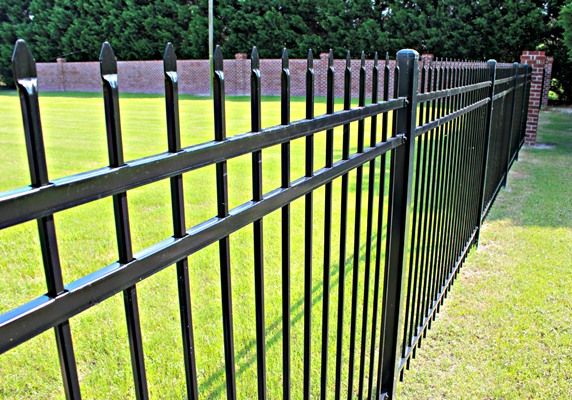
For properties with aging iron fences that need attention alongside a canopy project, wrought iron fence repair & installation services from a contractor experienced with both structural and decorative ironwork will typically produce a better outcome than splitting the work between separate vendors. Continuity of design, consistent materials, and a single point of accountability all matter more than they might seem when the work is complete and the property has to look cohesive.
Similarly, if the property also has an existing iron fence that was installed by the original builder, matching new canopy work to that existing aesthetic requires a fabricator who can assess and replicate period scroll profiles rather than substituting modern alternatives.
Key Takeaways
Iron canopies and awnings outperform lighter materials in Chicago's freeze-thaw climate, particularly when properly coated and maintained
Residential designs should reference the scale, proportions, and scroll profiles of existing ironwork on the property for visual coherence
Commercial storefront canopies benefit most from in-house fabrication, which allows custom letterwork, integrated lighting, and longer unsupported spans
Permits are required for most attached canopy installations in Chicago; historic district properties face additional review requirements
Coordinating canopy work with fence, railing, or painting projects reduces cost and ensures a consistent result across the property
Frequently Asked Questions
How long does a custom iron canopy typically last in Chicago's climate? A properly fabricated and coated iron canopy, maintained with periodic repainting every seven to ten years, can realistically last 40 to 60 years. The failure point is almost always the coating rather than the iron itself. Surface rust that's caught early and treated rarely compromises structural integrity.
What's the difference between a canopy and an awning when it comes to iron construction? In iron construction, a canopy is generally a fixed, rigid structure with an iron skeleton and a solid or semi-transparent infill. An awning typically refers to a fabric-covered frame, which can be retractable or fixed. Iron frames can support either, but for permanent installations in Chicago, solid infill panels, glass, or polycarbonate are more practical than fabric, which degrades faster under UV exposure and heavy snow.
Do iron canopies require a permit in Chicago? In most cases, yes. Any canopy attached to a building facade or requiring footing work will need a permit from the Chicago Department of Buildings. Commercial canopies over public sidewalks also require a separate revocable consent permit from the city. A contractor familiar with Chicago's permitting process can typically manage this on your behalf.
Can a new iron canopy be matched to existing iron details on the property? Yes, provided the fabricator has in-house capability. Matching scroll profiles, bar diameters, and finish types requires fabrication from scratch rather than catalog components. This is one area where in-house fabrication capability makes a direct difference to the quality of the finished result.
What maintenance does an iron canopy need? Annual inspections for surface rust, particularly at weld points and anchor connections, are the minimum. Any rust spots should be wire-brushed, primed, and touched up immediately. A full repaint of the iron surfaces every seven to ten years will preserve the coating and prevent deeper oxidation. In coastal-adjacent or heavily salted urban environments like Chicago's main arterials, a shorter repaint cycle of five to seven years is more appropriate.
Closing Thoughts
An iron canopy or awning is not a simple accessory purchase. It's a structural addition to a building that will affect how the property looks, how it performs in weather, and how it reads to anyone approaching it from the street. Getting the design, the material specification, and the installation right matters for decades.
The best outcomes tend to come from working with fabricators who understand both the decorative craft of ironwork and the structural realities of attaching permanent features to Chicago's varied building stock. If the project involves multiple iron elements, coordinating them from the outset produces a result that looks intentional rather than assembled over time.
For anyone starting the planning process, requesting a detailed fabrication consultation before committing to a design is worth the time. A good fabricator will flag clearance issues, code requirements, and integration challenges before they become expensive corrections after the fact.