
Chicago doesn't go easy on outdoor structures. A single winter can bring sub-zero temperatures, ice accumulation, freeze-thaw cycles, and heavy snow loads, followed by a summer of humidity and UV exposure that would test almost any material. For homeowners thinking about adding a pergola to their backyard, the material choice isn't just about aesthetics. It's a practical decision with real consequences for maintenance costs, longevity, and how the structure looks ten years down the road.
Iron and wood are the two most common choices, and both have genuine strengths. The right answer depends on your priorities, your property, and how much ongoing upkeep you're willing to do.
Why the Chicago Climate Changes Everything
Most pergola advice online is written for mild climates. Chicago is not a mild climate. The city routinely experiences some of the widest seasonal temperature swings in the country, and that variability puts enormous stress on outdoor materials.
Wood expands and contracts significantly as temperatures change. Over several winters, those repeated cycles cause cracking, warping, and joint loosening. Iron, by contrast, handles thermal movement more predictably, and its structural integrity doesn't degrade the same way under freeze-thaw conditions.
Moisture is the other major factor. Chicago's proximity to Lake Michigan means higher ambient humidity for much of the year. Wood absorbs moisture readily, which accelerates rot, mold, and structural softening in untreated or poorly maintained timber. Iron's vulnerability is different: surface rust if the coating is compromised. But rust is a surface problem that can be addressed. Structural rot in wood often isn't caught until it's already expensive.
Iron Pergolas: Durability With a Maintenance Commitment
Iron is a compelling choice for Chicago backyards, particularly in older neighborhoods where the architectural character already leans toward ornamental metalwork. Wrought iron and structural steel pergola frames offer load-bearing strength that wood simply can't match at comparable dimensions. Thinner profiles, cleaner lines, and the ability to support heavier climbing plants or shade elements without bulk are all genuine advantages.
The durability case for iron is strong. A properly fabricated and coated iron structure, installed correctly, can last several decades with periodic maintenance. That maintenance usually means repainting every several years and inspecting welds and joints for any signs of surface oxidation.
One thing worth knowing: not all iron pergola fabrication is equal. Custom-fabricated structures built to the specific dimensions of a property tend to perform better than generic catalog pieces. Companies like Americana Iron Works & Fence, which build custom ironwork in-house, can account for site-specific factors including soil conditions, fence integration, and existing architectural elements.
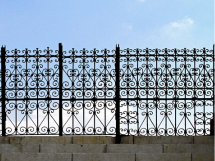
When it comes to fencing around a pergola space, an iron fence pairs naturally with a metal pergola structure, creating a cohesive outdoor aesthetic that doesn't require mixing maintenance schedules across different materials.
<strong>Where Iron Performs Best</strong>
Iron pergolas tend to work well in situations where:
The backyard has an existing ornamental iron fence or gate
The homeowner wants a low-profile structure that doesn't look heavy
The design includes integrated climbing hardware, lighting mounts, or privacy screens
The property is in a historic district where architectural character matters
Wood Pergolas: The Classic Option With Real Trade-Offs
There's a reason wood has been the default pergola material for generations. It's workable, widely available, visually warm, and relatively straightforward to repair. A well-built cedar or pressure-treated pine pergola can look excellent and hold up reasonably well, provided it's properly sealed, stained, and maintained on a consistent schedule.
The problem is that "properly maintained" is doing a lot of heavy lifting in that sentence. In Chicago, a wood pergola that misses a season of treatment can start showing visible deterioration within two to three years. Cedar is naturally more rot-resistant than pine, but it still needs attention. Composite and treated lumber options reduce some of that risk, but they change the aesthetic considerably.
For homeowners who also have a wooden fence on the property, coordinating maintenance schedules across both structures makes practical sense. Sealing the pergola and the fence in the same season reduces the chance of either getting neglected.
<strong>Where Wood Works Well</strong>
Wood pergolas tend to be a better fit when:
The design intent is a natural, garden-style look that blends with plantings
The homeowner is comfortable with regular staining and sealing
Budget constraints favor lower upfront fabrication costs
The structure is in a sheltered area with reduced wind and moisture exposure
Cost Over Time: The Real Comparison
Upfront material costs often favor wood, but that framing doesn't hold up once you factor in ongoing maintenance and lifespan. A cedar pergola might cost less to build initially, but factor in annual or biannual treatment costs, potential board replacement after five to seven years, and the possibility of full structural replacement in fifteen to twenty years, and the numbers look different.
Iron, installed and coated correctly, typically requires repainting every five to seven years. That's a cost, but it's predictable and relatively contained. The structural lifespan of a well-built iron pergola in Chicago conditions comfortably exceeds that of a comparable wood structure, often by a significant margin.
The cost-effective framing here isn't about finding the cheapest option. It's about understanding total cost of ownership over the realistic lifespan of the structure. A pergola that needs to be rebuilt in fifteen years isn't cheaper than one that lasts thirty.
Aesthetics and Design Flexibility
This is where personal preference plays the biggest role, and there's no single right answer. Wood offers a warmth and texture that suits cottage-style gardens, naturalistic planting schemes, and properties with existing timber elements. It's easy to customize with paint or stain, and it accepts hardware modifications with basic tools.
Iron offers precision and visual refinement. Ornamental details, curved elements, and integrated mounting points for lighting or shade fabric are all more achievable with fabricated metal than with timber construction. For properties in neighborhoods like Lincoln Park, Old Town, or the Gold Coast, where period architecture is common, iron often sits more naturally in the visual context.
The two materials aren't always mutually exclusive. Some designs combine an iron post structure with timber beams or composite decking overhead, blending the structural advantages of metal with the surface warmth of wood. That hybrid approach does introduce multiple maintenance requirements, though, which is worth thinking through before committing.
Installation Considerations Specific to Chicago
Pergola installation in Chicago often involves factors that aren't relevant in other parts of the country. Frost depth is one of them. The Chicago area frost line sits at approximately 42 inches, which means footings for any permanent outdoor structure need to go deep enough to prevent heaving. Iron structures, which are heavier and less forgiving of movement at the base, require this to be done correctly.
Building permits may also be required depending on the size and configuration of the pergola, especially if it's attached to the house. Chicago's municipal code has specific requirements around structural attachments and setbacks that vary by neighborhood and zoning classification.
For commercial properties and building owners managing multiple outdoor structures, compliance considerations become more significant. Working with a contractor who understands Chicago's permitting environment reduces risk considerably.
Key Takeaways
Chicago's freeze-thaw cycles and humidity make material selection more consequential than in milder climates
Iron offers superior structural longevity with predictable maintenance requirements, wood offers warmth and lower upfront cost but demands more consistent upkeep
Total cost of ownership over fifteen to thirty years often favors iron, despite higher initial investment
Matching the pergola material to existing fencing and architectural elements creates a cohesive and lower-maintenance outdoor space
Frost depth and permitting requirements in Chicago make correct installation as important as material selection
FAQ
Can a wood pergola survive Chicago winters without heavy maintenance? It can survive, but "survive" covers a lot of ground. Without proper sealing and staining going into winter, wood pergolas in Chicago show accelerated cracking, mold, and structural softening within a few seasons. Cedar holds up better than pine, but neither is maintenance-free in this climate.
Does iron rust in Chicago's weather? Surface rust can develop if the protective coating is damaged or neglected, but this is a surface-level issue rather than a structural one. Regular inspection and repainting on a five to seven year cycle prevents meaningful oxidation. Iron that is properly coated and maintained does not rust through structurally in normal use.
Which material is better for supporting heavy climbing plants like wisteria? Iron, without question. Wisteria in particular can reach considerable weight and mass at maturity, and wood beams under that kind of load are vulnerable to both structural stress and moisture retention from the plant coverage. Iron supports heavier loads with smaller structural profiles and doesn't absorb moisture the way wood does.
Is a pergola a permanent structure under Chicago building code? It depends on the configuration and size. Freestanding pergolas below certain square footage thresholds may not require a permit, but attached structures or those with footings typically do. Chicago's building department is the authoritative source, and checking before installation is strongly advisable.
How long should each type of pergola realistically last in Chicago? A well-maintained wood pergola can last fifteen to twenty-five years before major structural replacement becomes necessary. A properly fabricated and maintained iron pergola can comfortably last thirty to fifty years or more. The gap widens significantly when maintenance on the wood structure lapses even briefly.
Conclusion
The iron vs wood decision for a Chicago pergola isn't one with a universal answer, but the climate context narrows it considerably. Wood can work, and it can look beautiful. Iron simply asks less of you over time in a city that pushes outdoor materials to their limits every single winter.
Whichever direction makes sense for your backyard, getting the installation right, including footing depth, material quality, and protective coatings, matters as much as the material itself. A well-built pergola of either type will outperform a poorly installed one regardless of what it's made from.
Take the time to think through the full picture: aesthetics, maintenance commitment, existing structures on the property, and realistic lifespan. That's the analysis that leads to a decision you won't regret five winters from now