
Types of Metal Privacy Fences: Corrugated, Louvered, Panel and Slat
A metal privacy fence is a different product from the ornamental iron most Chicago properties already have. Open pickets are designed to be seen through, privacy fencing is designed not to be, and that single change alters the framing, the footings and the wind load. Four styles cover almost everything available, and the difference between them is less about material than about how they handle the gap between solid and open.
Short answer: Corrugated panels give full opacity at low material cost in an industrial look. Louvered blades block sightlines while letting air and light through, at the highest fabrication cost. Solid panels give maximum privacy and maximum wind load. Slats give partial privacy that changes with viewing angle. The thing most buyers miss is that privacy is a function of gap and viewing angle rather than material, and that a solid fence acts as a sail, which on a Chicago lot means heavier posts and deeper footings than an open fence needs.
What Actually Makes a Fence Private
Worth establishing before the styles, because it decides which one you want. Privacy comes from three things together: the proportion of surface that is solid, height relative to sightlines from where people actually look, and viewing angle. The third surprises people.
A fence with narrow gaps reads solid when you stand square to it and becomes substantially transparent viewed along the run. So whether something gives you privacy depends on where the people you are screening from stand, which is a question about your neighbor's deck and your alley rather than about the product. Height also interacts with grade: a six-foot fence on ground falling away from the viewer screens less than the same fence on level ground, and Chicago lots are rarely flat across a full run.
The Four Metal Privacy Fence Styles
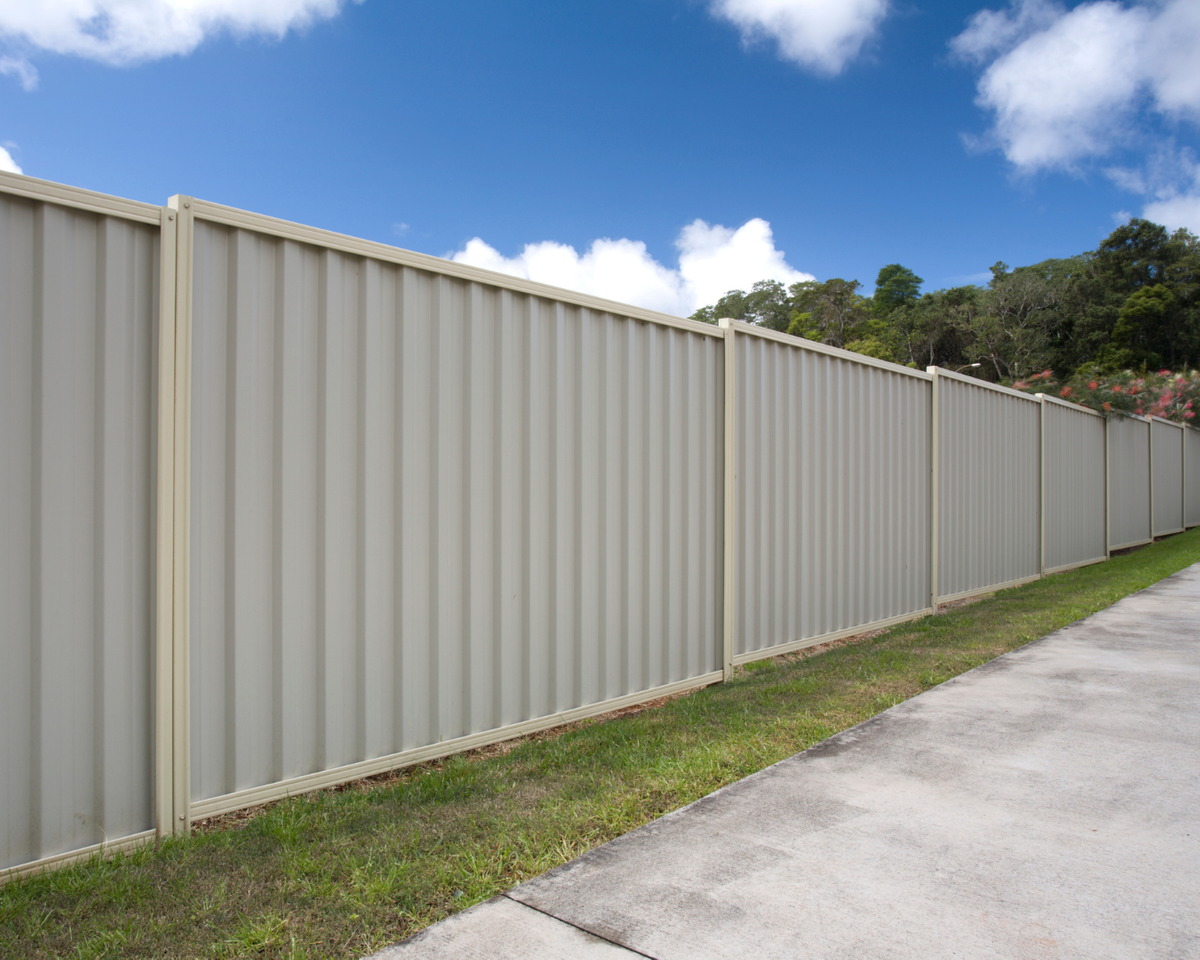
Corrugated panels. Corrugated steel sheet set into a steel or wood frame, ribs usually running vertically. Fully opaque, inexpensive as a material, and strongly associated with a modern industrial look that suits some buildings and fights others.
What to know: the panel is thin, so it needs a frame to be rigid, and an under-framed panel drums and flexes in wind. Cut edges are sharp and need capturing in the frame rather than leaving exposed. And if the specification is weathering steel, the patina bleeds and the runoff permanently stains concrete, pavers and stone below it. A design decision rather than a defect, and the most common regret with this style.
Louvered blades. Angled blades, horizontal or vertical, fixed or adjustable, in a frame. They block direct sightlines while leaving a path for air and light, which is why the style suits places a solid fence would turn into a box.
What to know: the most expensive of the four, being the most material and the most fabrication, and the best performer in wind since air passes through rather than pushing against it. Privacy varies with blade angle, so effectiveness depends on whether the people looking are above, level with or below the fence.
Solid panels. Flat sheet or plate in a frame, giving complete visual separation. The most private and the most structurally demanding, since a solid surface catches the full wind load and transfers it to posts and footings.
What to know: solid metal reads monolithic and institutional at height unless broken up with framing, texture, a reveal between panels or a change in plane. It is also the heaviest option, which matters for gate hardware where a run includes a gate.
Slats. Horizontal or vertical slats with deliberate gaps, usually aluminum or steel. The current default for modern residential projects, lighter and less wind-affected than solid.
What to know: the gap is the whole specification. Tight approaches solid and loses the airflow benefit; generous is a screen rather than a privacy fence. Decide it by standing where the viewer stands, not by picking a number on a drawing.
Metal Versus Wood for Privacy
Worth being direct, because wood is the default for privacy fencing and for good reasons.
Wood is cheaper to install, universally available, easy to repair in sections, and nobody looks twice at it. For a straightforward solid privacy run on a residential lot, wood is usually the sensible answer and the cheaper one.
Metal earns its cost in three situations: where service life matters, since metal does not rot, warp or cup and a wood privacy fence here is a maintenance commitment with a finite life; where the look is the point, since corrugated, louvered and slat styles cannot be done in wood; and where combustibility matters, since metal contributes no fuel in a fire, a real consideration on tight lots with structures near the line.
Where metal is clearly the wrong tool is a long straightforward run on a budget, which is a wood job. A fabricator who tells you that is more useful than one who does not.
Chicago Factors That Change the Specification
Three local conditions bear directly on a privacy fence in a way they do not on an open one.
Wind load. This is the big one and the reason privacy fencing is a structural question. An open picket fence is mostly air and lets wind through. A solid fence is a sail, and the force it collects goes into the posts and then into the ground. That means larger posts, closer post spacing and deeper, wider footings than the same run of ornamental iron would need. A privacy fence built on footings sized for an open fence leans, and then it keeps leaning.
Frost and footing depth. Chicago's freeze and thaw cycles move anything not set below the frost line, and a tall solid fence puts more force on its footing than a short open one. The footing is where privacy fences fail, which makes it worth asking about specifically rather than assuming.
Height limits and lot lines. Fence height is regulated and the limit commonly differs between front, side and rear yards, with corner lots and sightline rules adding more. Confirm what is allowed at your address before designing to a height, since a privacy fence that has to be cut down is a rebuild rather than an adjustment.
Specifying a Metal Privacy Fence
Six decisions, in the order they matter.
Stand where the viewer stands. Before choosing a style, go to the spot you are screening from and look. That determines height, gap and whether you need solid at all.
Settle the gap, not just the style. Slat and louver performance is entirely about gap and angle. A number on a drawing is not a privacy decision.
Size the structure for wind, not for appearance. Posts, spacing and footings follow from how solid the fence is. This is the line item that should not be value-engineered.
Decide the finish before fabrication. Galvanizing under a finish coat is what keeps a fence out of trouble in a Chicago winter, and refinishing a privacy fence later means far more surface area than an open one. Metal fence painting is a different proposition on solid panels than on pickets.
Plan the gates with the fence. Solid gates are heavy and catch wind, so hinges, posts and hardware get sized for it. A gate that sags is usually one specified like a panel, and correcting it later is iron gate repair rather than an adjustment.
Expect fabrication rather than a catalog. These styles are built to the opening, so the run gets measured and the panels get made to fit it. That is custom ironwork rather than a stock purchase.
If the goal is security rather than privacy, the answer is probably different. An iron fence deters and delineates while keeping sightlines open, which is often what a property actually needs, and open sightlines are a security advantage rather than a compromise.
Key Takeaways
Privacy comes from solid proportion, height relative to sightlines and viewing angle. The angle is the part buyers miss.
A fence with narrow gaps reads solid head-on and becomes transparent when viewed along the run.
Corrugated gives full opacity cheaply, needs a proper frame, and in weathering steel permanently stains whatever sits below it.
Louvered blades block sightlines while passing air and light, cost the most to fabricate, and handle wind best.
Solid panels give maximum privacy and maximum wind load, and can read institutional without detailing.
Slats are the modern default, and the gap dimension is the entire specification.
A solid fence is a sail, so posts, spacing and footings must be sized larger than an open fence of the same height.
Wood is usually the cheaper and sensible answer for a plain privacy run. Metal earns its cost on service life, appearance or combustibility.
Frequently Asked Questions
Which metal privacy fence style gives the most privacy?
Solid panels, by definition, since there is no gap to see through at any angle. Corrugated is effectively equivalent in opacity. Louvered comes next, blocking direct sightlines while passing air, with performance depending on blade angle relative to where the viewer is. Slats give the least, and how much depends entirely on the gap you specify.
Why does a privacy fence need bigger footings than my iron fence?
Because it catches wind that an open fence lets through. An ornamental fence is mostly air, so wind passes between the pickets. A solid surface collects that force and transfers it down the posts into the ground, which calls for larger posts, closer spacing and deeper, wider footings. Building a privacy fence on footings sized for an open fence is the most common cause of leaning.
Is a corrugated metal fence a good idea?
It can be, with two cautions. The panel needs a frame stiff enough to stop it drumming in wind, and cut edges need capturing rather than leaving exposed. And if the specification is weathering steel for the patina, the runoff permanently stains concrete, pavers and stone below it. Plenty of people choose it anyway, but it should be a decision rather than a surprise.
Should I use metal or wood for a privacy fence?
For a plain solid run on a budget, wood is usually the right answer and the cheaper one. Metal makes sense where service life matters, since it does not rot or warp, where the look is the point, since corrugated, louvered and slat styles cannot be done in wood, or where you want a fence that contributes no fuel in a fire.
How tall can a privacy fence be in Chicago?
It depends on the yard and the property, since limits commonly differ between front, side and rear yards, and corner lots carry additional sightline restrictions. Confirm what is permitted at your specific address before designing to a height, because a fence built too tall is a rebuild rather than a trim.
Choosing a Metal Privacy Fence for a Chicago Property
The metal privacy fence decision is mostly two questions asked in the right order. Stand where the people you are screening from will stand and work out how much solid surface you actually need. Then size the structure for the wind that surface will catch.
Americana Iron Works fabricates and installs fencing, gates and structural steel across Chicago, with panels built to the opening rather than cut down from stock. See the full range of fencing and ironwork services, and if you are weighing privacy styles, bring the site rather than a picture, since the footings and sightlines settle the design.