
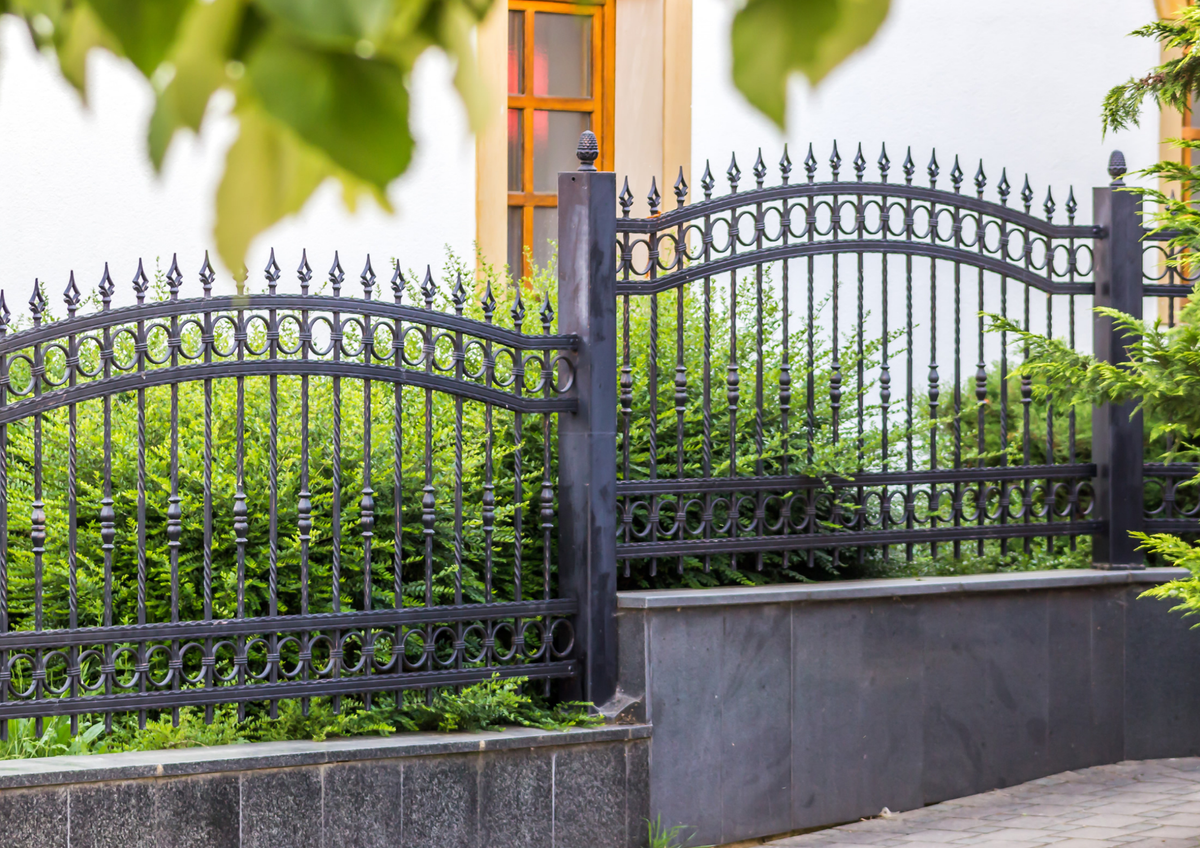
Property owners quoted a full fence replacement after a car clipped one panel are usually being quoted the easy job rather than the right one. On-site fence welding handles a wide range of damage in place, at a fraction of the cost, and preserves ironwork that in many Chicago neighborhoods cannot be matched by anything currently manufactured. The question worth asking before authorizing a replacement is which category the damage actually falls into, because a great deal of what looks terminal on a wrought iron fence is a cut and a weld away from being sound.
SHORT ANSWER
Localized damage is almost always repairable in place: broken welds, bent or missing pickets, failed rail-to-post joints, sagging gates, corroded post bases, and sections damaged by impact. Replacement becomes the better answer when corrosion has caused section loss along the whole run, when posts have failed below grade, or when the fence is aluminum or chain link, which are not candidates for the same repair. The deciding factor is whether the damage is concentrated or distributed.
Why Repairing in Place Usually Wins
Removing a fence section to shop-weld it means excavating posts, transporting the panel, welding, transporting it back, and resetting posts in new concrete. Doing the same weld on site skips nearly all of that.
The preservation argument matters more in Chicago than the cost argument. Ornamental iron fencing on older residential blocks was made with patterns, castings, and proportions that no current catalog reproduces. Replacing one damaged section with a modern panel leaves a visible mismatch across the entire frontage. Splicing in repaired material keeps the run consistent.
What Can Be Repaired in Place
Broken or cracked welds. The most common failure by a wide margin. Pickets separating from rails, or rails from posts, are re-welded after the joint is ground back to clean metal.
Bent, broken, or missing pickets. Individual pickets are cut out and replacements spliced in, matched to the existing profile where possible.
Failed rail-to-post connections. A rail pulling away from a post is a joint problem, not a fence problem.
Sagging or dragging gates. Usually a combination of worn hinges and a racked frame. Re-squaring the frame, adding a diagonal brace, and re-welding or replacing hinges resolves most cases.
Corroded post bases. Where a post has rusted through at grade but the material above is sound, the corroded section is cut away and new material welded in, sometimes with a new base plate.
Impact damage. Vehicle strikes typically destroy one or two sections while leaving the rest intact. The damaged material comes out and fabricated replacement goes in.
Modifications. Adding a gate opening, extending height, or reworking a section for a new driveway are all on-site fabrication tasks rather than replacement triggers.
Gates deserve particular attention because they carry moving loads that fencing does not. Repeated iron gate repair on the same gate usually points to a frame that has racked out of square or a post that has shifted, and welding the symptom without correcting the geometry produces the same failure again.
What On-Site Fence Welding Cannot Fix
Several conditions call for replacement, and recognizing them early avoids paying for a repair that will not hold.
Distributed section loss. When corrosion has thinned material throughout the run rather than at specific points, there is nothing sound to weld to. Pitting deep enough to penetrate wall thickness in multiple places is the signal.
Failed posts below grade. Posts that have corroded or shifted underground require excavation and resetting, which is no longer an in-place repair.
Aluminum fencing. Aluminum requires a different process and different equipment than steel, and many residential aluminum systems are assembled rather than welded, making component replacement the practical route.
Chain link. Repairs are mechanical, involving fittings and tension hardware, not welding.
Galvanized material. It can be welded, but doing so destroys the coating at the joint and produces hazardous fumes, so it requires specific handling and always requires re-coating afterward.
Compliance problems. A fence that no longer meets requirements for height, spacing, or pool enclosure is not fixed by welding it back to its previous condition.
Cast Iron, Wrought Iron, and Modern Steel Behave Differently
The term wrought iron gets applied loosely to any ornamental metal fence, but the material actually in the ground affects the repair.
Most fencing sold as wrought iron over the past several decades is mild steel, which welds readily. True wrought iron, found on genuinely old installations, has a fibrous structure and different working properties. Cast iron, common in decorative elements such as finials, panels, and post caps on older Chicago properties, is brittle and cracks under the thermal stress of ordinary welding. Repairing it correctly requires different filler material and controlled heating, and treating a cast element like mild steel usually cracks it further.
This is why a welder should identify the material before striking an arc, particularly on an older property where several materials may be present in the same fence.
The Process, and Why Working Outdoors Changes It
On-site welding runs from a portable engine-driven machine, which is what makes the work possible away from a shop.
The process selection matters more than most owners realize. Wind is the deciding factor. A shielding gas process protects the weld pool with a gas envelope, and even modest wind blows that envelope away, producing porous welds that fail early. Processes that carry their own shielding through the electrode or wire tolerate outdoor conditions far better, which is why competent field work on a windy Chicago block does not look like shop work.
Surface preparation is the other half. Welding over rust, old paint, or mill scale produces a joint that looks finished and is not. The area has to be ground to clean bright metal on both sides of the joint before any welding happens, and a quote that does not account for prep time is quoting a weld that will fail.
Site safety is a real consideration on tight urban lots. Sparks travel, and fence lines sit next to mulch, siding, parked cars, and gas services, so shielding and a fire watch are part of the work rather than an extra.
Finishing Matters as Much as the Weld
A completed weld is bare steel, and bare steel in Chicago starts corroding almost immediately. Road salt makes fence lines particularly aggressive environments, since salt spray from plowing concentrates exactly where the fence meets grade.
Proper sequence is to grind the weld smooth, remove all mill scale and spatter, apply a rust inhibiting primer, and topcoat with an industrial exterior paint. Skipping the primer or delaying the coating is the most common way a good repair fails within a year. Where the entire run is due for attention anyway, coordinating repairs with metal fence painting across the whole fence produces a uniform finish rather than a patch that reads as a repair from the sidewalk.
Deciding Between Repair and Replacement
A few questions settle most cases.
Is the damage concentrated or spread out? Concentrated damage repairs well. Distributed corrosion does not.
Are the posts sound? Posts are the structure. Sound posts favor repair regardless of what the panels look like.
Can the material be matched? On a historic pattern, repair preserves value that replacement destroys.
How much of the run is affected? Once repairs would touch most of the fence, replacement becomes the more sensible allocation.
Does the fence still meet requirements? If it does not, replacement resolves compliance and condition together.
Properties in landmark districts add a further consideration, since alterations to historic features can be restricted. In those cases repair is frequently not just the cheaper path but the required one, and fabricated structural steel work matched to the original is how the fence stays both compliant and intact.
Key Takeaways
On-site fence welding handles broken welds, damaged pickets, failed joints, sagging gates, corroded post bases, and impact damage without removing the fence.
Distributed corrosion, failed below-grade posts, aluminum, and chain link call for replacement or a different repair method.
Cast iron is brittle and requires different technique than mild steel, so the material should be identified first.
Wind rules out shielding gas processes outdoors, which is why field welding uses self-shielded methods.
Joints must be ground to clean metal before welding, and prep time belongs in the quote.
Prime and topcoat immediately, since bare weld metal corrodes quickly in a salted Chicago fence line.
Repeated gate failures usually indicate racked geometry rather than a weak weld.
Frequently Asked Questions
Can a fence be welded without taking it out of the ground?
Yes, in most cases. Portable equipment allows pickets, rails, joints, gates, and post sections to be repaired in place. Removal becomes necessary mainly when posts have failed below grade.
Will the repair be visible?
Properly executed, the weld is ground smooth and blends into the profile once primed and painted. A repair becomes visible when the coating is not matched or when replacement material does not match the original picket profile.
Can a rusted-through post be saved?
Frequently. If corrosion is concentrated at grade and the material above and below is sound, the affected section can be cut out and new material welded in. Posts that have deteriorated along their buried length need resetting instead.
Is welding a fence a permitted job in Chicago?
Like-for-like repair of an existing fence is generally treated differently than new installation or alteration, and requirements vary by scope and by property. Confirm with the city before work that changes fence height, location, or configuration.
How long does an on-site repair take?
Most localized repairs are completed within a single visit, including preparation, welding, and finishing. Extensive damage across several sections or fabrication of matching material may require a return visit.
My fence is aluminum. What are my options?
Aluminum systems are commonly assembled with brackets and fasteners rather than welded, so damaged components are typically replaced individually. Welded aluminum repair is possible but calls for different equipment and technique than steel.
Conclusion
Most damaged iron fencing in Chicago is more salvageable than the first quote suggests. On-site fence welding addresses the failures that actually occur, which are concentrated at joints, gates, and post bases rather than spread across an entire run, and it preserves ornamental material that no replacement panel will match. Replacement earns its place when corrosion has become general rather than local.
Americana Iron Works & Fence repairs, fabricates, and refinishes iron fencing, gates, railings, and structural ironwork for residential and commercial properties throughout Chicago and the surrounding suburbs, with more than thirty years of in-house fabrication behind the work. If a section of your fence has been damaged or your gate has started to drag, reach out today to request a free quote.