
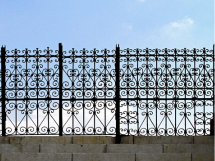
Chicago loses a little bit of its character every time a deteriorated wrought iron fence gets ripped out and replaced with something cheaper. Walk through Lincoln Park, Old Town, or the Gold Coast on any given afternoon and you'll see it — ornate scrollwork, hand-forged pickets, gates with details that simply cannot be replicated by modern automated production. These pieces are often more than a century old, and with the right approach, they can last another hundred years.
Restoration is rarely the first instinct. Many property owners assume the damage is too far gone, or that the cost will be prohibitive. But understanding what wrought iron actually is, how it behaves over time, and what repair genuinely requires can change that calculation entirely.
Why Wrought Iron Behaves Differently from Modern Steel
Before getting into techniques, it helps to understand the material itself. Wrought iron is not the same as cast iron or modern mild steel. It's a low-carbon iron with slag fibers running through its structure, giving it a fibrous, almost grain-like quality. That grain is why wrought iron bends rather than snapping under stress, and it's also why pieces forged 100 years ago often show surface corrosion without any underlying structural compromise.
Modern steel corrodes differently. It can rust from the inside out, weakening the core before the surface damage becomes visible. Wrought iron, by contrast, tends to rust on the surface while the inner material remains surprisingly sound. This is relevant because it means that what looks like a severely deteriorated fence may actually be far more structurally intact than it appears.
The National Park Service has documented this extensively in its preservation briefs on historic metals, noting that wrought iron's corrosion resistance and repairability make it well-suited to restoration rather than outright replacement.
Assessing the Condition Before Any Work Begins
A proper restoration starts with an honest structural assessment, not a quote for paint.
Surface rust versus structural rust is the critical distinction. Surface rust, the reddish-brown oxidation that builds up on exposed iron, can be mechanically removed without compromising the base metal. Structural rust is different. It appears as deep pitting, flaking layers, or areas where the metal has become honeycombed or brittle. Tap the section with a hammer. Solid wrought iron rings clearly. Heavily corroded iron sounds dull and hollow.
Check welds and joints separately. Many older fences were assembled with rivets or forge welds, not arc welds. If a joint has been previously repaired with arc welding, inspect it carefully because the heat-affected zone around a modern weld can accelerate localized corrosion on wrought iron if it wasn't properly treated afterward.
Also look at the posts. Ground contact is where posts fail first. Below-grade sections are constantly exposed to moisture and soil chemistry, and this is usually where you'll find the most advanced deterioration even on a fence that looks fine above ground.
Rust Removal: Matching the Method to the Damage
Once the assessment is complete, rust removal is the first physical step. The method depends on how much material needs to come off and how intricate the ironwork is.
Wire brushing and hand tools are the baseline for light surface rust on decorative sections. Angle grinders with wire wheel attachments work well on flat or curved sections, but they're too aggressive for fine scrollwork or ornamental details where they can remove or distort the original profile. In those areas, hand wire brushes, detail picks, and even dental tools are more appropriate.
Sandblasting is effective for extensive rust on larger sections or posts, and it strips paint layers simultaneously. The trade-off is that it can be too aggressive for thin or detailed wrought iron components. Wet abrasive blasting, also called dustless blasting, is often a better choice for historic ironwork because it's gentler and reduces the risk of embedding abrasive particles in surface pits.
Chemical rust converters can supplement mechanical removal on pitted areas. These products convert iron oxide to a more stable compound (typically iron tannate) that provides a better bonding surface for primer. They don't replace mechanical removal, but they're useful for pit interiors that can't be fully reached by abrasion.
One point worth emphasizing: wrought iron should be primed almost immediately after rust removal. Bare iron oxidizes quickly, and leaving it exposed for even a day or two in Chicago's humid summer conditions can start the process over again.
Repair Versus Replacement: Knowing When Each Is Right
Not every section of a historic fence can or should be saved. Judgment matters here.
For missing pickets or decorative elements, reproduction is often the right answer. A skilled fabricator can replicate original profiles, scrollwork, and collar details using traditional forging techniques. This is where in-house fabrication capability becomes important. Stock replacement parts rarely match the profile of historic ironwork accurately, especially on custom or semi-custom designs that were common in Chicago's older residential neighborhoods.
For gate hardware, hinges, and latches that are damaged or seized, replacement is almost always more practical than repair. This applies particularly to gate installation work on historic properties, where the gate itself may be restorable but the mounting hardware has reached the end of its functional life. Replacing hardware with period-appropriate designs maintains the visual integrity of the original installation.
Welding repairs on wrought iron require specific awareness. Modern MIG or TIG welding can be used, but the filler material and technique matter. Wrought iron's slag content means it behaves differently in the heat-affected zone than mild steel. Ideally, welded repairs on structural sections should be done by someone familiar with the material's properties, not simply treated as a standard steel repair job.
Priming and Painting for Long-Term Protection
Restoration without proper finishing is a short-term fix. The coating system is what determines how long the repair actually holds.
For historic wrought iron, the most widely recommended primer is a zinc-based or oil-based formulation. Zinc-rich primers provide sacrificial protection, meaning the zinc corrodes preferentially to the iron beneath it. Red oxide primers are another traditional choice with a long track record on ferrous metals. Water-based primers have improved significantly, but they remain generally less suitable for exterior ironwork than solvent-based systems.
Application matters as much as product selection. Two thin coats of primer outperform one heavy coat, particularly on textured or pitted surfaces. The primer needs to get into surface irregularities rather than bridging over them, which is exactly what happens when it's applied too thickly.
For topcoats, alkyd enamels remain the standard for exterior iron. They cure hard, adhere well to primed iron, and hold up through Chicago winters. Gloss finishes are traditional and also practical because they shed water more effectively than flat finishes.
Many property owners in Chicago's historic districts are dealing with layers of old paint on their ironwork, sometimes 15 or 20 layers deep over a century of repainting. This buildup obscures detail and creates a poor bonding surface. Full strip-and-refinish is labor-intensive but produces far better results than painting over existing layers when the underlying coats are already failing.
Working Within Chicago's Historic Districts
Several Chicago neighborhoods fall under local landmark protections or are listed on the National Register of Historic Places. Properties within these areas may need approval before altering or replacing exterior ironwork, even for restoration purposes.
The Chicago Landmarks ordinance administered by the Commission on Chicago Landmarks covers alterations to landmark buildings and districts. For properties in designated areas like the Prairie Avenue Historic District or portions of Old Town Triangle, it's worth confirming what approvals are needed before beginning significant fence or gate work. Restoration work that maintains original materials and profiles is generally viewed favorably, while replacement with non-matching materials can be more complicated to approve.
For complex restoration projects that involve both structural repair and custom reproduction of missing elements, working with a contractor experienced in custom ironworks is worth the investment. The ability to fabricate replacement components in-house, to match original profiles and finishes, makes a measurable difference in both the quality of the result and the speed of the project.
Maintenance After Restoration
A restored fence requires less attention than most people expect, but it does require some.
Annual inspection is the baseline. Look for areas where paint is lifting, cracking, or showing rust bleed through. Catch these spots early and they're a wire brush and touch-up job. Let them go for a few seasons and they can develop into structural repairs.
Clean the ironwork once or twice a year to remove debris that holds moisture against the surface. A soft brush and mild soap is sufficient. Pay particular attention to horizontal surfaces, flat rail tops, and any decorative elements where water and organic material tend to pool.
Repainting on a cycle of roughly 5 to 7 years, or sooner if the topcoat is visibly failing, is a reasonable schedule for properly primed exterior ironwork in Chicago's climate. The city's freeze-thaw cycles are hard on any coating, and staying ahead of the maintenance cycle is always more economical than waiting for full corrosion to redevelop.
Americana Iron Works and Fence has completed restoration and painting projects across Chicago's older neighborhoods for over 30 years, and the pattern is consistent: properties maintained on a regular cycle last significantly longer between major interventions than those where maintenance is deferred until visible failure.
Key Takeaways
Wrought iron's fibrous structure makes it more restorable than modern steel in many cases. Surface rust does not necessarily indicate structural failure.
Always assess posts and below-grade sections separately. Ground contact is where historic ironwork deteriorates fastest.
Match the rust removal method to the detail level of the piece. Sandblasting and angle grinders are too aggressive for fine ornamental work.
Zinc-based or oil-based primers applied in two thin coats significantly outperform single heavy coats on pitted or textured iron surfaces.
Properties in Chicago's historic districts may need landmark commission review before fence or gate alterations. Confirm this before any work begins.
Frequently Asked Questions
Can wrought iron that looks heavily rusted still be structurally sound? Often, yes. Wrought iron corrodes from the outside in rather than internally, so deep surface rust can coexist with a structurally intact core. The tap test (listening for a clear ring versus a dull thud) is a quick field check. A professional assessment will give you a definitive answer before deciding between restoration and replacement.
How do you match a missing section of ornamental ironwork on a historic fence? This typically involves creating a profile template from an intact section and fabricating a matching piece through forging or casting, depending on the detail complexity. Stock replacement parts rarely match historic profiles accurately. Custom fabrication is usually the only option that achieves a visually consistent result.
Is it worth stripping all the old paint before repainting a historic wrought iron fence? When existing paint layers are failing, cracking, or have built up to the point of obscuring detail, yes. Painting over failing coats gives you a poor bonding surface and the new paint will lift prematurely. When the existing layers are intact and well-adhered, a light mechanical prep and fresh topcoat can be sufficient.
How long does a properly restored wrought iron fence last before it needs major attention again? With proper priming, finishing, and annual inspections, a restored fence on a regular maintenance schedule can go 20 to 30 years without significant structural intervention. The key variable is how quickly minor coating failures are addressed. Early touch-up is far less costly than allowing corrosion to redevelop.
Do Chicago's landmark regulations apply to fence restoration, or just the buildings themselves? Landmark protections can apply to fence and gate work on designated properties and within historic districts, not only to the structure itself. The Commission on Chicago Landmarks makes these determinations. It's always worth checking before beginning work, as restoration that maintains original materials is generally easier to get approved than replacement with different materials.
Conclusion
Chicago's older neighborhoods carry a visual identity that's tied directly to the ironwork running along their sidewalks and front yards. That character doesn't have to disappear. Wrought iron is a remarkably durable material, and with the right assessment, the right removal techniques, and a proper finishing system, most historic fences and gates can be brought back to full function and original appearance.
The goal of restoration isn't just aesthetics. It's preserving material that's already in place, already fitted to the architectural scale of its surroundings, and already part of a neighborhood's physical history. That's worth the effort.