
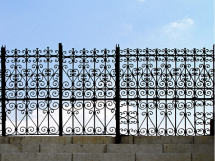
Rust on Ironwork in Chicago: Surface, Scale and Structural
Rust on ironwork is judged almost entirely by how bad it looks, which is close to useless as a measure. Heavy orange staining over sound steel is cosmetic. A neat blister over a pit most of the way through is not. Three tiers describe what you are actually dealing with, and separating them takes about ninety seconds with a screwdriver.
Short answer: Surface rust sits on top of steel that is still sound, and it cleans off and recoats. Scale is layered, flaking rust that has consumed some thickness and needs mechanical removal back to sound metal. Structural rust has taken enough cross-section that capacity is in question. Tell them apart by scraping and probing rather than looking: solid steel underneath is surface, flaking layers are scale, metal that gives or perforates is structural. The rust you can see is rarely the worst of it.
What Rust Actually Does to Steel
Rust needs iron, oxygen and water. Remove any one and nothing happens, which is why a coating works and why anything holding moisture against metal is a problem.
Two properties matter more than the chemistry. Rust occupies more volume than the steel it replaced, so as it forms it pushes outward against whatever is around it, which is what turns corrosion into a mechanical problem: it forces bolted plates apart, splits hollow sections, and pushes masonry off steel set into it. And it is porous, so a rusted layer holds moisture against the sound metal underneath rather than protecting it. Rust is not a protective patina on ordinary steel. It is a condition that accelerates itself.
The Three Tiers, and How to Tell Them Apart
Take a flat screwdriver to the worst-looking spot you can reach.
Surface rust. A thin, even film or light orange bloom. Scrape it and solid metal appears underneath with no loss of profile. This is a coating problem rather than a steel problem, and it is the normal state of any exposed edge, cut end or fastener head that has lost its finish.
Scale. Rust in layers that lift and flake off in sheets, often with a rough, pitted surface underneath. Scrape it and material keeps coming away, and the profile underneath is uneven rather than clean. Thickness has already been consumed, though usually not enough to matter structurally. It has to come off mechanically, back to sound metal, before anything is applied over it, because coating over scale traps moisture and the spot reappears larger.
Structural. Metal that gives under pressure, crumbles, flexes where it should be rigid, or has perforated. A screwdriver that sinks in, a section you can deform by hand, a hole you can see through. At this point the question is no longer how to refinish it but whether it still carries what it is holding.
Two findings sit outside that progression.
Pitting. Localized deep craters, driven mostly by chlorides, that can go through a section while the surrounding steel looks fine. Pitting is why you probe rather than judge by area.
Pack rust. Corrosion in the tight gap between two surfaces pressed together, such as a bolted base plate against concrete. It is invisible from outside and it expands, so the first sign is a gap opening up, a bolt going slack, or a plate lifting at an edge. A structural finding dressed as a cosmetic one.
Where Rust Starts Where You Cannot See It
This is the part a visual walk-around misses entirely. Rust starts where water sits and air does not move, and both are out of sight.
Inside hollow sections. Hollow posts and rails rust from the inside out if water gets in and cannot drain. The outside can look sound for years while the wall thins from within, and a post full of water in a Chicago winter becomes a split post. Tap along a run and listen: a dull thud where the others ring is a thin wall or a water-filled section.
At the base, where post meets concrete. The most common location by far. Water collects at the interface, debris piles against it, and nothing dries. The steel above looks fine and the steel at and just below the line is the failure.
Under base plates and bolted connections. Pack rust territory. Look for gaps, lifted edges, rust bleeding out from under a plate, and fasteners gone loose on their own.
Under failing coating. Rust spreads under paint still adhered at the edges, so a blister marks the middle of an area rather than its full extent. Press around it and the soft zone is usually larger than it looks.
At welds, cut ends and tight joints. Weld areas behave differently from the parent material, a cut end that was never sealed is bare steel, and anywhere two pieces meet with a narrow gap, that gap holds water by capillary action and releases it slowly. Picket-to-rail junctions and decorative collars are the usual spots.
What Accelerates It Here
De-icing chloride is the most aggressive accelerant, and it drives pitting specifically rather than general rusting. Freeze and thaw cycling matters because every cycle of wetting and drying is a corrosion cycle, and a winter here delivers a great many. And snow piled against a fence by a plow holds moisture against the lower portion for weeks at a time, which is why the bottom 18 inches of a Chicago fence is almost always the worst part of it.
Rust on Ironwork: What Each Tier Means
Surface rust is a prep and coating job. Clean back to sound metal, prime and topcoat. Caught here it is the cheapest intervention available, which is the whole argument for dealing with it early. On a fence or railing that means metal fence painting or railing refinishing rather than fabrication.
Scale is the same job with more preparation and a judgment about what is left. It comes off mechanically, the remaining profile gets assessed, and some members may need building up or replacing while the rest refinishes. Aggressive prep on pre-1978 ironwork also runs into lead paint rules, which change the permitted methods.
Structural rust is a capacity question rather than a finish question, answered by how much section is left and what the member carries. That is fabrication and sometimes engineering, not refinishing.
The economics are plain. Surface rust addressed on schedule is routine metal painting. The same ironwork left two more winters is scale. Left longer, it is replacement.
When It Stops Being a Fabricator's Question
Four findings warrant more than a refinishing quote. Section loss on anything load-bearing, since railings, guards, stair stringers, fire escapes and structural steel carry people and how much steel remains is the question rather than how it looks. Pack rust at a connection to a building, since that is a load path and the connection itself is corroding. Any member that moves or flexes when it should be rigid. And perforation anywhere structural, because a hole means the section is compromised around it, not just at it.
For fire escapes in particular, corrosion findings belong in the required inspection rather than a maintenance conversation, since what is being assessed is whether it holds people in an emergency.
Key Takeaways
Judge rust by scraping and probing, not by how much area it covers. Appearance and severity are poorly correlated.
Surface rust reveals solid metal underneath and is a coating problem. Scale flakes in layers and has consumed thickness. Structural rust gives, crumbles or perforates.
Rust occupies more volume than the steel it replaced, and it is porous, so it forces plates apart and holds moisture against sound metal.
Pitting can perforate a section while the surrounding steel still looks acceptable, and chlorides drive it.
Pack rust between bolted surfaces is invisible from outside and shows up as a gap, a lifted plate or a bolt gone slack.
The worst corrosion is usually inside hollow sections, at the base where post meets concrete, and under base plates.
Tap along a run and listen. A dull thud where the others ring means a thin wall or standing water.
Frequently Asked Questions
How do I know if rust is just cosmetic?
Scrape it with a flat screwdriver or putty knife. Solid metal underneath with the profile intact means surface rust, and the answer is cleaning and recoating. Material that keeps flaking away in layers means thickness has gone. A tool that sinks in means structural. Heavy staining over sound steel looks far worse than a small blister over a deep pit, and the small blister is the real problem.
Can I paint over rust?
Not over loose, flaking or scaling rust. Coating over that traps moisture against the metal and the spot returns larger, usually within a season. Tight surface rust can be prepared and coated after cleaning back to solid material. One caveat on pre-1978 ironwork: the sanding and grinding that proper prep requires can disturb lead-containing coatings, which is regulated work.
Why is the bottom of my fence always the worst?
Because that is where water, snow, de-icing salt and soil all collect and nothing dries quickly. Plowed snow sits against the lower portion for weeks, chloride residue pulls moisture out of humid air, and debris against the base keeps that zone permanently damp. The lower 18 inches takes more corrosion exposure than the rest of the fence combined.
What is pack rust?
Corrosion in the tight space between two surfaces pressed together, such as a base plate against concrete. It cannot be seen because it is inside the joint, and because rust expands it forces the surfaces apart. The signs are a gap that was not there before, a plate lifting at an edge, rust bleeding out of a seam, or a fastener gone loose on its own.
Does galvanized or coated ironwork still rust?
Eventually, but far more slowly, and that is the point of it. A galvanized base under a finish coat means a damaged top coat does not immediately become a corrosion site. Where protection gets compromised is at field cuts, drilled holes and damage after fabrication, which is why those are the locations to inspect on otherwise well-protected work.
Dealing With Rust on Ironwork Before It Changes Tier
Rust on ironwork moves in one direction, at a rate the climate sets rather than you. The useful discipline is checking the hidden places once a year, scraping rather than squinting, and treating surface rust while it is still surface, because that is the only tier where the fix is paint.
Americana Iron Works assesses, refinishes, repairs and fabricates iron fencing, railings, stairs and custom ironwork across Chicago. If a scrape test turned up flaking material, or something load-bearing has lost section, that is worth looking at on site.