
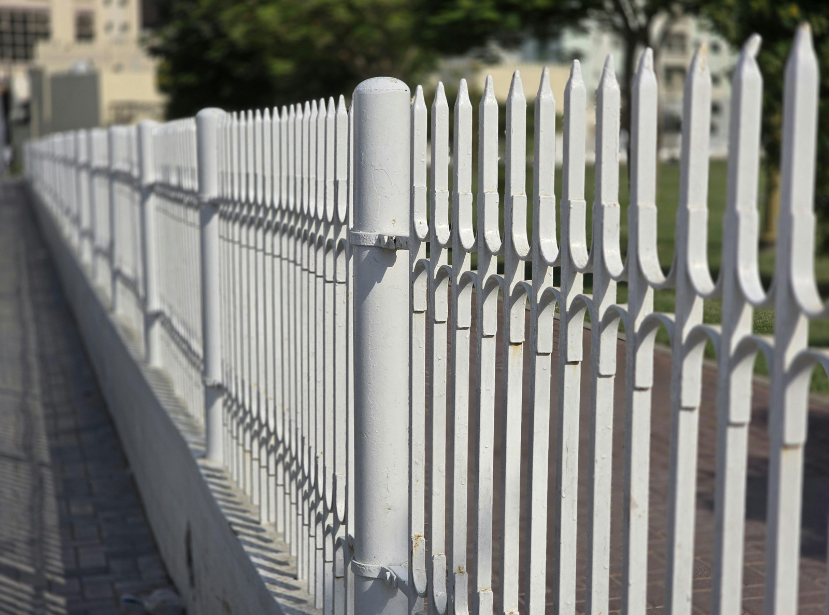
Most homeowners know they want a wrought iron fence long before they know what getting one actually involves. The process looks simple from the outside: pick a style, set some posts, done. In reality, a proper installation, especially on Chicago's older residential stock, involves site assessment, custom fabrication, permit considerations, and a multi-stage install sequence that most contractors don't bother explaining upfront.
Understanding what that process looks like helps you ask better questions, avoid common mistakes, and set realistic expectations before a single post goes in the ground.
Why Chicago Properties Require a Different Approach
Chicago's residential neighborhoods are not a blank canvas. Properties in Lincoln Park, Old Town, Wrigleyville, and the Gold Coast were largely built in the late 1800s and early 1900s. Lot lines are irregular. Existing masonry stoops, stone coping, and century-old concrete slabs are common. Fences rarely follow a clean, straight perimeter.
That architectural complexity means a one-size-fits-all fence panel from a national supplier often won't fit correctly. Posts may need to be custom-spaced. Panels may need to be cut or fabricated to accommodate steps, grade changes, or existing structures. A fence company that only installs pre-manufactured panels will struggle with these jobs. One with in-house fabrication capability won't.
The city's climate adds another layer. Chicago experiences some of the most punishing freeze-thaw cycles in the Midwest. Posts set too shallow will heave. Welds that aren't properly finished will trap moisture and corrode faster. These are not hypothetical concerns; they're the reason so many Chicago properties have rusted, leaning fences that were installed cheaply years ago.
Stage One: The Consultation and Site Assessment
A proper consultation for wrought iron fence installation is not a sales call. It's a technical visit. A qualified contractor will walk the full perimeter with you, assess the grade, identify any obstructions or buried utilities, and take accurate measurements.
During this stage, expect to discuss:
Intended purpose - Is this primarily for privacy, security, curb appeal, or pet containment? Each purpose influences height, spacing, and panel design.
Style preferences - Flat top, spear top, finial, or custom ornamental profiles all carry different fabrication requirements and price points.
Grade changes - A sloped yard requires either raked panels (which follow the slope) or stepped panels (which drop in increments). These are fabricated differently.
Gate requirements - Single gates, double drive gates, and automated gates each have structural implications that affect post sizing and footing depth.
This is also when experienced contractors will flag anything unusual. Cracked existing concrete that needs to be broken out. A property line that doesn't match the visual boundary. A neighboring fence that partially encroaches. Getting clarity on these early prevents surprises mid-install.
Stage Two: Design, Custom Fabrication, and Permitting
Once measurements and design specs are confirmed, fabrication begins. For standard residential wrought iron fencing, this typically means steel pickets, rails, and posts welded together to the specified panel dimensions. Decorative elements like scrolls, rings, or finials are added during this stage.
One aspect most homeowners don't ask about: how closely does the fabricated panel match the approved design? With in-house fabrication, adjustments are straightforward. If a panel needs to be resized because site conditions changed, it happens in the shop, not on the job site with a grinder and a hope.
Permitting requirements vary by municipality. In the City of Chicago, fence permits are generally required for fences above a certain height on commercial properties and in some residential zones. Your contractor should advise you on this during consultation and handle the permit application on your behalf. A contractor who dismisses the permit question is worth treating with caution.
Stage Three: Site Preparation
Site prep often gets overlooked in conversations about fence installation, but it's where a lot of problems originate if it's handled poorly.
The key steps include:
JULIE call - In Illinois, contractors are legally required to contact JULIE (Joint Utility Locating Information for Excavators) before any digging. This identifies buried utilities and prevents dangerous and costly mistakes.
Layout and marking - Post locations are marked along the perimeter, accounting for panel width, gate openings, and any corner configurations. This is where the measurements from the consultation get translated to the ground.
Footing depth - Chicago's frost line sits at approximately 42 inches below grade, according to standard building practice. Posts set shallower than this are vulnerable to heaving through the winter. Concrete footings are poured around each post and left to cure before panels are hung.
This curing period matters. Rushing it to speed up the project is one of the more common shortcuts that leads to posts shifting after the first hard winter.
Stage Four: Panel Installation and Finishing
With footings cured and posts set, panel installation moves relatively quickly. Pre-fabricated panels are hung between posts, aligned, and secured. Gates are hung and adjusted for swing clearance and latch alignment.
After installation, the finishing stage begins. For wrought iron and steel fencing, this means surface preparation and painting. Bare metal is cleaned, primed with a rust-inhibiting primer, and top-coated. The quality of this step determines how long the fence stays looking good and how quickly corrosion sets in if it's skipped or rushed.
A well-applied finish on a properly fabricated steel fence should hold up for years in Chicago's climate before requiring touch-up. A thin spray coat over unprimed metal, on the other hand, will begin peeling within a season.
What to Ask Before Signing a Contract
Choosing the right contractor matters as much as choosing the right fence style. Before signing anything, get clear answers to these questions:
Is fabrication done in-house or outsourced? In-house means more control over quality and fit.
What is the warranty on materials and workmanship? A lifetime warranty on applicable services signals confidence in the work.
Is the contractor licensed, bonded, and insured? This is non-negotiable. It protects you if something goes wrong on your property.
Who handles permitting? You should not be navigating this yourself.
Can you see examples of similar jobs in Chicago? Photos or site visits to comparable properties in the neighborhood are a reasonable ask.
Americana Iron Works & Fence has completed over 20,000 jobs across Chicago and its surrounding neighborhoods over more than 30 years, which means most of those questions come with verifiable answers.
Common Installation Mistakes to Avoid
Even with a good contractor, it pays to know where things go wrong. The most frequent problems seen on Chicago properties are:
Shallow footings - Posts that don't reach below the frost line will shift. Always ask about footing depth.
Poor-fit panels on irregular lots - Pre-sized panels forced to fit a non-standard perimeter leave gaps, lean at odd angles, or require cutting that compromises structural integrity.
Skipped primer - Rust-inhibiting primer is not optional on steel in a climate like Chicago's. If a crew is moving straight to topcoat, that's a red flag.
Ignored grade changes - A fence installed without accounting for slope will have visible gaps underneath or misaligned panels. This is both an aesthetic and security issue.
Undertreated gate posts - Gate posts carry significantly more load than line posts and need larger footings and heavier post profiles. Using the same spec for both is a common shortcut.
For anyone comparing contractor quotes or trying to understand what a full, professional wrought iron fence installation actually covers, the detailed overview at wrought iron fence installation lays out the process clearly.
Key Takeaways
Wrought iron fence installation on Chicago's older properties almost always requires custom fabrication. Pre-manufactured panels rarely account for irregular lot lines, grade changes, or existing masonry.
Footing depth is not a detail to negotiate on. Chicago's 42-inch frost line is the benchmark, and posts set shallower will cause problems within a few winters.
The finishing stage, specifically priming and painting, has a direct impact on how long the fence holds up. Skipping it to cut costs is a common and costly mistake.
Licensed, bonded, and insured contractors are not a preference; they're a baseline requirement for any work on your property.
In-house fabrication gives you more control over fit, quality, and adjustments when site conditions don't match the original plan.
Frequently Asked Questions
How long does a full wrought iron fence installation take in Chicago? Timeline varies based on the scope of the project, but a typical residential install, including fabrication, site prep, and finishing, runs one to three weeks from the start of fabrication. Permitting, when required, can add time depending on the municipality. Your contractor should give you a clear project timeline at the consultation stage.
Do I need a permit to install a wrought iron fence in Chicago? It depends on the height, location, and property type. In the City of Chicago, commercial properties and taller residential fences typically require permits. A reputable contractor will confirm this during the consultation and manage the permit process on your behalf. Don't assume it's handled; ask directly.
What is the difference between raked and stepped panels on a slope? Raked panels are fabricated at an angle to follow the slope of the ground continuously. Stepped panels drop in flat increments, creating a staircase effect. The right choice depends on the degree of the slope and the style of the fence. Your contractor should walk you through both options with examples before fabrication begins.
How often does a wrought iron fence need to be repainted? With proper surface preparation and a quality rust-inhibiting primer and topcoat, a well-installed wrought iron fence in Chicago should hold up for several years before needing a repaint. Harsh winters and road salt spray can accelerate wear near street-facing sections, so those areas are worth inspecting annually.
Can existing wrought iron fencing be repaired rather than replaced? Often yes, particularly if the structural integrity of the posts and rails is sound. Rusted sections, broken pickets, or damaged gates can frequently be repaired or replaced in sections. A contractor with fabrication capability can match the existing profile closely enough that repairs are nearly invisible. If you're unsure whether to repair or replace, a site assessment will clarify the condition. You can contact us to schedule one.
Final Thoughts
Wrought iron fencing holds up exceptionally well when it's installed correctly. The challenge in a city like Chicago is that "correctly" means accounting for frost depth, irregular lots, climate-appropriate finishing, and code compliance. None of that is complicated once you know what to ask, but it's easy to miss when you're comparing quotes based on price alone.
Understanding the process from consultation through to the finished install puts you in a better position to evaluate who you're hiring and why the quality of each stage matters. A fence that's still standing straight and rust-free a decade from now isn't luck. It's the result of decisions made before a single post went into the ground.