
Chicago has more wrought iron in its built environment than almost any other American city, and the style of that iron carries weight. A fence is not just a property line; it is the first thing every visitor sees, and in a city where architectural detail is part of neighborhood identity, the wrong fence style can make a beautiful house look out of place. Choosing among the major wrought iron fence styles is the most consequential design decision homeowners make before wrought iron fence installation begins.
Three broad style families dominate the Chicago market: Baroque, Classic, and Contemporary. Each comes from a different era, suits a different type of architecture, and carries its own price range. This guide breaks down what defines each style, where it fits across Chicago neighborhoods, and how to pick the one that will look right both on day one and twenty years from now.
Whether you own a brick two-flat in Bucktown, a graystone in Lincoln Park, or a new-build townhouse in West Loop, the same three categories apply. The differences are in proportion, finish, and ornamentation.
Why Style Matters More Than You Think
A fence outlasts most cosmetic decisions made for a home. A coat of paint cycles every five to seven years, and a kitchen remodel happens every fifteen. A properly fabricated wrought iron fence regularly lasts thirty years or more before any major intervention is needed. That longevity makes the style choice an architectural commitment, not a trend bet.
Style also shapes how a property reads from the street. The visible details that influence first impressions include:
Picket profile and spacing
Top detail (spear, finial, flat, or scrolled)
Horizontal rail thickness and number of bands
Finish color and texture (matte, satin, gloss)
Gate and post proportions relative to the fence run
Real estate agents in Chicago routinely tell sellers that an iron fence in the right style can lift perceived home value, while one in the wrong style flags a future replacement project to buyers. Iron fencing has been part of Chicago's residential streetscape since the late 1800s, and that long visual history is exactly why a mismatched style stands out.
Classic Wrought Iron Fence Styles
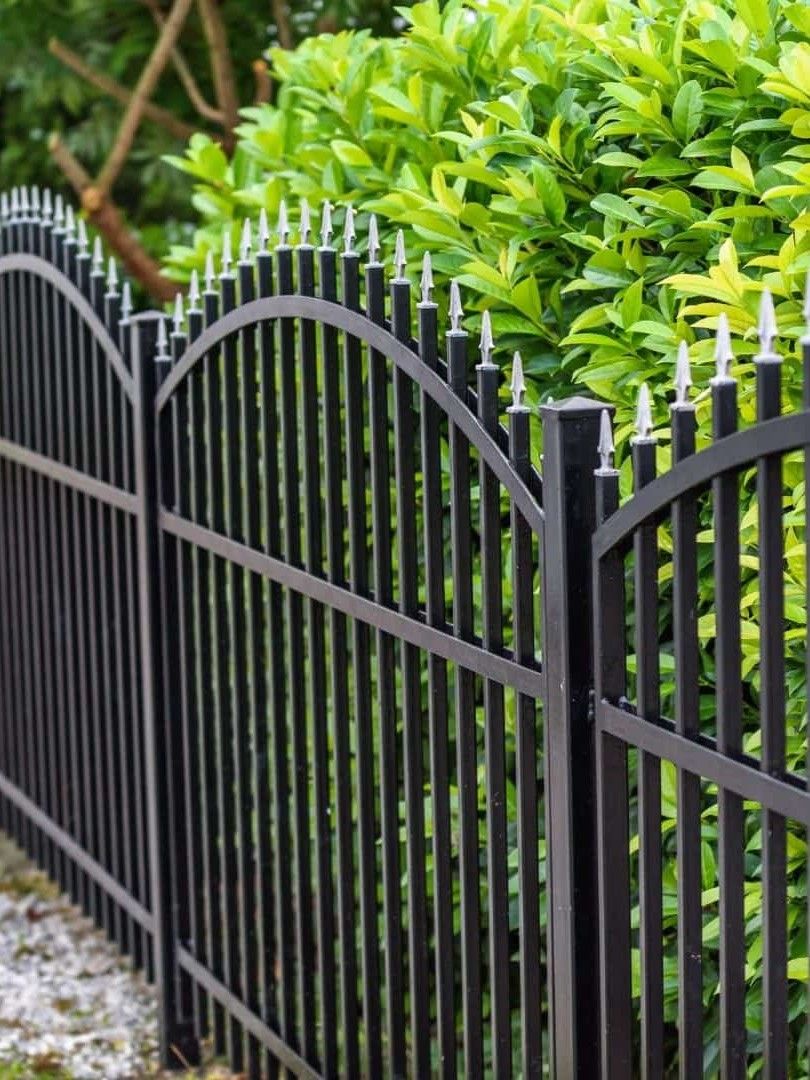
The Classic style is what most people picture when they hear "wrought iron." Vertical pickets with spear-tops or finials, horizontal top and bottom rails, regular spacing, and either black or dark bronze finish. It is the default choice for most Chicago single-family homes and the most code-friendly option in the city.
Spear-Top and Finial Pickets
Spear-tops are the simplest classic detail: each picket terminates in a pointed cap. Finial caps are a slight upgrade, with cast or pressed decorative tops in shapes like fleur-de-lis, ball, or quatrefoil. Both work on brick, stone, and frame houses across most Chicago neighborhoods.
Where Classic Fits Best
Classic styling reads well on a wide range of Chicago housing stock, including:
Brick bungalows and Chicago two-flats
Graystones across the North and South Sides
Single-family homes built before 1940
Newer Georgian and Colonial Revival homes that borrow older architectural language
Why It Stays Popular
Classic styles are the most efficient to fabricate, which keeps the price-per-foot lower than Baroque while still meeting most landmark district guidelines. Repairs and section matching are also straightforward because picket profiles are widely produced.
Baroque Wrought Iron Fences
Baroque is the ornate end of the spectrum: dense scrollwork, hand-forged volutes, cast medallions, twisted rails, and often layered detail across multiple horizontal bands. The style traces back to seventeenth-century European ironwork and was widely imported into Chicago during the late nineteenth and early twentieth centuries.
Hand-Forged Scrollwork
True Baroque ironwork is forged, not assembled from stock parts. A blacksmith heats and shapes each scroll individually, which is why authentic Baroque fencing carries a higher labor cost. The result is detail that machine-fabricated iron cannot match, including subtle thickness variation along curves and tool marks that read as craftsmanship rather than imperfection.
Where Baroque Fits in Chicago
Baroque works best in front of formal historic architecture, including:
Italianate row houses
Beaux-Arts mansions
Ornate Victorian homes
Restored properties in landmark districts like the Gold Coast, Old Town Triangle, and Pullman
On contemporary or minimalist homes, Baroque ornamentation usually looks misplaced.
When to Commission Custom Baroque Work
Most Baroque projects are custom rather than catalog. Working with a fabricator who maintains in-house custom ironworks capability lets the design respond to the specific architecture rather than approximating it with stock parts.
Contemporary Wrought Iron Fence Styles
Contemporary styling strips ornament back to clean horizontal and vertical lines. Flat-bar pickets, square tubing, geometric panels, mixed materials such as iron with cable or wood inserts, and matte black or gunmetal powder-coat finishes are the defining elements.
Flat-Bar Linear Designs
Instead of rounded pickets with decorative tops, Contemporary fences use flat or square stock with clean terminations. Pickets may be wider-spaced than Classic, or set horizontally rather than vertically, depending on the look.
Where Contemporary Fits
Contemporary iron suits new-build single-family homes, modern infill construction, and renovated lofts in neighborhoods like West Loop, Fulton Market, Bucktown, and parts of Logan Square. It also works well for commercial properties and mixed-use buildings that lean modern.
Powder Coat Versus Traditional Black
Modern powder-coat finishes hold up better than older paint systems and come in finishes far beyond glossy black. Matte black, charcoal, and gunmetal are common Contemporary choices, while bronze and patinated finishes can soften the modern read for transitional architecture.
How Chicago Weather and Architecture Should Inform Your Choice
Chicago weather is hard on iron. Salt from winter sidewalks, freeze-thaw cycles, prolonged humidity, and lake-effect storms all accelerate corrosion. Style affects how visibly a fence ages: heavily ornamented Baroque pieces have more crevices for rust to start, while flat Contemporary surfaces shed water faster but show every dent.
Match style to architecture first, climate-readiness second. A Baroque fence on a Beaux-Arts mansion can be maintained for decades with proper finishing and routine fence repair. A Contemporary fence on a modern infill home will look correct from day one, age gracefully, and need less spot work over time.
Style, Code, and Landmark Considerations
Before specifying any style, three things should be confirmed:
Chicago's general fence ordinance. Height limits in front yards and rear yards differ, and corner lots may have additional setback rules.
Landmark district requirements. Properties in designated Chicago landmark districts often have ornamentation, color, or material restrictions that override standard ordinance rules.
HOA covenants. Newer developments and townhome associations frequently set their own rules on fence height, finish, and style.
Front-yard wrought iron fences are typically limited to four feet in residential zones, while rear-yard fences can rise to six feet or more depending on lot configuration. Style does not change these limits, but it does interact with them. Dense Baroque scrollwork on a four-foot fence reads as deliberate detail; the same density on a six-foot fence can look heavy.
Mixing Styles: When Hybrid Designs Work
Chicago has a lot of architecturally eclectic homes, and a strict reading of these three categories sometimes leaves the right answer in the middle. A spear-top Classic fence with a single Baroque medallion at the gate, or a Contemporary flat-bar fence with subtly turned posts, can match an eclectic facade better than a pure-style fence would. Custom fabrication makes this practical.
Hybrid designs work best when one style clearly leads. Picking a primary style and adding two or three accent details from another reads as intentional. Mixing too many elements at equal weight tends to read as indecisive.
Key Takeaways
Wrought iron fence styles fall into three broad design families: Baroque (ornate, hand-forged), Classic (spear-top traditional), and Contemporary (flat-bar minimalist).
Each style suits a different type of Chicago architecture, and matching the fence to the building matters more than picking what is currently trending.
Modern powder-coat finishes have closed the durability gap between styles, so the choice is mostly aesthetic, not structural.
Chicago landmark districts and HOAs may restrict ornamentation, height, or finish, which can rule out certain styles before design work begins.
Custom fabrication lets you blend elements from multiple style families, which is common for owners of architecturally eclectic Chicago homes.
Frequently Asked Questions
Which wrought iron fence style is most popular in Chicago?
Classic style with spear-top pickets is the most-installed wrought iron fence style across Chicago residential neighborhoods. It fits most home types, meets landmark district guidelines in most cases, and costs less per foot than Baroque or heavily customized Contemporary designs. Baroque dominates a smaller subset of high-end historic properties, and Contemporary is growing fastest in newer construction.
Are Baroque wrought iron fences worth the higher cost?
For genuinely historic homes, yes. A correctly fabricated Baroque fence supports the architecture and tends to lift property value in landmark districts where buyers expect period-correct detailing. On homes built after roughly 1940, the same Baroque ornamentation often reads as overdone and can have the opposite effect on resale.
Can I mix Classic and Contemporary wrought iron styles?
Yes. Hybrid wrought iron fences are common in Chicago, especially for homes that have been renovated or that sit on architecturally mixed blocks. The cleanest hybrids choose one style as the dominant look and use details from the other style sparingly, usually at the gate or along a single decorative band.
Do contemporary wrought iron fences need less maintenance?
Slightly. Contemporary flat-bar designs have fewer crevices where rust can start, so spot maintenance tends to be quicker. The bigger maintenance variable is finish, not style. Modern powder coatings outlast traditional liquid paint regardless of style, and any wrought iron fence in Chicago benefits from an annual inspection for chips and rust starts.
How long does a wrought iron fence last in Chicago weather?
A properly fabricated wrought iron fence with a quality powder-coat finish typically lasts thirty to fifty years before major restoration is needed. Spot repairs, refinishing, and occasional picket replacement extend that life further. Cheaper fabricated iron with thin paint finishes may need significant work in fifteen years or less.
Do Chicago landmark districts restrict wrought iron fence styles?
They can. Designated Chicago landmark districts and individually landmarked properties have additional review requirements that may dictate fence height, material, color, and level of ornamentation. Always confirm requirements with the Commission on Chicago Landmarks before finalizing a style choice on a landmarked property.
Conclusion
The right wrought iron fence style is the one that matches the home, holds up to Chicago weather, and meets local code without compromise. Classic suits most of Chicago's residential housing stock, Baroque belongs on formal historic architecture, and Contemporary fits new construction and modern renovations. The best fences pick a clear style and execute it precisely, with finishes built to survive the climate.
Americana Iron Works and Fence has fabricated and installed wrought iron fences across Chicago for more than thirty years, including custom Baroque restorations, Classic residential installs, and Contemporary new-builds. Contact us for a free quote at 312-722-6515, or schedule a consultation to talk through which wrought iron fence styles fit your property.